How to Dry an RC Car After Running in Water to Prevent Rust
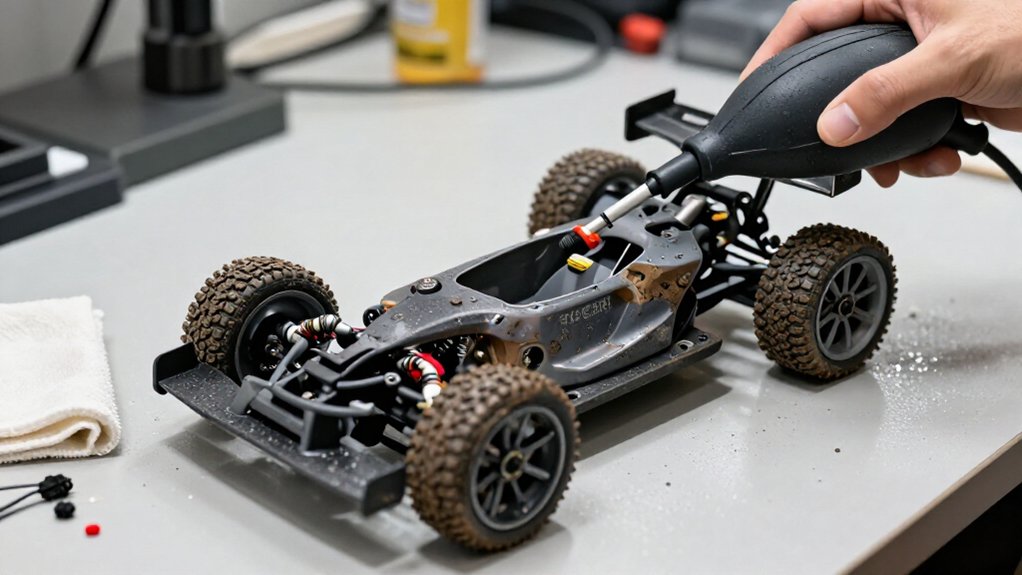
After a wet run, switch off your RC car, disconnect and remove the battery, then place it on a stable, dry surface. Blot the chassis and electronics with a microfiber towel; use short, moderate air bursts to clear seams, bearings, screws, and tight joints.
Brush away mud and grit, and open the receiver box to air-dry fully. Check metal parts for rust and bearings for roughness; lubricate only when dry.
More checks catch hidden damage.
Who Needs Rust Prevention
If you run your RC car through rain, wet grass, snow, puddles, or mud, dry and inspect it afterward—even if its electronics are rated waterproof. Prioritize exposed metal screws, hinge pins, axles, driveshafts, gears, and bearings; moisture can corrode them despite waterproof electronics. Beach or saltwater use demands prompt inspection because salt rapidly attacks connectors and drivetrain parts.
After wet runs, remove vented tires and uncover wheel vents to release trapped water before it soaks foam inserts or damages tires. If you drive wet frequently, make drying, bearing checks, and lubrication routine maintenance. Check the full drivetrain carefully after each run; water can reach fasteners and moving parts. Don’t treat an electronics rating as protection for exposed metal hardware; inspect those components after every wet run.
Microfiber Towels and Air
After a wet run, blot the chassis, electronics housings, and other accessible surfaces with a soft microfiber towel to lift standing water without scratching parts. Work methodically, keeping airflow controlled and avoiding direct, prolonged blasts at delicate seals or wiring.
- Direct short bursts into screw heads, suspension joints, and around bearings to dislodge trapped moisture.
- Dry carefully around the motor and battery compartment; moisture there can cause corrosion or electrical damage.
- Remove the tires and peel back tape covering vent holes, allowing tires and foam inserts to air out.
- Keep the car in a warm, ventilated place until fully dry; inspect metal parts and bearings for lingering moisture before storage.
Use canned air or a compressor at moderate pressure, and disconnect the battery before drying.
Rust-Prone Components and Locations
Water can leave rust-prone steel parts corroded even when the chassis looks dry, especially where moisture stays trapped in tight joints. Inspect systematically after each wet run. Steel screws, hinge pins, axles, and driveshafts can rust inside joints; examine seams and exposed threads. Check wheel and drivetrain bearings for water or grit, then dry and relubricate them with bearing-specific oil.
Inspect transmission parts and differentials for retained moisture that can corrode metal or seize components. Check motor bearings too; water may remain inside despite a dry exterior.
| Location | Risk | Action |
|---|---|---|
| Fasteners and shafts | Rust in joints | Inspect and dry |
| Bearings and drivetrain | Corrosion or grit | Dry; apply bearing oil |
| Tires and motor | Foam damage; bearing moisture | Remove tires; ventilate; inspect |
Work in good light.
Disconnect the Battery
As soon as the wet run ends, power down your RC car and disconnect both battery leads to reduce the risk of shorts. Remove the battery, inspect its connectors, and dry it separately; don’t leave it in the wet compartment. Store it safely, and don’t charge or reuse it until it’s fully dry and you’ve checked for damage.
Power Down First
When the wet run ends, switch off the car and disconnect and remove the battery before drying or inspecting the vehicle. Treat this as the first safety step, not a task to postpone while you wipe the chassis. A powered, wet system can short when moisture bridges electrical contacts, and handling it while energized may damage components or create a hazard.
Keep the battery disconnected throughout the drying and inspection. If you’re dealing with a LiPo pack, don’t reconnect or charge it while wet; dry it separately with a fan and check for swelling or damage before considering charging. Keep the pack away from water; never submerge it. Check the connector, and wait until both it and the battery are fully dry before reconnecting.
Remove the Battery
Once the wet run ends, disconnect and remove the battery so it can’t power damp electronics. Keep it separate from the car throughout drying; never leave it in a wet battery compartment. Set it on a dry, nonconductive surface away from water and metal tools. Inspect the casing, leads, and connectors under light, checking for moisture, cracks, punctures, or other damage.
Dry the battery carefully before you consider reuse. If you use a LiPo pack and it gets wet, disconnect it immediately, then dry it with a fan. Don’t charge or reinstall it until it’s completely dry and inspection confirms it’s undamaged. If you notice swelling, deformation, damaged wiring, or persistent moisture, keep the pack out of service and follow the manufacturer’s safety guidance.
Disconnect Both Leads
With the battery removed, disconnect both battery leads from the car before cleaning or drying it; this cuts power and reduces the risk of shorts. Set the battery on a dry, nonconductive surface away from the wet car, and keep it separate throughout the drying process. Never submerge it or leave it connected while moisture remains.
If your LiPo battery got wet, disconnect it promptly and use a fan to dry it; don’t apply heat or charge it while damp. Before reconnecting, wait until the battery and car are fully dry, then check that the leads and connectors are dry too. If you notice swelling or damage on the battery, don’t charge it; follow the manufacturer’s safe handling guidance before returning it to service.
Inspect Battery Connectors
Before inspecting the battery connectors, disconnect and remove the battery, then dry it separately; never leave it connected while the car is wet.
With the battery removed, examine both connectors before you reconnect anything. Look for water, dampness, dirt, or corrosion on the contacts. Check the plug openings and wire joints where moisture hides.
Blot wet areas with a soft towel or use compressed air to clear connectors; don’t force debris deeper into the plug. Inspect the battery casing and leads for cuts, looseness, swelling, or other damage. If a LiPo battery is wet, swollen, or damaged, don’t charge it. Keep the battery disconnected while you finish drying and inspecting the car. Reconnect only after the battery and every connector surface are completely dry.
Store Battery Safely
After a wet run, disconnect and remove the battery promptly, then dry and store it separately from the car. Keep it, its leads, and connectors dry; water can damage the pack and create hazards. Never submerge a battery, especially a LiPo, because moisture can compromise its cells or protection circuitry.
If a LiPo gets wet, disconnect it immediately. Use a fan to dry its exterior, then inspect the pack for swelling, punctures, split seams, or other damage. Don’t charge it until it’s fully dry and shows no signs of damage. If you find swelling or damage, don’t charge or reuse the battery; follow the manufacturer’s disposal guidance. Store the dry battery in a dry location away from the car, and check it before its use.
Drying After Saltwater Runs
After a saltwater run, remove the battery and keep it out of the rinse. Rinse the car with fresh water, then dry every component, including connectors, bearings, and tight spots. Open the receiver box, inspect and lubricate exposed parts as needed, and store the car only when it’s fully dry.
Rinse Away Salt
Saltwater leaves corrosive residue on connectors and metal drivetrain parts, so remove the battery and gently rinse the car with fresh water only if its protection can handle splashes. Keep the battery and its connectors away from water throughout cleaning. Use a flow, not a pressure washer, and direct fresh water over exposed chassis surfaces where salt has collected.
Don’t submerge the vehicle, and don’t spray water into receivers, speed controls, motors, or other unprotected electronics. If splash protection is uncertain, don’t rinse; use a dry brush to lift salt. Work methodically around the drivetrain, rinsing metal parts without forcing water into bearings or housings. After rinsing, check bearings, screws, axles, and connectors for remaining salt or moisture, and relubricate bearings if needed.
Dry Every Component
Disconnect and remove the battery immediately, then dry it separately; never charge a wet or damaged LiPo.
After rinsing away salt with fresh water, remove tires and uncover their vent holes so the foams can dry. Use soft towels, Q-Tips, or compressed air to clear the chassis, receiver box, motor area, battery compartment, and other tight spaces. Open the receiver box and let electronics dry fully in a warm, ventilated place. Inspect connectors and wiring for trapped moisture before reconnecting anything.
Check bearings, axles, driveshafts, and other metal parts for salt or grit. Remove contamination, then re-lubricate bearings with bearing-specific oil and apply suitable grease to moving parts. Work methodically around seams and recesses, and confirm components are dry before reassembly.
Prevent Corrosion Afterward
Because salt residue accelerates corrosion, rinse the car gently with clean fresh water, then dry it thoroughly with soft towels and compressed air, including tight spots.
Afterward, disconnect and remove the battery promptly. Keep it dry and inspect it for swelling or damage before you charge it. Remove the tires and peel back tape covering wheel vent holes so the tires and foam inserts can ventilate and dry.
Open the receiver box and battery compartment to check for moisture. Let the car dry fully in a warm, well-ventilated place before storage.
Then inspect metal parts and bearings for salt, grit, or early rust. Clean and re-lubricate bearings with bearing-specific oil; apply suitable grease to exposed moving parts. Check connectors for remaining moisture before reassembly.
Bright, Corrosion-Free Battery Contacts
After a wet run, remove the battery promptly and dry it, the connector, and the car separately. Use a soft towel or compressed air to clear moisture from battery contacts and connector crevices; direct air so you don’t force water deeper into housings. Inspect each contact under light for dampness, dirt, or early corrosion. Don’t reconnect the battery or charge it until every contact and crevice is completely dry.
If you find residue, follow the battery maker’s cleaning guidance rather than scraping plated surfaces. Protect exposed connector joints with heat-shrink tubing or a suitable coating, but seal only after drying; trapped moisture can promote corrosion. If a LiPo battery gets wet, disconnect it, dry it with a fan, and check for swelling or damage before charging.
Grinding After Drying
If your RC car grinds after drying, stop running it; grit or moisture may remain in the bearings, gears, or other moving parts.
Remove the motor pinion, then turn the drivetrain by hand. Check for binding, rough movement, or unusual resistance; don’t force components past a jam. Inspect bearings for trapped grit and corrosion. Clean and dry them before reassembling.
Examine driveshafts, differentials, and suspension parts for debris, damage, or binding that could produce grinding. Keep fingers clear of pinch points and disconnect the battery before working near the drivetrain.
After cleaning, recheck rotation by hand. If grinding continues, inspect gears, bearings, and components for wear or damage. Replace any faulty parts before you drive again. Don’t use the car until it turns smoothly.
Lubricating Bearings After Drying
Once the drivetrain turns smoothly, lubricate the bearings only when the car and bearings are fully dry. Before applying oil, inspect each bearing: turn it by hand and note grit, rust, or roughness. Clean out debris, then use a small amount of bearing-specific oil on exposed bearings. Avoid thick grease unless the bearing or component specifically calls for it.
- Check both motor bearings; moisture can corrode them even when the drivetrain seems fine.
- Apply oil sparingly so it reaches the bearing without flooding nearby parts.
- Spin the serviced drivetrain by hand and confirm smooth rotation without binding.
- Recheck bearings after every wet run; trapped moisture can cause rust beneath an exterior that looks dry.
Keep your car powered off while you service and test bearings.
Check for Stuck-On Debris
Before drying the car, inspect the chassis, suspension arms, wheel wells, and drivetrain for packed mud, grass, sand, or other debris that can trap moisture.
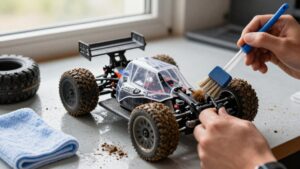
Set the car on a stable work surface and switch it off; disconnect the battery before cleaning. Use a soft brush to lift stuck-on dirt without forcing grit into moving parts. For tight spaces, use cotton swabs or controlled bursts of compressed air, keeping the nozzle clear of wiring and delicate components.
Check around bearings, driveshafts, axles, and hinge pins, where grit can cause binding and hold water against metal. Rotate the wheels and move the suspension gently to expose hidden debris, then remove anything you find. Clear packed material before drying; otherwise, moisture may stay trapped beneath it and contribute to rust or corrosion. Don’t apply lubricant as a substitute for cleaning, and inspect the cleared areas again before you begin drying completely.
Conclusion
After every wet run, disconnect the battery before cleaning or drying your RC car. Use microfiber towels and low-pressure air to remove moisture from rust-prone parts, bearings, contacts, and debris-trapping gaps. If you drove through saltwater, rinse with fresh water, then dry thoroughly.
Check that battery contacts stay bright and components move freely; investigate grinding, then lubricate bearings with oil. Don’t power up until everything’s fully dry and reassembled safely. Regular checks prevent corrosion and costly failures.