How to Dispose of RC LiPo Batteries Safely and Legally
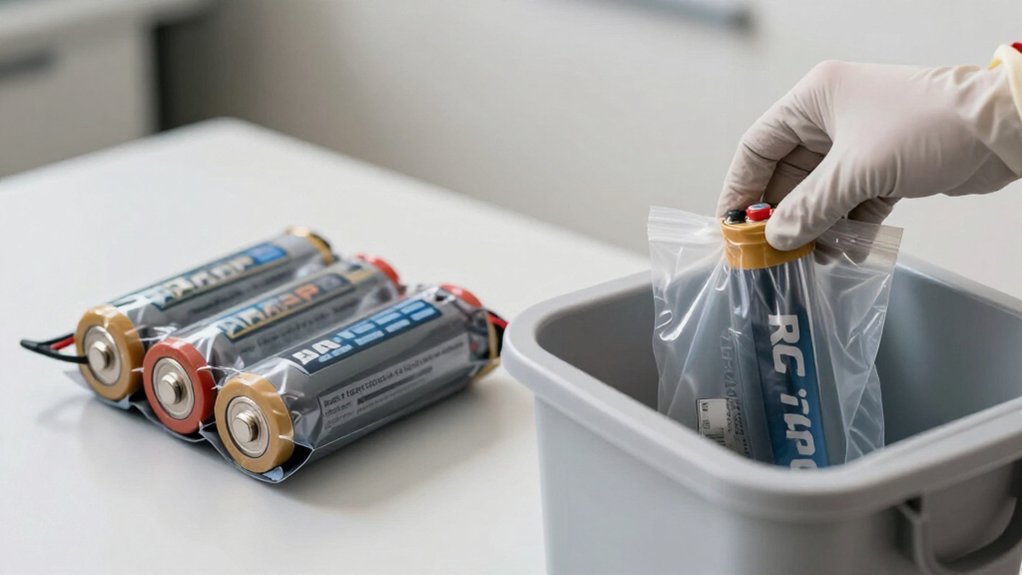
To dispose of an RC LiPo safely and legally, inspect it for swelling, leaks, punctures, or damaged wires.
If damaged or readings are unclear, don’t charge or discharge it; tape exposed terminals and contact a hazardous-waste facility.
For an intact pack, follow the facility’s preparation rules; discharge only with a controlled load, never a short circuit or saltwater bath. Don’t put LiPos in household trash. Confirm acceptance and damaged-pack procedures locally.
More steps follow below.
Identify Your Battery’s Condition
Before you choose a disposal or discharge method, inspect the LiPo pack for swelling, punctures, leaks, crash damage, and broken wires. Treat any swollen, damaged, or leaking pack as unstable; don’t recharge it or use an aggressive discharge method. A zero-voltage reading at the main leads doesn’t prove the pack is empty; it may retain energy, particularly if salt-water electrolysis has severed its connection tabs.
If the main connector reads zero and the pack appears intact, check voltage between adjacent balance pins. Don’t discharge cells with visible damage or zero-voltage balance pins. Until you’re certain it’s safe to handle, keep an undischarged or damaged pack isolated from flammable materials, and prevent its connectors from shorting. Then follow your local hazardous-waste guidance for disposal.
Assess Battery Condition
Start by inspecting the pack for swelling, punctures, leaks, crash damage, broken connections, or other visible cell damage. Treat any damaged or swollen LiPo as unstable: don’t recharge it or attempt an aggressive discharge.
A zero-volt main connector doesn’t always reveal each cell’s condition if balance leads appear intact. Check voltage between adjacent balance pins to assess individual cells, but don’t discharge through them if any pin reads zero or a cell is visibly damaged. For safe, regulation-aware disposal, use this decision guide:
- Confirm visible condition before testing.
- Treat damage as unstable; stop charging.
- Check adjacent cell voltages only when leads appear intact.
- If safe discharge isn’t possible, isolate the pack from flammable materials and take it to a local hazardous-waste facility for disposal.
Step 1: Insulate Exposed Battery Terminals
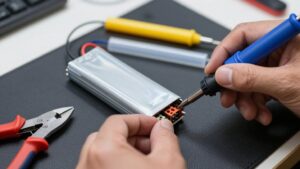
Cover the main power connector’s exposed contacts with electrical tape so metal objects can’t bridge the pins and cause a short; tape the balance-plug contacts too, if possible.
Before handling the pack, keep conductive tools and jewelry away from both connectors. Press tape firmly over every exposed contact without forcing it into the connector or pulling on wires.
Don’t assume the main lead’s insulation protects the separate balance leads; their small pins can still contact metal. Check that no pin remains uncovered, and replace tape if it loosens, tears, or becomes contaminated. Keep the taped connectors separated from each other and from loose metal during storage and transport.
Then place the pack in a non-conductive container or LiPo-safe bag before taking it to an appropriate drop-off site. Insulating terminals reduces the chance of an accidental short; it doesn’t make a damaged or swollen pack safe to handle casually or eliminate fire risk.
Step 2: Confirm Local Recycling Rules
Check local hazardous-waste or battery-recycling rules before preparing your LiPo pack, since some facilities require a low charge while others require it to be fully discharged. Confirm which locations accept RC LiPo packs; acceptance varies, and a site that handles household or rechargeable batteries may reject specialty, high-energy packs. Contact the facility or use a recycling locator, then verify its instructions before you travel.
Ask how it classifies damaged, swollen, or leaking packs; those may require separate handling and shouldn’t enter ordinary battery collection. Check preparation rules and any quantity or weight limits. For example, Call2Recycle lists an 11-pound limit in most areas and a 25-pound limit in New York. Don’t assume every drop-off program accepts RC packs. If requirements aren’t clear, call ahead.
Step 3: Controlled Resistive-Load Discharge
For an intact LiPo with functional leads, use an incandescent automotive bulb or a suitable power resistor as a controlled load, never short the leads. Keep discharge current well below 1C, ideally at or below 0.5C. For a 2200 mAh pack, limit current to about 1.1 A. A 12 V, 21 W bulb draws 1.7 A from a 3S pack, so choose a lower-wattage bulb or suitable resistor for a gentler load. For packs above 3S, connect two 12 V bulbs in series; a 4S pack can reach 16.8 V and may blow one bulb. Place the pack on a nonflammable surface in a ventilated area. Stop if it heats, swells, or leaks. Follow local disposal and recycling rules; discharge doesn’t make a LiPo household waste.
Step 4: Verify Zero-Voltage Reading
After the bulb goes out, wait about 30 minutes, then measure the pack voltage again.
Use a meter across the main power leads. A zero reading there doesn’t prove the LiPo is fully discharged: salt-water electrolysis may destroy metal tabs and open the circuit while cells still hold charge.
If the main connector reads zero and balance leads remain intact, measure voltage between adjacent balance pins to assess each cell. Don’t treat zero-voltage balance pins as proof of safety, and don’t attempt further discharge if those pins read zero or you see cell damage.
If readings remain uncertain, or you can’t verify and discharge the pack safely, keep it isolated from materials that could cause short circuits. Contact your local hazardous-waste facility for handling guidance.
Step 5: Inspect Load Connections
Before attempting a controlled discharge, inspect an intact pack’s main power leads and balance connector for loose, broken, or damaged connections.
If the main connector reads zero volts but the balance leads look intact, check voltage between adjacent balance pins; this helps determine whether individual cells still hold voltage.
Proceed only after you verify cell condition and sound balance connections. A damaged cell or balance pin reading of zero makes discharge unsafe. If you discharge through balance pins, limit current to about 0.5C or less, and never exceed 4 A.
Never short load connections to force discharge; that can cause rapid heating, fire, or injury. If you can’t discharge the pack safely, protect its connectors from shorts and take it to a hazardous-waste facility.
Step 6: Never Use Saltwater Baths
Don’t use a saltwater bath to discharge a LiPo pack: electrolysis can corrode its tabs and stop the process while dangerous charge remains in the cells. Brine may discharge a pack through its terminals, but the method is slow and uncontrolled. Corroded tabs can interrupt discharge without removing stored energy.
Don’t treat immersion time—or even a two-week bath—as proof of safety; it can’t verify complete discharge. Salt water doesn’t neutralize LiPo contents. If you puncture a cell, water may react with electrolyte, producing hazardous substances, including hydrogen fluoride, which forms corrosive hydrofluoric acid in water. Never puncture or slash a pack to speed disposal. Use controlled discharge only for an intact pack. If it’s damaged or unsafe, take it to a local hazardous-waste facility.
Check Individual Cell Voltages
A zero reading at a LiPo pack’s main leads doesn’t prove it’s discharged; damaged tabs may interrupt the circuit while cells still hold energy.
Use a suitable meter to measure voltage between adjacent balance-plug pins, checking each cell individually, especially when the main connector reads zero. Treat every cell as energized until verified otherwise. A broken tab can isolate the main leads without removing stored energy.
Use these readings to guide discharge only when cells and balance connections are intact and you see no visible damage. Never discharge through balance pins if any cell reads zero volts or looks damaged. If connections are sound, discharge through the balance connector at no more than about 0.5C and 4 A. Follow local hazardous-waste rules for final disposal; voltage checks don’t make a pack safe for household trash. Work on a noncombustible surface, stay present, and stop if the pack heats or swells.
Cell Voltage Imbalance
If cell voltages differ, use the balance-connector readings to identify which cells still hold energy; a normal main-lead reading doesn’t confirm that every cell is discharged. If the main connector reads zero and balance leads remain intact, measure between adjacent pins.
Only discharge verified, undamaged cells through the balance connector or individually, at about 0.5C or less and never above 4 A.
| Finding | Response | Limit |
|---|---|---|
| Intact, energized cell | Discharge cautiously | ≤0.5C; ≤4 A |
| Damage or zero volts | Hazardous-waste facility | Don’t discharge |
Imbalance means energy may remain despite a reassuring pack-level reading. Don’t bridge pins, short leads, or improvise a load. Verify polarity and connection integrity before controlled discharge. If readings are unclear or connections are compromised, stop and use an authorized hazardous-waste facility for disposal.
Record Disposal Date
After discharge or recycling preparation, record the date and note whether the pack was intact, swollen, or damaged. Add the battery’s cell count and final voltage, if you measured it, to document its condition and disposal status. These details help you track the pack’s handling without relying on memory.
When you deliver the battery, record the drop-off date and facility name with your disposal notes. Keep the information with any receipt or acceptance record, and follow the facility’s instructions for damaged or swollen packs; don’t assume every site accepts them. Accurate notes can support safe handling and demonstrate when and where you transferred the battery, but they don’t replace local hazardous-waste rules. Check applicable requirements before drop-off, and retain your records for future reference.
Conclusion
Before disposal, assess your LiPo pack for swelling, heat, damage, or leakage; isolate any unsafe battery and contact local hazardous-waste services. Insulate exposed terminals, check individual cell voltages, and note any imbalance. If permitted, discharge only with a controlled resistive load, never use a saltwater bath. Confirm your local recycling rules before transport, follow their packaging instructions, and record the disposal date. These steps help you reduce fire risk and meet applicable requirements.