How to Clean and Store a Nitro RC Car With After-Run Oil
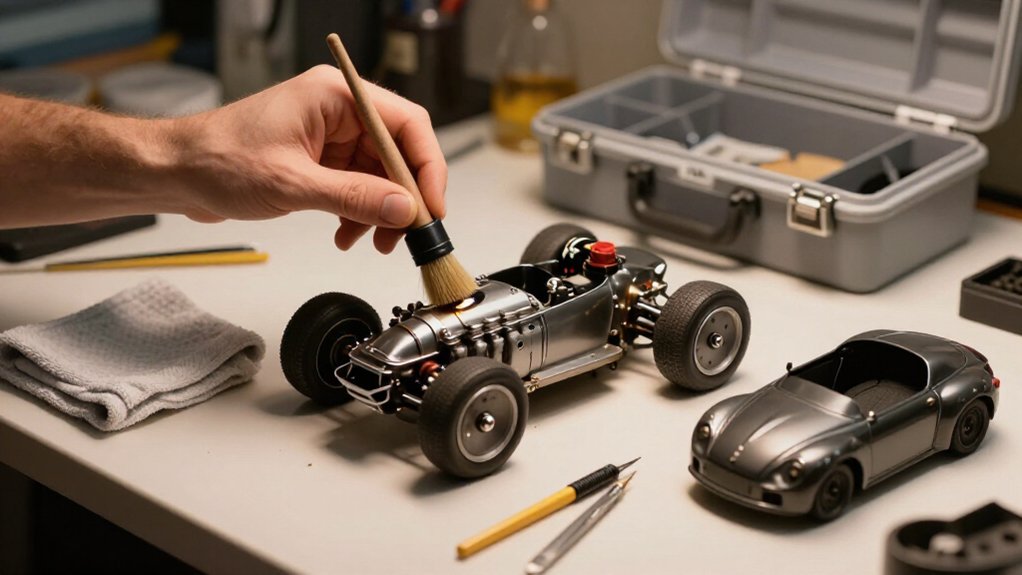
After each run, drain the tank and dispose of used fuel properly; never return it to fresh fuel. Wipe dirt and moisture from the chassis and engine, then let surfaces dry completely.
Remove the glow plug and air filter, apply after-run oil through the carburetor and plug hole as directed, and briefly spin the engine with the exhaust covered.
Store the car cool and dry; remove batteries in cold conditions. Check fuel lines and log inspections; further checks help guarantee smooth restarts.
After-Run Oil Engine Protection
Because methanol residue can leave moisture inside the engine, apply after-run oil to protect steel parts such as the crankshaft, bearings, wrist pin, and starter shaft from corrosion.
With the engine off, remove the glow plug and air filter, then open the throttle fully. Follow the oil manufacturer’s instructions as you apply after-run oil through the carburetor and glow plug hole. Cover the engine with a rag or paper towel, then use the EZ-Start® controller to spin it for 10 seconds, distributing oil.
Repeat the application and 10-second spin cycle twice more. Keep the covering to catch expelled oil. This sequence coats steel components and limits moisture-related corrosion during storage. Don’t run the engine under combustion; the brief spins circulate oil without restarting it.
Required Supplies and Tools
Before cleaning and storing your nitro RC car, gather after-run oil or WD-40, a fuel-dispensing bottle, compressed air or spray motor cleaner, denatured alcohol in a spray bottle, and a rag or paper towel. Arrange these supplies within reach, and verify the bottle labels before handling liquids; careful preparation keeps fuel, cleaning agents, and oil controlled throughout the job.
- Use the fuel-dispensing bottle to drain the tank; keep used fuel separate from fresh fuel to prevent contamination.
- Choose after-run oil or WD-40 to protect internal steel parts during storage.
- Use compressed air or spray motor cleaner to remove exterior residue without forcing debris into openings.
- Spray denatured alcohol for cleaning, and wear safety glasses and gloves; keep a rag nearby to catch expelled oil.
After-Run Oil Application Timing
For storage longer than a few hours, apply after-run oil after each use. First, empty the fuel tank. Then run your engine at idle until it stops; this clears fuel remaining in the engine and lines before storage.
Clean and dry the engine exterior, then apply oil through the carburetor and glow-plug hole. Follow the oil manufacturer’s instructions for timing and quantity; don’t assume every engine needs the same dose.
| Stage | Action |
|---|---|
| Before oiling | Empty tank; idle engine until it stops. |
| Oil application | Use carburetor and glow-plug openings; follow product directions. |
Use this sequence whenever you finish running and plan to leave the engine unused beyond a few hours. Depleting fuel first prepares the engine for oil protection during storage. This order helps you apply oil consistently.
Wipe Chassis Before Oiling
Once the tank’s empty and the engine’s stopped, use a lint-free cloth to remove loose dirt from the chassis and clean around components without pushing debris inside. Let the cleaned surfaces dry completely before applying after-run oil. Wear eye protection when using compressed air or cleaner, and cover the engine with a rag to catch expelled oil.
Remove Loose Dirt
Wipe loose dirt from the chassis with a clean, dry cloth, then brush dust and debris away from the engine and other components. Work around the engine, fuel lines, suspension, and drivetrain without pushing grit into joints or openings. Keep dirt away from the carburetor and glow plug opening; contamination there can enter the engine during preparation.
Use controlled compressed air for stubborn loose particles, and wear eye protection before directing airflow. Hold the nozzle far enough away to avoid driving debris deeper into components, and use short bursts. Check that no grit remains on or around the engine exterior. Before applying after-run oil, confirm the chassis and engine exterior are clean and dry. This keeps residue out of sensitive engine areas during oiling later.
Choose a Lint-Free Cloth
Choose a clean, lint-free cloth to remove fuel residue, dirt, and moisture from the chassis after emptying the fuel tank and before applying after-run oil.
Use a fresh section of the cloth as you work across the chassis, lifting residue rather than spreading it. Apply light, even pressure, and check the fabric often; replace it when it becomes damp or visibly dirty. A dry, clean wiping surface limits the chance that contaminants will reach the engine during maintenance.
Don’t use fluffy towels, shop rags that shed, or worn fabric with loose fibers. Strands can cling to oily surfaces or enter the engine, where they may interfere with operation. Keep the cloth clear of the carburetor and glow-plug opening. Finish wiping before you spray lubricant into the engine, and set the used cloth aside so you don’t transfer collected grime back onto the chassis during the next stage of your maintenance.
Clean Around Components
Before applying after-run oil, empty the fuel tank, set the throttle to idle, and remove dirt and fuel residue from the chassis and engine exterior with compressed air or motor cleaner.
Wear eye protection when you use compressed air or spray cleaner, and keep the spray away from your eyes. Work around the engine mounts, linkages, and chassis joints, cleaning exposed surfaces without disturbing adjustments. After cleaning, wipe the chassis with a lint-free cloth to collect remaining residue. Let all cleaned surfaces dry completely before oiling; otherwise, moisture or loosened dirt can remain around components. Before spraying after-run oil, cover the engine with a rag or paper towel. This barrier catches expelled lubricant and helps keep parts and the chassis clean.
Avoid Pushing Debris Inside
Once the cleaned surfaces are dry, remove loose debris from the chassis and engine exterior with a clean, lint-free cloth. Work methodically from chassis panels toward the engine, lifting dust rather than pushing it into seams or openings. Pay attention around the carburetor inlet and glow-plug hole; keep both clear as you wipe. Don’t brush debris toward these openings, and don’t blow it inward with compressed air.
If you use compressed air or a spray cleaner nearby, wear eye protection and direct airflow away from the engine openings. Check the cloth and turn to a clean section so you don’t redistribute grit. Remove residue from the exterior before applying after-run oil. Then cover the engine with a rag or paper towel to catch expelled oil.
Dry Before Oiling
After cleaning, wipe moisture and cleaner residue from the chassis and engine exterior with a clean, dry cloth, keeping liquids out of the carburetor, glow-plug hole, and other openings. Check seams, recesses, and areas around fasteners for remaining dampness; use a fresh section of cloth rather than spreading residue. Let the engine exterior and surrounding surfaces air-dry completely before you apply after-run oil.
Don’t oil a wet engine: trapped moisture or cleaner can interfere with the lubricant and remain near openings. Once everything’s clean and dry, follow the oil manufacturer’s directions for the amount and application points. Wear eye protection when you use spray cleaners or lubricants, and aim sprays away from your eyes and engine openings. Inspect the area again before long-term storage.
Cold-Weather Storage Tips
Before storing your nitro RC car in cold weather, remove leftover fuel to limit moisture-related corrosion. Dry and oil the engine as directed, then store the car in a cool, dry place. Bring its batteries indoors and follow their storage guidelines.
Remove Fuel Before Storage
To reduce moisture-related corrosion, remove the fuel before storing your nitro RC car for more than a few hours. If the engine is running, pinch the fuel line closed for several seconds, when possible, to stop it. Then empty the tank with a fuel-dispensing bottle.
Keep this drained fuel separate from fresh fuel; never pour it back into the fuel jug. Dispose of fuel according to your city or county regulations. For a purge, leave the tank empty, set the throttle to idle, and try starting the engine. It may run briefly as it burns residual fuel in the engine and lines. Don’t prolong this step: stop once the fuel has been consumed, then prepare the car for storage according to your maintenance routine.
Protect Against Moisture
Because methanol attracts moisture that can corrode steel parts, protect the crankshaft, bearings, wrist pin, and starter shaft with after-run oil when storing the engine for more than a few hours.
With the engine clean and dry, open the throttle and apply after-run oil through the carburetor and glow-plug hole, following the product’s instructions. Wear eye protection when handling spray lubricant. Cover the engine with a rag or paper towel, then use the EZ-Start® to spin it for 10 seconds. This spreads oil across internal parts and catches expelled lubricant.
Repeat the application and spin sequence two more times, covering the engine each time to contain spray and protect surfaces. Before storage, confirm that you’ve removed leftover fuel and that no excess oil remains.
Store Batteries Indoors
Once the engine is protected, remove the car’s batteries before storing it in a cold garage or shed.
Store them indoors in your home at room temperature; cold can reduce available power and make starting less reliable. Choose a cool, dry location away from direct sunlight, heaters, and other heat sources.
Before storage, inspect each battery for damage or leakage. Separate any damaged battery from usable ones, and don’t install or charge it. Follow the manufacturer’s storage instructions for rechargeable packs, including the recommended storage charge.
Don’t assume a fully charged pack is suitable for long-term storage. Before your next run, recharge rechargeable batteries as directed, then check their condition and connections. Keep the car’s power supply separate until you’re ready to use it.
Smooth Pull-Start After Storage
Smooth Pull-Start After Storage
Before starting the engine after storage, remove the glow plug and rotate the flywheel by hand to confirm it turns smoothly.
If the flywheel turns freely, reinstall the glow plug only after checking for excess oil. A stiff pull-start isn’t a cue to apply more force: oil trapped in the cylinder can resist piston movement hydraulically. Remove the glow plug, place a clean rag over the opening, and pull the starter gently several times.
Keep the rag in place to catch expelled oil, and avoid sharp or forceful pulls. Reinstall the glow plug securely. Then draw the starter slowly through its travel to verify smooth movement before attempting to start the engine. This confirms readiness for a normal starting attempt if resistance remains low.
Spotting Cracked Fuel Lines
Inspect the entire fuel line for cracks, splits, or brittle sections, paying particular attention to the connections at the tank and carburetor. Flex the tubing gently along its length; bending can open small cracks and make damage easier to see. Examine each connection for looseness or fuel seepage, which can point to a cracked line or poor fit. Don’t rely on a line that looks sound while straight; inspect it under gentle movement without pulling hard enough to stretch or dislodge it.
Replace any damaged or hardened tubing before you run the engine. A leak can interrupt fuel flow and affect reliable operation. Choose fuel-resistant replacement tubing with the correct size for your setup. Fit it securely at both ends, then check the connections.
Sealing Open Exhaust Ports
To keep after-run oil from escaping, cover the exhaust outlet with a clean rag or paper towel before spraying oil and turning the engine over. Keep the covering in place throughout each 10-second EZ-Start® spin; it catches oil expelled from the engine and limits mess around your work area.
Follow this sequence carefully to protect the engine and keep oil where it belongs:
- Spray after-run oil into the engine while the outlet remains sealed with the clean covering.
- Turn the engine over with EZ-Start® for 10 seconds, keeping the covering firmly in place.
- Remove the covering between cycles, then reseal the exhaust outlet before applying more oil.
- Repeat the spray-and-spin process two more times; cover the outlet during each 10-second spin.
This precaution protects your work.
Log Storage Inspection Dates
After each cleaning and after-run oil treatment, record the date and confirm the engine is clean, dry, and protected with oil. Use the log to track preparation date. On each inspection, recheck the engine and note moisture or corrosion on the crankshaft, bearings, wrist pin, and starter shaft. Record whether you emptied the fuel tank and disposed of fuel properly; don’t return it to the fresh-fuel jug.
Add the next inspection date, especially if storage will exceed a few hours. Verify after-run oil protection and dryness at that check. This record helps you identify gaps and maintain consistent protection between runs. If you find a problem, record the affected part, corrective action, and the date you completed it; then schedule another check as needed.
Conclusion
Clean your nitro RC car after each run, then protect the engine with after-run oil before storage. Wipe the chassis, inspect fuel lines, and seal the exhaust port to limit dirt and moisture entry. Store the car in a cool, dry location, following cold-weather precautions when needed. Record inspection dates so you can check its condition and refresh protection regularly. Before your next run, confirm the engine turns freely and the fuel system remains intact.
RC Car Gear Ratio & Top Speed Calculator
Work out final drive ratio, rollout, wheel rpm and theoretical no-load top speed from your motor KV, battery, gearing and tire size.
RC Battery Runtime & Voltage Calculator
Get LiPo or NiMH pack voltage (nominal and full), estimated runtime and C-rating current from cells, mAh, C and average amp draw.
Nitro Fuel Runtime & Cost Calculator
Enter your tank size, timed minutes per tank, sessions and fuel price to estimate nitro fuel used and its cost per session and per month.
RC Apps & Software Finder
Filter RC phone control apps, ESC/radio programming software and design tools by purpose, platform, price and brand, with official links.