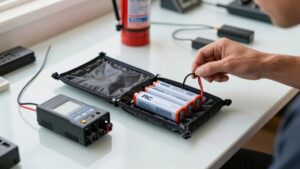
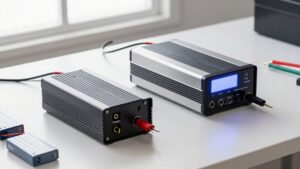
What Is LiPo Storage Charge? The 3.8V Rule Explained
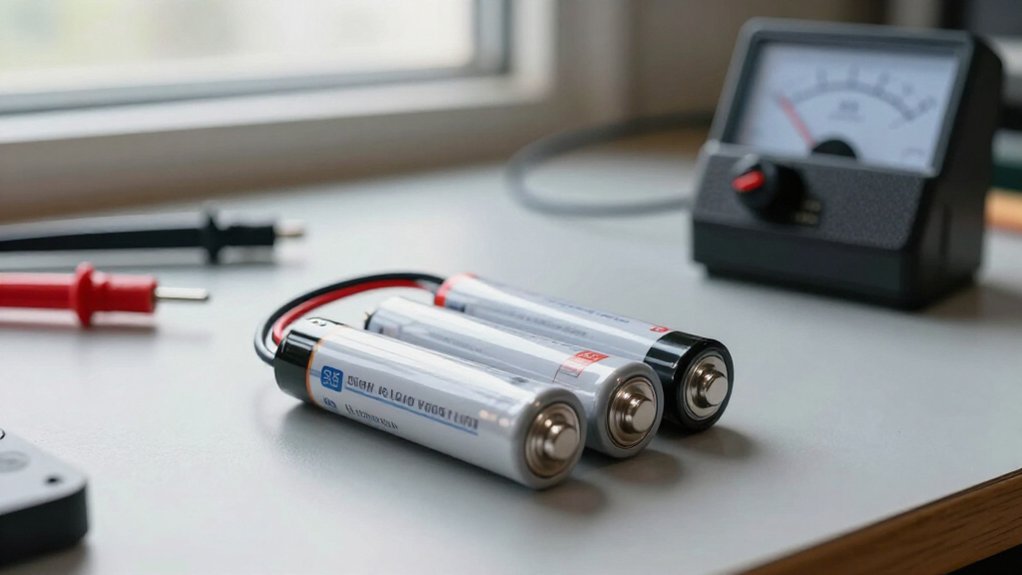
LiPo storage charge is the voltage you target between uses to slow cell aging. For standard LiPo cells, aim for about 3.8 V per cell, not the 3.7 V nominal level or 4.2 V full-charge limit.
Use a compatible balance charger’s storage mode, then check every cell; total pack voltage can hide an imbalance. Confirm chemistry and follow the manufacturer’s guidance for LiHV packs.
Store packs cool and dry, away from combustibles. Next, learn which checks matter.
The 3.8V Per-Cell Rule
The 3.8V-per-cell rule means storing a LiPo at about 3.8 volts per cell, a stable level that helps preserve battery health. For a series pack, multiply 3.8V by its cell count to find the target pack voltage. A 4S pack should read about 15.2V, while a 6S pack should read about 22.8V.
Use your charger’s storage mode to bring each cell to the target, and verify that you’ve selected the correct cell count before charging. If you’ve charged a pack but won’t use it within about 48 hours, return it to approximately 3.8V per cell for storage. Avoid leaving it fully charged at 4.2V per cell for extended periods. Follow your charger’s safety instructions, and stop if readings appear abnormal.
Slowing Cell Degradation
Because LiPo cells age faster when held fully charged, storing them near 3.8V per cell helps slow degradation. At this voltage, cells remain more stable than at 4.2V, where sustained charge accelerates aging. Prolonged full-charge exposure can raise internal resistance, reducing performance and increasing heat and puffing risk.
Accumulated charge time matters: separate periods count cumulatively, so 24 hours at full charge is roughly equivalent to one continuous day.
If you won’t use a charged battery within a day or two, select your charger’s storage mode to bring cells to about 3.8V. After flying, returning cells to storage voltage soon limits degradation and helps preserve service life. Follow your charger and battery manufacturer’s instructions, and monitor the pack during charging; never leave it unattended.
Storing Packs Between Flights
If you won’t fly again within a day or two, use your charger’s storage mode to bring each LiPo cell to about 3.8V instead of leaving the pack fully charged at 4.2V per cell. After each flight, return the pack to storage voltage soon. Time spent fully charged accumulates and can increase internal resistance. For multi-cell packs, 3.8V is a per-cell target, so use total pack voltage as a check, not a replacement for cell monitoring.
| Pack | Storage total | Check |
|---|---|---|
| 4S | 15.2V | Confirm each cell |
| 6S | 22.8V | Confirm each cell |
Use charger readings, then disconnect packs and keep them away from heat and combustible materials. Store packs in a cool, dry, fire-resistant location, and inspect for puffing or damage before reuse.
Separating LiPo and LiHV Storage Voltage
For standard LiPo cells, set storage mode to about 3.8 V per cell; don’t confuse this with the 4.2 V-per-cell full-charge level. LiHV cells allow a higher charging voltage, but you shouldn’t assume they use a different storage voltage. Check your battery maker’s specifications before setting storage voltage.
Standard LiPo Voltage
A standard LiPo cell has a nominal voltage of 3.7 V, charges fully to 4.2 V, and is typically stored at about 3.8 V.
You should treat this value as a per-cell target, not the total voltage for every pack.
For a standard pack, multiply 3.8 V by its series cell count: a 2S pack targets about 7.6 V, a 4S pack 15.2 V, and a 6S pack 22.8 V.
Before you select storage mode, confirm the battery type and cell count; the charger needs both to apply the correct target. Don’t rely on voltage alone if the pack label is unclear; verify its specifications and use a balance charger. Storage charge isn’t a substitute for monitoring cells, and you should disconnect the pack once charging finishes.
LiHV Storage Voltage
Although standard LiPo cells typically target about 3.8 V per cell for storage, don’t assume that voltage applies to LiHV packs.
A LiHV cell supports a higher maximum charging voltage than a standard LiPo cell, but that doesn’t mean you should use its charging limit as a storage target. Storage voltage remains chemistry-specific: the appropriate LiHV setting may differ from the familiar LiPo value. Set your charger to LiHV chemistry and the pack’s cell count, then select storage mode so it brings each cell to the recommended level.
Don’t substitute a standard LiPo setting merely because the connector or pack layout looks familiar. For either chemistry, avoid leaving the battery fully charged for extended periods; prolonged high voltage can raise internal resistance and accelerate wear.
Check Battery Specifications
Before setting storage voltage, check the battery label or manufacturer’s instructions to confirm whether the pack is LiPo or LiHV. For a standard LiPo, use the charger’s LiPo storage mode; its target is about 3.8 V per cell. Don’t treat 4.2 V—the typical full-charge voltage—as a storage target. LiHV cells accept a higher maximum charge voltage, but that doesn’t mean you should apply the LiPo setting or infer a storage target from the maximum. Check the specified storage voltage for your pack.
Set your charger to the correct chemistry and cell count, then verify its displayed per-cell voltage. If you’re storing a multi-cell pack, connect the balance lead and review each cell reading. Confirm every cell is at the specified storage voltage before disconnecting the pack. If the label and charger settings don’t agree, stop and consult the manufacturer rather than guessing.
Pack Age and Condition
Check your pack’s age and cycle history; many LiPo batteries lose substantial performance after about 300 cycles. Inspect for puffing, reduced flight time, weaker power, or rising internal resistance, especially in one cell. Retire damaged or markedly degraded packs, and slow aging by avoiding heat, overcharging, over-discharging, and prolonged storage away from about 3.8 V per cell.
Check Pack Age
How old is your pack, and how many charge cycles has it completed? Record the cycle count after each use, and treat roughly 300 cycles as a point to assess performance closely; it isn’t a guaranteed service limit.
As a LiPo ages, you may notice shorter flight time, weaker punch under load, or rising internal resistance. Compare these changes with the pack’s earlier readings and your aircraft’s normal performance. Don’t rely on cycle count alone: age and use conditions both affect capacity and voltage sag.
Storage habits also matter. If you won’t use a pack within a day or two, bring each cell to about 3.8V before storage. This storage charge reduces avoidable stress and helps slow age-related deterioration.
Inspect Physical Condition
Inspect each LiPo pack before and after every session for puffing, dented corners, punctures, damaged wrapping, or frayed balance wires. Track pack behavior alongside visible wear.
A sudden rise in internal resistance, shorter flight time or weaker punch, or one cell reading much higher than its peers can signal a worn or failing pack. Many LiPo batteries lose substantial performance after about 300 charge cycles; actual life depends on use, heat, and charging and storage habits. Compare cell readings over time; keep leads clear of propellers and sharp edges.
| Check | Look for |
|---|---|
| Exterior | Puffing, dents, punctures, wrapping |
| Electrical | Balance wires, cell spread, resistance |
| Use | Flight time, punch, cycles |
Always
Retire Damaged Packs
Visible damage or a sharp change in cell voltage or internal resistance means you should retire the LiPo pack, not keep testing it in flight.
If the pack is puffed, punctured, leaking, or has damaged wiring, stop using it. Even slight puffing can signal internal gas formation. Don’t squeeze or puncture a damaged pack; follow local battery-recycling guidance for disposal.
Retire a pack when one cell’s voltage or internal resistance differs sharply from the others, or resistance rises suddenly. Shorter flight time, increased voltage sag, and reduced power or “punch” also indicate possible wear. LiPo performance often declines substantially after about 300 charge cycles, but heat, overcharging, and over-discharging can shorten its service life. Don’t rely on cycle count alone; assess condition before use.
Using a Voltage Checker
A LiPo voltage checker shows each cell’s voltage, so use it instead of relying only on the pack total. Connect the checker to the correct balance plug, and verify its cell count.
For storage, target about 3.8 V per cell. That corresponds to 15.2 V for a 4S pack or 22.8 V for a 6S pack, but total voltage alone can hide imbalance. Check that each cell is close to the target; one cell may be too high or low even when the average looks right. If readings fall above or below storage voltage, use a compatible balance charger’s storage mode to bring each cell toward 3.8 V. Recheck cells before storing the pack.
Cold-Weather Storage Precautions
Once each cell is near 3.8 V, store the LiPo pack within the guide’s -10°C to 45°C range, away from direct sunlight and temperature extremes. Cold can reduce available power and voltage response, so let the pack warm naturally to a moderate temperature before use. Don’t place it near a heater, flame, or other intense heat source; excessive heat can damage cells and increase fire risk.
Never charge a pack below 0°C (32°F) or while it’s above 100°F (about 38°C). Before storage, inspect each pack for swelling, damage, or frayed leads. If you find a defect, don’t use or charge the pack; follow safe battery disposal guidance. Keep sound packs in a non-conductive, fireproof container, with terminals protected from contact with conductive objects.
Storing Fully Charged Packs
If a fully charged LiPo pack won’t be used soon, return it to storage voltage rather than leaving it at 4.2 V per cell. A standard full pack reaches 4.2 V per cell: 16.8 V for 4S or 25.2 V for 6S.
- Don’t leave packs fully charged for weeks; high voltage accelerates aging.
- Aging raises internal resistance and can contribute to pack puffing.
- Full-charge exposure accumulates; ten separate days have a similar effect to ten consecutive days.
- About one day at full charge is generally acceptable.
- If you won’t use it within a day or two, select charger storage mode.
Use storage mode to bring each cell to approximately 3.8 V before longer-term storage; verify charger readings and follow its safety instructions during charging.
Label Packs With Dates
Alongside returning unused packs to about 3.8 V per cell, label each LiPo with its purchase date and, if useful, its first-use date. Add charge cycles or flight sessions to the label or a log; this record helps you detect shorter flight times, reduced punch, or rising internal resistance.
| Record | What to note | Why it matters |
|---|---|---|
| Dates | Purchase or first use | Track pack age |
| Use and condition | Cycles, sessions, concerns | Spot decline or damage |
Record inspection concerns, including puffing, damaged wrapping, or unusually high cell voltage, with the date. Retire any pack showing damage; don’t keep it in service. Date labels reveal packs left charged too long. If you won’t fly within a day or two, discharge to 3.8 V per cell before storage; never rely on memory.
Conclusion
Set your LiPo packs to 3.8 volts per cell before storage, and verify each cell with a checker. That level slows degradation while keeping packs between flights; don’t confuse LiPo guidance with LiHV requirements. Store packs cool, dry, and fire-resistant, away from damage or flammable materials.
Don’t leave them fully charged, and inspect aging packs before use. Label each pack with its storage date, then recheck voltage periodically. If a pack swells, isolate it safely.