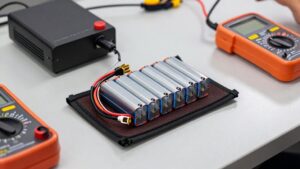
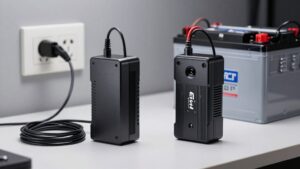
How Long Do RC LiPo Batteries Last? Cycles, Runtime and Lifespan
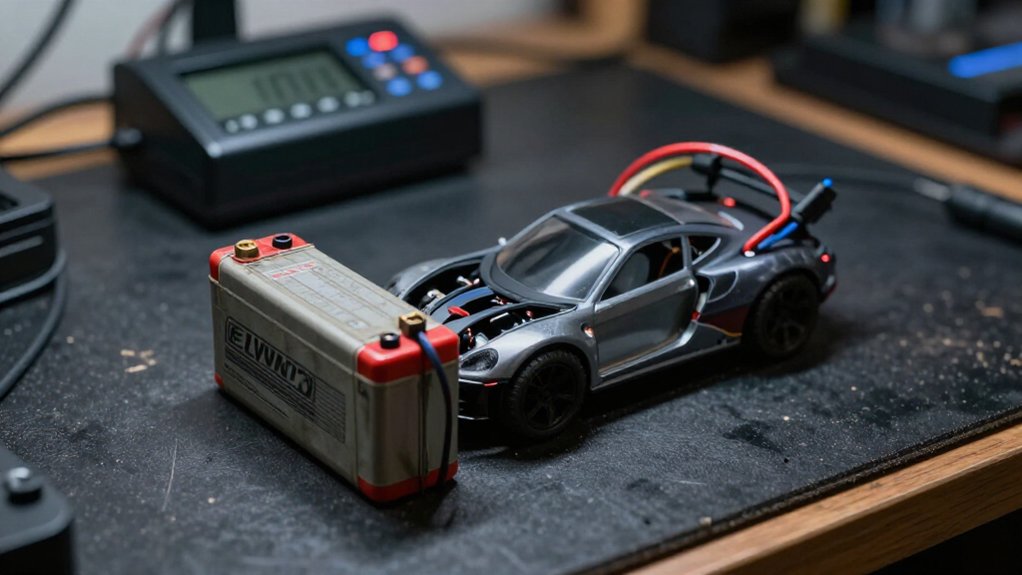
Your RC LiPo typically lasts about 150 to 300 charge cycles, though careful use may extend service toward 500; no total is guaranteed. Capacity gradually falls, so an aging pack delivers less runtime.
A 5,000mAh pack may power a 1/10-scale vehicle for roughly 15 to 30 minutes, depending on terrain, throttle, load, temperature, and battery condition.
You’ll get a lifespan estimate by tracking cycles, monitoring capacity, and following safe charging and storage practices; voltage, chemistry, and warning signs matter.
Typical LiPo Cycle Counts
An RC LiPo battery typically lasts about 150 to 300 charge–discharge cycles, though a well-maintained pack may approach 500.
You should treat cycle count as a more useful lifespan measure than calendar age because each cycle represents using the pack and then recharging it. Battery quality and operating conditions affect the total you can expect. As repeated cycling progresses, chemical aging gradually reduces the pack’s available capacity, so cycle count doesn’t mean the battery remains at its original performance.
You can shorten its service life by over-discharging, overheating, overcharging, or storing it poorly. To approach the upper end of the range, follow the manufacturer’s charging and storage guidance, avoid excessive heat, and don’t drain the pack beyond its specified voltage limits. These practices won’t guarantee a cycle total, since pack construction and use patterns vary. Track cycles consistently to compare aging between packs.
LiPo Capacity and Runtime
Cycle count tracks battery aging, while capacity helps estimate how long a LiPo will power your RC vehicle.
Capacity, measured in milliamp-hours (mAh), describes stored charge. Under similar conditions, a 5,000mAh pack generally lasts longer than a 3,000mAh pack, but demand changes the result. Aggressive throttle, high current, heavy loads, rough terrain, wind, and cold temperatures can all shorten operation. A 5,000mAh pack in a 1/10-scale truck may deliver 20 to 25 minutes of casual driving, versus 10 to 15 minutes on a hard track. Vehicle type matters: racing drones may run about five minutes, while rock crawlers can approach 30. As your pack ages, capacity gradually declines, so it may provide less runtime than when new.
| Vehicle | Typical runtime | Use |
|---|---|---|
| Truck | 20 to 25 min | casual driving |
| Truck | 10 to 15 min | hard track |
| Drone | about five minutes | racing |
Your setup and battery condition can shift these figures substantially between runs.
Estimating Runtime From Capacity
Estimating Runtime From Capacity
To estimate runtime, use capacity as a rough guide: under similar conditions, a 5,000mAh pack generally runs longer than a 3,000mAh pack. Capacity, measured in milliamp-hours (mAh), tells you how much charge the battery holds, but it doesn’t specify a fixed running time.
For a 5,000mAh pack in a 1/10-scale vehicle, expect roughly 15 to 30 minutes; a truck may deliver 20 to 25 minutes of casual driving or 10 to 15 minutes on a hard track. Use these ranges to plan, not as guarantees. Your actual result depends on vehicle weight, terrain, throttle use, and temperature.
Power demand explains the spread: racing drones may fly for about five minutes, while rock crawlers can run near 30 minutes. You’ll get a better estimate by matching examples to your driving style.
LiPo Storage Voltage Guidelines
For storage beyond a few days, set your LiPo to about 3.8 V per cell, using a balanced charger’s storage mode to bring cells to similar voltages. Check each cell’s voltage before storage, and follow the manufacturer’s guidance. Keep your pack in a cool, dry place away from sunlight and temperature extremes, and inspect it for swelling or leaks before use.
Ideal Storage Voltage
If you’ll store a LiPo for more than a few days, bring each cell to about 3.8 V rather than leaving the pack fully charged or depleted.
For longer storage, target this midrange state of charge to limit stress on the cells. Use your charger’s storage setting to bring the pack toward the recommended level automatically. Choose a balanced charger, which adjusts cells together so they finish at similar voltages.
After charging, keep the battery in a cool, dry place away from direct sunlight and extreme temperatures. Follow the manufacturer’s storage instructions, since pack requirements can vary. Before use, inspect the pack for swelling or other damage; don’t use a damaged LiPo. This helps protect long-term cell health.
Checking Cell Voltage
Before storing a LiPo, check each cell’s voltage: aim for about 3.8 volts per cell, or 22.8 volts for a 6S pack. That total comes from multiplying the cell count by the target voltage: six cells × 3.8 volts equals 22.8 volts. Don’t rely on the pack’s total reading alone, because individual cells can differ. Use a balance charger and review its per-cell readings; it helps you compare cell levels carefully.
If the pack needs adjustment for storage, select the charger’s storage setting. For storage lasting more than a few days, bring cells near 3.8 volts each instead of leaving the pack fully charged or discharged. Never charge a cell above 4.2 volts; exceeding that limit can damage it.
Safe Storage Practices
When your LiPo will sit unused for more than a few days, set it to about 3.8 volts per cell rather than leaving it fully charged or discharged. Use your charger’s storage setting to bring each cell to that target, then verify the pack with a balanced charger so cell voltages remain consistent. Never exceed 4.2 volts per cell while charging; storage voltage isn’t a charging limit.
Choose a cool, dry storage location away from direct sunlight, moisture, and extreme temperatures. Keep the pack protected from physical damage and check it before putting it away.
Don’t store or continue using a battery that’s swollen, leaking, or physically damaged. Isolate it safely and follow the manufacturer’s disposal guidance rather than placing it in household trash.
Cell Chemistry Differences
LiPo means lithium polymer, a chemistry that gives your RC vehicle or drone high power in a lightweight package. Compared with LiPo, Li-ion packs can offer different capacities and voltage, so you should match the chemistry and cell design to your application. These differences also affect battery lifespan, which depends on how you use and maintain the pack.
LiPo Chemistry Basics
Although LiPo and lithium-ion batteries use related lithium-based chemistry, RC LiPo packs are commonly selected for high-power applications such as drones. That choice gives you a lightweight, compact pack capable of delivering substantial power to an RC vehicle. Treat voltage as a cell-level limit: nominal voltage is about 3.7 V, and you shouldn’t charge a cell above 4.2 V.
| Measure | Meaning | Practical implication |
|---|---|---|
| Cell voltage | 3.7 V nominal; 4.2 V maximum | Respect charging ceiling |
| 6S pack | 6 × 3.7 V | 22.2 V nominal |
Series-connected cells raise pack voltage; a 6S configuration totals 22.2 V nominal. As you use the pack repeatedly, its mAh capacity gradually declines, shortening runtime. Track capacity and follow the cell limit to protect useful service life for dependable operation.
Li-ion vs. LiPo
For RC applications, the choice between LiPo and Li-ion often reflects a trade-off between power delivery and endurance.
LiPo means lithium polymer, while Li-ion names lithium-ion cells. Both use rechargeable lithium-based chemistry, but their cell formats and pack designs differ. When you need a lightweight pack with power delivery, LiPo suits drones that demand response and maneuverability.
Li-ion packs can support long-endurance builds, but the pack configuration matters. For example, a CNHL 6S1P pack with six BAK 65E cells is rated at 6,350 mAh and 137.16 Wh. A comparable 6S1P pack with six BAK 50D cells is rated at 5,000 mAh and 108 Wh. These figures show you can’t predict runtime from chemistry alone: capacity, energy, pack design, and vehicle power demand shape it.
Chemistry and Battery Lifespan
A LiPo pack’s lifespan is measured in charge to discharge cycles, not simply months or years. Typical packs deliver about 150 to 300 cycles; careful maintenance may push yours toward 500. Capacity declines as you use the pack: one example may retain only 75% of its rated capacity after roughly 200 discharge cycles.
| What you do | Effect on lifespan |
|---|---|
| Avoid heat, overcharging, deep discharges | Slows capacity loss |
| Use, store, and balance carefully | Helps preserve cycles |
Heavy current draw, prolonged discharging, overcharging, heat, and improper storage accelerate deterioration. You’ll notice shorter runtime as capacity falls. Swelling, unusual heat, or repeated cell imbalance are warning signs; stop using the pack and inspect it safely. Chemistry sets the baseline, but your habits influence LiPo longevity in your model overall.
6S LiPo Voltage Sag
Under load, a 6S LiPo’s voltage temporarily drops, a behavior known as voltage sag.
A 6S pack connects six cells in series, giving you 22.2 V nominal and 25.2 V fully charged (4.2 V per cell). When your motor demands high current during hard acceleration, or your drone climbs into wind, pack voltage can fall noticeably. Cold conditions increase internal resistance, so you may see greater sag, reduced performance, and shorter runtime.
A higher C-rating supports stronger current delivery, but it won’t prevent sag when you heavily load or use a worn battery. Monitor pack and cell voltage under load. If sag becomes severe or any cell nears your ESC’s low-voltage cutoff, reduce power and land or stop using the model. This helps prevent over-discharging and protects battery capacity.
LiPo Swelling Warning
Voltage sag can indicate excessive load or battery wear, but visible swelling is a more urgent warning: treat a puffed LiPo as damaged, stop using it immediately, and don’t charge or discharge it.
| Sign | What you should do |
|---|---|
| Swelling | Stop using; don’t charge or discharge |
| Heat or balance trouble | Treat pack as suspect |
| Leaks or damage | Follow local disposal guidance |
Swelling can reflect internal deterioration, as can unusual heat or difficulty balancing cells. Inspect your pack periodically for puffing, leaks, and damage. If you spot a warning sign, discontinue use and handle the battery. Arrange disposal according to local LiPo recycling or hazardous-waste guidance; don’t place it in household trash unless local rules permit it.
Avoiding LiPo Over-Discharge
To protect cycle life, don’t run a LiPo until it’s fully drained; recharge it before the pack reaches an unsafe low voltage. Use your vehicle’s ESC cutoff or a LiPo alarm to track voltage under load and end a run before cells fall below the pack’s permitted limit.
- Set the ESC’s low-voltage cutoff according to the battery maker’s discharge limit; settings aren’t universal.
- Check an alarm’s threshold and respond promptly; a warning won’t protect the pack if you keep driving.
- If you suspect over-discharge, measure every cell before charging and follow the manufacturer’s recovery guidance.
Over-discharging accelerates wear and reduces useful cycle life, so treat cutoff as a safeguard, not a target. Stop while the pack retains a safe reserve, then recharge it promptly.
Inspect LiPo Connectors Regularly
Inspect LiPo connectors regularly for loose wires, bent or damaged contacts, corrosion, or debris that can compromise a secure connection. Before you inspect or clean them, disconnect the pack and follow the battery and connector manufacturers’ instructions.
Check that each connector sits firmly and that its contacts remain clean and dry; contamination or a loose fit can increase resistance and disrupt power delivery. After use or charging, feel for unusual heat near the connection, which may signal a poor or damaged contact. When unplugging, grip the connector rather than pulling the wires, since strain can loosen wire-to-terminal joints. Don’t use a melted, cracked, or badly worn connector; replace it with a compatible type before reuse to avoid unreliable power and excessive heat during operation.
Conclusion
Your RC LiPo’s lifespan depends on cycle count, storage habits, discharge depth, and how you handle each pack. Estimate runtime from capacity and current draw, then leave a reserve. Store cells at the recommended voltage, and account for chemistry differences and 6S voltage sag under load. Don’t over-discharge cells, and inspect connectors. If you spot swelling, stop using the pack and dispose of it safely. With careful charging and monitoring, you’ll get more dependable service.
RC Battery Runtime & Voltage Calculator
Get LiPo or NiMH pack voltage (nominal and full), estimated runtime and C-rating current from cells, mAh, C and average amp draw.
LiPo Charge Time & Charger Wattage Checker
Estimate how long a LiPo pack takes to charge and check whether your charger's watts and amps cover the charge current you enter.
Nitro Fuel Runtime & Cost Calculator
Enter your tank size, timed minutes per tank, sessions and fuel price to estimate nitro fuel used and its cost per session and per month.