How to Store RC Cars Long Term: Batteries, Tires and Shocks
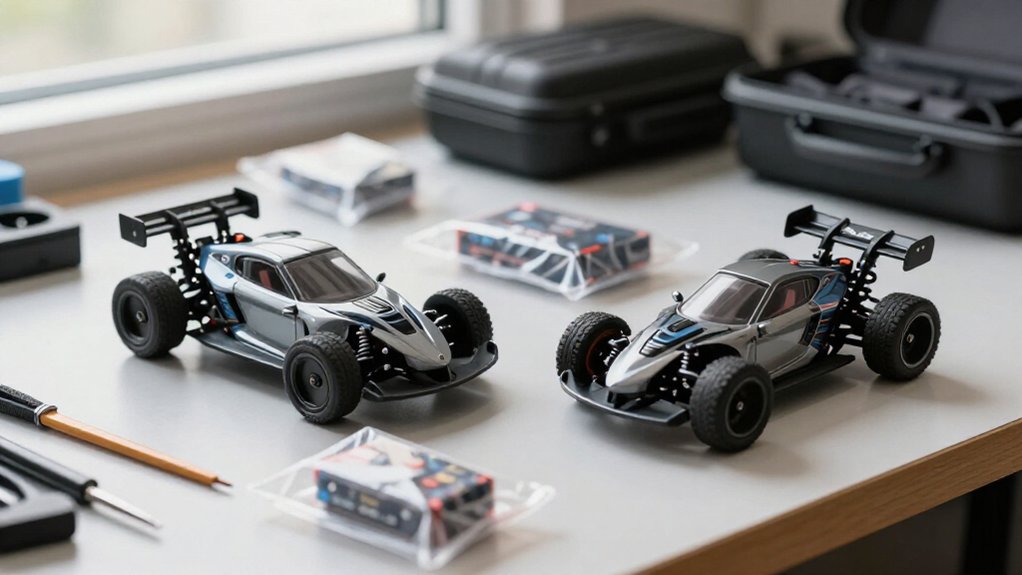
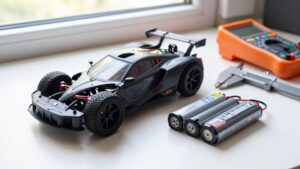
Before storage, remove the battery, clean and fully dry your RC car, then support its chassis on a stand with tires clear and suspension arms hanging freely.
For LiPo packs, use a checker to inspect each cell, then set storage voltage to 3.8 to 3.85 volts per cell with your charger; label the pack and date.
Store batteries indoors. Check shock shafts for corrosion and record ride height; further checks support your return to driving.
Preventing Tire Flat Spots
To prevent tire flat spots during long-term storage, support the chassis on an RC stand, wooden block, or box so the tires don’t touch the shelf.
This support keeps the vehicle’s weight off the rubber, which can take a permanent set when a heavy 4WD basher rests on its tires for months. Keep the tire carcasses unloaded to reduce compression of the internal foams; prolonged loading can deform and degrade them, affecting tire shape and performance after storage.
Also let the suspension arms droop so the shocks aren’t supporting the car’s weight. Set the support on a level, stable surface, position it beneath the chassis, and verify it can’t tip or shift. Confirm tires stay clear before leaving stored; this also limits spring compression.
Lipo Storage Voltage Checker
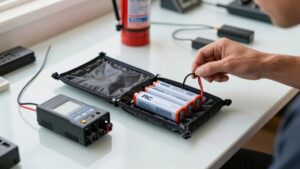
Before storing a LiPo, use a LiPo-compatible voltage checker to read each cell individually and confirm the pack is balanced. A checker measures voltage, but it can’t change it; use your charger’s Storage mode to bring each cell to about 3.8–3.85 volts.
Use these pack totals as a cross-check:
- 2S: 7.6–7.7V.
- 3S: 11.4–11.55V.
- 4S: 15.2–15.4V.
- Compare individual readings; a total alone can hide imbalance.
Before you connect or store the pack, inspect its condition and recheck cell voltages periodically during storage. Don’t store or use a battery that’s swollen, damaged, unusually warm, or severely imbalanced. If readings differ substantially, stop and follow the battery maker’s guidance rather than relying on the checker alone. Keep the pack away from combustible materials.
Shock Shaft Corrosion Checks
After setting the LiPo to storage voltage, inspect each shock shaft for rust, pitting, scratches, or rough spots that could damage its seal. Wipe dirt and moisture from each shaft, then dry it completely; trapped water accelerates corrosion. Move each shaft through full travel. Binding or scraping can signal damage or contamination; don’t force it.
| Check | Action |
|---|---|
| Surface | Replace corroded or scratched shafts. |
| Movement | Confirm smooth, full travel. |
| Storage | Support car; let arms droop. |
A damaged shaft scores the seal during compression and may cause oil leaks; replace it before storage. Set the model on a stable stand, with suspension arms hanging freely. This reduces sustained shock load while stored. Check each arm droops without contacting the stand or nearby objects.
Remove Batteries and Clean Chassis
Before storage, remove the battery and disconnect its leads to reduce the risk of damage. Take off the body shell, then brush or carefully blow loose dirt and debris from the chassis, using low-pressure air near bearings. Wipe away any residue and dry the chassis, connectors, and battery tray completely before storing the car.
Remove Batteries First
Pull the battery before storing the RC car, and use the charger’s Storage mode to bring a LiPo to about 3.8–3.85 volts per cell; store other battery chemistries at their recommended levels.
Remove the body shell and battery before cleaning, especially after snow, salt, or wet conditions. Brush or blow off dirt, sand, and grass, then wipe the chassis and clean suspension arms, bearings, driveshafts, and the battery tray. Use low-pressure air around bearings so you don’t force contaminants past seals or spin them.
Dry the vehicle completely, including connectors, crevices, and electronics, before packing it away; never seal a damp car in a storage tub. If the car is cold, let it warm gradually to room temperature before cleaning or storage to limit condensation.
Disconnect Battery Leads
Disconnect the battery leads and remove the pack before cleaning or storing the RC car; store it separately at the level recommended for its chemistry.
For LiPo packs, select Storage mode on your charger and let it set each cell to about 3.8 to 3.85 volts. Don’t leave the pack fully charged or discharged for months. Check the manufacturer’s guidance for other chemistries, and use a charger suited to the pack.
Remove the body shell to access the chassis and battery tray. If the car has encountered snow, salt, or moisture, keep the battery out while you clean and dry the chassis, connectors, and crevices completely. Don’t trap residual moisture inside a storage tub; leave the vehicle open until it’s fully dry. Then store the car in a cool, dry place.
Brush Away Loose Dirt
With the battery removed, take off the body shell and let a cold RC car warm gradually to room temperature before cleaning to limit condensation. Brush or blow away loose mud, sand, grass and dust before storage, especially after exposure to snow, salt or wet conditions. Use a soft brush around suspension arms, hinge pins, hubs, bearings, driveshafts and the battery tray, where debris can remain trapped.
If you use compressed air, keep pressure low near bearings and direct debris away from connectors and moving parts. Wipe chassis surfaces with a clean cloth; for stubborn grime, choose an RC-specific degreaser sparingly. Don’t add excess lubricant during cleanup, because it can attract dust. Dry connectors, crevices, wheels and components completely before you store the car.
Clean the Chassis Carefully
Before cleaning the chassis, remove the battery, especially if the car has been exposed to snow, salt, or water, and take off the body shell. Use a soft brush or controlled air to clear dirt, sand, grass, and track dust from the chassis. Work methodically around suspension arms, hinge pins, hubs, bearings, driveshafts, differentials, steering links, and the battery tray; trapped grit can accelerate wear or restrict movement.
Use modest air pressure to protect seals and wiring. For oily deposits, apply an RC-specific degreaser sparingly and follow your vehicle manufacturer’s instructions. Keep cleaner away from components it could harm, and don’t spray directly into electronics or sealed bearings. Inspect cleaned areas for loose fasteners, damaged wires, or binding links, and fix problems before storage.
Dry Before Storage
After driving in snow, ice, salt, or wet conditions, remove the battery and body shell before cleaning the RC car. Clean mud, sand, grass, and dust from the chassis, suspension, bearings, driveshafts, and battery tray. Wipe the chassis and body, then dry wheels, tires, connectors, and crevices completely. Never seal a damp car in a storage tub.
Use low-pressure compressed air to clear debris and moisture from hard-to-reach areas, including around bearings; keep airflow gentle to avoid forcing contaminants into seals. If the car feels cold, let it warm gradually to room temperature before storage. Rapid temperature changes can cause condensation on metal parts and electrical contacts.
Check connectors and battery tray are fully dry before storage to prevent moisture-related electrical faults.
Cold Garage Storage
A cold garage can expose your RC car and batteries to freezing temperatures, dampness, and condensation, so choose a stable indoor location when possible. If you must use the garage, store batteries separately in a suitable temperature range and keep LiPo packs near 3.8–3.85 V per cell in a fire-resistant container. Keep the car clean and dry, off concrete, and supported on a stand to unload the tires and suspension.
Protect Batteries From Freezing
If your garage can drop below freezing, store RC batteries indoors in a cool, dry, temperature-stable spot, ideally around 10 to 25°C (50 to 77°F), away from heaters and direct sunlight.
For long-term storage, remove LiPo packs from your car and use your charger’s Storage mode to set them to about 3.8 to 3.85 volts per cell. Don’t leave packs in a vehicle or unheated garage, where temperatures can fall below 0°C (32°F). If a battery has been exposed to cold, let it return to room temperature before charging; charging below freezing may be unsafe.
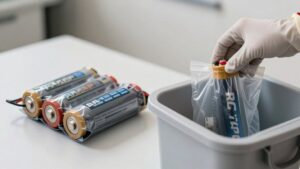
Keep packs in a nonconductive, fire-resistant container, away from anything that could short their terminals. Inspect them periodically for swelling or physical damage. Don’t charge or use a swollen or damaged pack; isolate it and follow your battery maker’s disposal guidance.
Control Moisture And Condensation
Because a cold garage can cause condensation and corrosion, store your RC car in a cool, dry, temperature-stable indoor area. Keep it away from freezing conditions, heaters, and direct sunlight, which can create temperature extremes. Before storage, dry the chassis, tires, connectors, crevices, and electronics completely; moisture trapped in metal parts or connections can promote corrosion and faults.
Don’t seal a damp vehicle in a storage tub. If you’ve brought the car in from a cold garage, let it warm gradually to room temperature so surfaces and electronics don’t collect condensation. Use low-pressure air carefully to clear water from hard-to-reach areas, especially around bearings; excessive pressure can force moisture deeper. Then leave the car in a dry place until it dries fully.
Insulate Tires And Shocks
For cold-garage storage, lift the RC car onto a stand or block so the tires clear the shelf and the suspension arms hang freely. This keeps the car’s weight off the rubber, helping prevent flat spots and compressed tire foams during months of storage. Free-hanging arms reduce load on shock springs, limiting sag and ride-height changes.
Clean tires and suspension parts before storage, then dry them completely; trapped moisture can corrode metal. Choose a cool, dry location with stable temperatures. Avoid freezing conditions and temperature swings, which can cause condensation. Keep the car away from heaters and direct sunlight. Don’t seal damp tires or shocks in airtight coverings; let moisture escape. Confirm the stand supports the chassis securely without stressing bodywork or suspension links.
Stable Ride Height Checks
Before storing your RC car, measure and record its ride height on level ground so you can identify changes later. Support the chassis on a stable stand, block, or box, positioning it so the suspension arms droop and all four tires remain clear of the shelf. Removing the car’s weight from the tires helps prevent flat spots, while unloading the suspension reduces shock-spring sag during storage.
After storage, place the car on level ground and compare the measured ride height with your recorded value. Check for sagging springs and suspension components that bind; move each corner gently through its travel without forcing it. If height changes, inspect shocks, springs, and suspension for wear or damage before running the car. Confirm free suspension movement again.
Damaged Battery Connectors
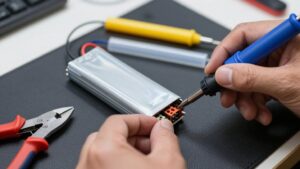
Inspect the battery connector before long-term storage, checking for corrosion, looseness, exposed wires, or other damage. Disconnect the battery from your RC car for storage. Keep the connector clean and dry, since moisture and corrosion can disrupt charging and reliable power delivery.
Cover exposed contacts with an insulating cap or nonconductive cover to reduce the risk of an accidental short circuit. Don’t charge or operate a battery if its connector is damaged, loose, or has exposed wiring. Arrange repair or replacement according to the battery or vehicle manufacturer’s guidance; don’t improvise a fix that could compromise the connection.
After storage, inspect the connector before charging. If you see corrosion or damage, or the connector feels unusually warm, stop and address the fault before use.
Protecting Receiver Antennas
Protect the receiver antenna from damage and signal problems during long-term storage. Before you put the car away, clean and dry the antenna, then inspect its insulation for cuts, cracks, or exposed wire. Don’t store a damaged antenna; repair or replace it first.
- Route the antenna through its original tube or holder, keeping it straight and clear of moving parts. Don’t bend, pinch, or crush it.
- Secure the tube and cap so the antenna stays covered throughout storage.
- Keep the receiver and antenna in a dry, dust-free location away from temperature extremes.
- Before driving, inspect the antenna and test steering, throttle, and failsafe operation.
If signal response seems inconsistent, stop and correct the fault before operation; reliable antenna performance supports safe control at range.
Label Battery Storage Dates
Once the receiver antenna is secured, label each battery or its container with the storage date, chemistry, and storage voltage. This date tracks storage time and supports later checks. For a standard LiPo pack, use Storage mode to set about 3.8–3.85 V per cell; write the storage voltage beside the chemistry and date.
Also note your last inspection date. Check every stored pack every one to two months for physical damage, swelling, and cell imbalance. Before charging a pack that’s been stored for several months, inspect it and measure its voltage. Compare those readings with your records; investigate unexpected changes before charging.
Conclusion
Before you shelve your RC car, remove its batteries, clean the chassis, and store LiPo packs at the manufacturer’s recommended storage voltage; verify it with a checker and label each pack’s date. Support the tires to prevent flat spots, set a stable ride height, and inspect shock shafts for corrosion. In a cold garage, protect receiver antennas and check battery connectors for damage. Recheck these items periodically, and don’t ever charge or use damaged packs.