Does mAh Matter for RC Cars? Runtime vs Weight Trade-Offs
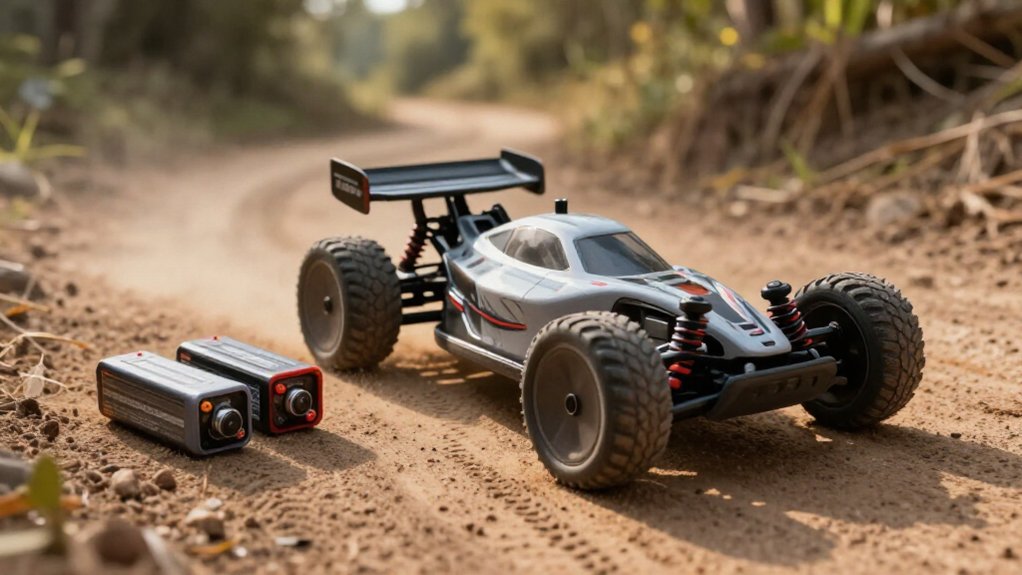
Yes, mAh matters: a higher-capacity pack usually extends runtime, but it can add weight that blunts acceleration and changes handling. Choose capacity for your session, terrain, and driving style; a 5,000mAh battery typically outlasts a 2,200mAh pack, though runtime won’t rise in direct proportion.
Compare mAh per gram only across packs with matching chemistry and voltage. Before buying, check discharge capability, ESC limits, connector, dimensions, and temperature guidance. The details ahead clarify each trade-off.
mAh’s Runtime-Weight Trade-Off
Although a higher mAh rating generally extends runtime, a 5000mAh pack will usually outlast a 2200mAh pack in the same RC car. The added capacity often brings more size and weight. That trade-off can affect fit, handling, and acceleration. A heavier or larger pack may shift chassis balance, slow response, or fail to clear your battery tray and mounting points.
Match capacity to your session length, then check dimensions and retention before installation. Runtime won’t rise in direct proportion to mAh: your driving style, terrain, vehicle weight, motor demand, and temperature also shape power use. If you choose more capacity than needed, added mass may offset part of the endurance gain. Compare packs in comparable conditions, and select one that delivers useful runtime without compromising control or acceleration.
mAh per Gram
To compare battery capacity against weight, divide mAh by grams to find the pack’s mAh per gram. A higher ratio suggests more potential runtime for a given battery weight, but your car, terrain, and driving style still matter. Compare packs with the same chemistry and voltage; this ratio won’t confirm compatibility or adequate current delivery.
A larger pack can add capacity yet score lower when its weight rises faster. Treat the result as a screening metric, not a runtime guarantee. Check dimensions and total weight before choosing, because the pack must fit and added mass can offset potential runtime gains.
| Pack | Capacity per gram |
|---|---|
| A | 20,000 mAh / 500 g = 40 |
| B | 24,000 mAh / 700 g = 34.3 |
| Meaning | Higher ratio favors charge per gram |
| Check | Match chemistry, voltage, current, fit |
Battery Weight on Track
The mAh-per-gram ratio helps compare capacity to battery mass, but added weight also affects performance on track. A higher-capacity pack can extend your run, yet its added mass may blunt acceleration, change cornering response, and reduce agility. A 5000mAh battery lasts longer than a 3000mAh pack, but it can mean slower launches or less precise changes.
Choose enough capacity for your session without carrying unnecessary mass, and verify the pack fits the battery tray. Compare packs on your track rather than relying on capacity alone. Track runtime and handling under consistent conditions; your motor, terrain, driving style, and vehicle weight all affect power use and performance. For long runs, extra runtime may justify added mass; a lighter pack may deliver more responsive handling when racing.
LiPo vs. NiMH Packs
When comparing LiPo capacity and weight, weigh its higher power output against the handling effects of a larger pack. NiMH packs offer a beginner-friendly runtime trade-off, but their lower voltage per cell means you should compare cell counts, not chemistry names alone. Before choosing a pack, check your car’s manual and ESC compatibility, then balance runtime, acceleration, and weight.
LiPo Capacity And Weight
A higher-capacity LiPo stores more energy and generally extends runtime, a 5000mAh pack will usually outlast a 2200mAh pack in the same RC car. That advantage comes with a physical trade-off: higher capacity often requires a larger, heavier pack. You’ll feel added mass in slower acceleration and less responsive cornering, especially in a light chassis.
Check tray dimensions and secure fit; an oversized pack isn’t a safe upgrade. Choose capacity to balance session length against handling. LiPo offers higher power output and a stronger power-to-weight ratio than NiMH, supporting sharp response without equivalent mass. Yet runtime also depends on driving style, terrain, vehicle weight, and motor demand, so mAh isn’t a guarantee. Check fit and weigh the performance cost before choosing your pack carefully.
NiMH Runtime Trade-Offs
Although higher-mAh NiMH packs can extend runtime, their added weight may blunt acceleration and alter handling. You should judge that gain against the vehicle’s power demand, not capacity alone. Each NiMH cell supplies about 1.2V, while each LiPo cell provides 3.7V nominal; pack voltage and electronic speed controller compatibility thus shape performance comparisons.
LiPo packs typically deliver more power and stronger acceleration, but you’ll need greater care when charging, storing, and handling them. NiMH suits casual driving with less maintenance, while runtime still varies with your driving style, terrain, vehicle weight, and motor load. A larger pack won’t guarantee a fixed or proportional increase: sustained throttle or difficult terrain can raise current draw and shorten each run. Assess run time under comparable conditions.
Choosing The Right Pack
Which pack suits your RC car depends first on compatibility: confirm the manual and ESC support the chemistry and voltage, since LiPo cells provide 3.7V nominal each and NiMH cells about 1.2V.
LiPo packs deliver strong power and acceleration with a favorable power-to-weight ratio, but you’ll need careful charging, storage, and handling. NiMH packs suit beginners because they’re generally lower-maintenance, making them practical for compatible entry-level cars. Compare the trade-off against your performance goals: LiPo’s lower weight can sharpen acceleration, while a high-capacity pack may add mass and alter handling.
Higher mAh offers more potential runtime, but actual endurance also depends on driving style and terrain. Before buying either chemistry, check pack voltage, dimensions, connector, and charger compatibility. Never exceed your ESC’s voltage limit.
Temperature and Terrain Effects
Hot weather can increase energy demand, so you should monitor pack temperature to protect performance. Cold conditions reduce available battery capacity, though LiPo packs generally handle low temperatures better than NiMH packs. Rough terrain and grass raise motor load, draining your pack faster than smooth pavement.
Heat Increases Energy Demand
When you drive in hot weather or over demanding terrain, battery temperature and motor load can rise, shortening runtime.
Hot conditions can push a pack toward higher operating temperatures while grass, loose surfaces, and steep routes demand more torque than smooth pavement. That extra load raises current draw, so your usable energy drains faster. Hard acceleration and sustained high speeds compound the effect; your throttle habits can change runtime as much as capacity does. Vehicle mass and tire diameter also alter drivetrain demand, so a 5000mAh battery won’t guarantee the same run time across setups.
Compare packs under terrain, weight, and driving conditions. Monitor battery temperature during runs, and follow the manufacturer’s guidance. Stop using any pack that becomes unusually hot or shows damage.
Cold Reduces Battery Capacity
In cold weather, your RC battery may deliver less usable capacity and shorter runtime than it does in mild conditions. The size of the loss depends on chemistry, pack condition, and driving load.
During hard acceleration, increased voltage sag can reduce power delivery and make cutoff arrive sooner, even when the pack’s rated mAh hasn’t changed. LiPo packs generally retain performance better than NiMH packs in low temperatures, but you should warm either type gradually before use and stay within the manufacturer’s temperature limits. Don’t assume a higher mAh rating will fully recover cold-weather runtime: output varies, and added capacity can mean extra weight. Choose a compatible pack that fits the battery tray and preserves handling, then compare runtime under temperatures and driving conditions.
Rough Terrain Drains Batteries
Why does rough terrain shorten runtime? Grass, mud, and loose dirt increase rolling resistance and force your motor to work harder than it does on pavement. Each acceleration over uneven ground also demands higher current, so your pack loses charge faster and runtime can fall.
A higher-mAh battery may extend a run, but it won’t deliver a fixed gain: added capacity adds weight, which raises the load your car must move across rough surfaces. Match capacity to the terrain and driving style rather than judging mAh alone.
Temperature matters, too. LiPo packs generally sustain performance better than NiMH in cold conditions, but warm them carefully before driving. In heat, monitor pack temperature, choose thermal protection when available, and stop if the battery becomes unusually hot.
Capacity for Short Sprint Sessions
For short sprint sessions, a 2200mAh pack may be a better fit than a 5000mAh pack: it stores less energy and runs for less time, but its lower weight can preserve acceleration and handling.
Match capacity to session length rather than maximizing mAh. A lighter pack reduces mass your motor must accelerate. The trade-off is a smaller energy reserve and an earlier stop.
In the same car, a 5000mAh pack runs longer, but runtime also varies with throttle use, terrain, motor demand, and vehicle weight. Choose the smallest pack that comfortably covers your planned session. Check its dimensions against the battery tray and confirm it meets your vehicle’s discharge requirements. That way, you avoid carrying unused capacity and preserve response during short, high-intensity runs.
ESC Voltage Compatibility
Before choosing a pack, check the ESC label or manual for its maximum voltage and supported cell count.
A 2S LiPo supplies 7.4V nominal, while a 3S pack supplies 11.1V. If you install 3S on an ESC rated only for 2S, excess voltage can overheat components or permanently damage the controller. Check the charged limit too: LiPo cells reach 4.2V each, so a 2S pack can reach 8.4V and a 3S pack 12.6V.
Higher voltage raises motor speed and can improve acceleration, but only when your ESC, motor, and electronics support that configuration. A pack’s nominal voltage doesn’t establish safe compatibility; compare both operating and charging voltage ratings before you choose capacity. If the system isn’t rated for it, don’t use it.
Overlooking Connector Compatibility
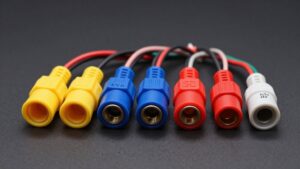
A battery can match your RC car’s voltage and still be unusable if its connector doesn’t fit. Before buying, compare the pack plug with your vehicle and ESC requirements: CNHL G+Plus 6S uses EC5, while CNHL Speedy Pizza and Long Range packs use XT60. A physical connection alone doesn’t prove electrical suitability.
- Identify both connector types and confirm polarity.
- If you need an adapter, verify its wiring and current capability; don’t assume any adapter is safe.
- Match the charger connection to the battery and follow both manufacturers’ instructions.
A poor connection can interrupt power or add resistance, undermining acceleration and runtime. Check the manual or ask an established hobby shop if you’re unsure. Treat connector compatibility as part of the complete electrical system, not a minor detail after choosing mAh and voltage. This keeps power delivery predictable during demanding runs.
Check Your Pack’s Dimensions
Even with the correct connector, a battery won’t work if it exceeds your RC car’s tray or mounting limits.
Measure the pack’s length, width, and height, then compare them with your tray and the manufacturer’s mounting limits before buying. Don’t assume a higher-mAh pack will fit just because its voltage and connector match; added capacity may mean a larger case. Check case style and orientation: soft-case and hard-case packs can differ in dimensions despite similar electrical specifications.
Use your manual or manufacturer’s specifications to confirm fit. Leave room to secure the pack and route wires without pinching or obstructing them. A tight installation can let the battery shift or interfere with vehicle components, undermining balance and control. Choose capacity within those physical limits safely.
Conclusion
Choose your RC battery by balancing mAh against mass, not by chasing the highest capacity. More mAh can extend runtime, but extra weight may slow acceleration, reduce handling, and strain components. Match chemistry, voltage, connector, and dimensions to your vehicle and ESC, then account for temperature, terrain, and session length. For short sprints, a lighter pack may deliver better lap times than a larger one. Test both setups on track and compare runtime, speed, and control objectively.