RC Glow Plug Heat Range Chart: Hot, Medium and Cold Plugs Matched
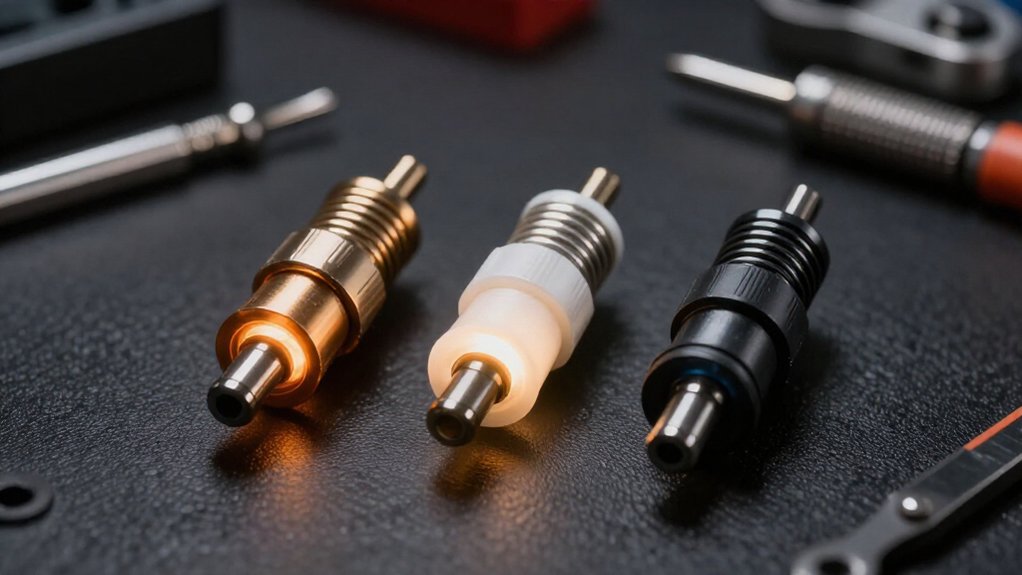
Choose your RC glow-plug heat range by matching fuel nitromethane, compression, and operating temperature—not engine size or weather alone.
Low- or no-nitro fuel often favors a hotter plug; higher nitro, compression, or head temperature generally calls for a colder plug. A standard plug suits sport setups.
Heat labels vary by brand, so charts are approximate. Verify your specified plug type and reach.
You’ll find how idle-bar design, filament condition, break-in, and symptoms guide selection.
Nitromethane Content Effects
Nitromethane content is a useful starting point when choosing a glow-plug heat range, but it isn’t the only factor. With low- or no-nitro fuel, you’ll generally benefit from a hot plug. Its heat can support quick starts and steadier idling, particularly in cold weather.
As nitro content rises, a cold plug usually becomes the better choice because it helps manage conditions in high-nitro applications. Your engine’s high compression or elevated head temperatures further favor a cold plug. For general sport flying, a standard plug offers a practical baseline if your fuel and engine setup don’t favor a hotter or colder range. Treat nitro percentage as a guide, not a fixed rule: consider compression and operating temperature together when selecting the plug, then assess engine behavior.
Idle-Bar Plug Compatibility
An idle-bar plug places a small wire across the glow element to help shield it from raw fuel at low throttle. If your engine loads up and stalls when you throttle back, this design may sustain idle during taxiing or low-throttle flight.
| Condition | Your choice | What it means |
|---|---|---|
| Frequent taxiing | Consider idle-bar | May reduce loading |
| Four-stroke engine | Use four-stroke plug | Shielded, long reach |
Check plug reach and head compatibility before installation; excessive reach can place the element or bar in the piston’s path. A four-stroke plug offers a shielded, long-reach alternative when you want to avoid an exposed idle bar, but use it only in a compatible four-stroke engine. Inspect the bar regularly for looseness or damage: if it comes free, it can strike the piston and cause serious engine damage. Don’t treat an idle-bar design as a substitute for checking fit and condition. A careful fit check protects the engine you’ve tuned and prevents a compatibility error from becoming a costly failure.
Glow Plug Filament Materials
Beyond plug fit and construction, filament materials also affect heat range. Glow-plug filaments use platinum-based elements that react with methanol in your fuel, helping the coil stay hot after you remove the driver. Alloy composition can affect heat behavior. Assess them as interacting variables.
You should also consider filament diameter and length, as well as coil shape, cavity dimensions, and coil position. A thicker wire may produce a colder plug, while thinner wire may run hotter, but that relationship remains uncertain; don’t treat it as a rule.
Inspect the filament when evaluating condition: a healthy coil appears clean, evenly wound, and centered in the plug. Sagging, stretching, distortion, or a break can indicate damage.
Brand-Specific Heat Range Scales
You can’t compare O.S., Novarossi, and Enya heat numbers as if their labels shared one scale. Check each brand’s ratings, such as O.S. plug types and Enya’s numbered range, before interpreting “hot,” “medium,” or “cold.” Match plugs across brands by engine and fuel requirements, not by label alone.
O.S. Plug Ratings
O.S. glow-plug ratings use a brand-specific heat scale, so compare plugs by O.S.’s guidance rather than assuming labels match other brands. Type #8 runs hot in most current O.S. and other two-stroke engines; Type F is mildly hot and commonly suits four-strokes. Choose the long-reach Type RE for O.S. Wankel rotary engines.
For off-road use, O.S. suggests cold A5, while very-cold R5 targets high-nitro, high-RPM operation. Treat older A3 references carefully: one guide rates A3 hot, but later O.S. nomenclature identifies A3 as #6, whereas the older #3 was medium. Check the plug’s exact type and engine maker’s recommendation before substituting; a familiar number doesn’t guarantee equivalent temperature or fit. Match heat range to your engine, fuel, and operating conditions carefully.
Novarossi Heat Numbers
Novarossi heat numbers follow a brand-specific scale, so don’t assume a number corresponds to the same heat range on an O.S., Enya, or other manufacturer’s plug. Treat the marking as meaningful only within Novarossi’s own system; a numerical label alone won’t tell you whether a plug is hot, medium, or cold.
Instead, use Novarossi’s application guidance to select a plug for your engine and running conditions. Account for engine type, nitro content, compression, and operating temperature, since each affects combustion and the plug’s thermal demand. Recheck the choice when conditions change, and judge operation under load; don’t treat the marking as a universal hot-to-cold ranking.
Enya Plug Scale
Enya’s heat scale runs from #3 (hot) through #4 (mildly hot) and #5 (medium) to #6 (cold), placing #5 between the hotter #3/#4 plugs and the colder #6. Treat these labels as Enya’s internal heat categories, not as a complete setup prescription. Your engine’s design, compression, tuning, and fuel affect combustion temperature and plug demand, so the same rating may behave differently across installations.
Match the plug to the conditions you actually observe: a colder choice can help control excessive heat, while a hotter choice can support reliable ignition when operating temperatures remain low. Don’t select #5 simply because it sits in the middle; assess starting, idle stability, acceleration, and the plug’s condition after running. Follow the engine maker’s guidance, then verify the choice under load and adjust cautiously. A suitable Enya rating must support clean combustion without overheating or misfiring throughout your normal operating range with your chosen fuel and tune.
Comparing Brand Labels
Because glow-plug heat labels are brand-specific, you can’t assume that “hot” means the same thing across manufacturers. Treat each maker’s scale as a separate rating system, and check the plug’s model designation and engine application before choosing.
In the cited O.S. guide, Type #8 was hot for most current O.S. and other two-stroke engines, while Type F was mildly hot for many four-strokes. O.S. also rated A3 hot and R5 very cold. Older O.S. listings called #3 medium and #5 cold, so model numbers need context.
Enya’s scale rated #3 hot, #4 mildly hot, #5 medium, and #6 cold; suitability depends on your engine and fuel. McCoy labels differ, too: MC-8 is medium-hot, MC-9 cold, MC-50 hot idle-bar long, MC-55 medium-hot, and MC-59 hot. Don’t interpret labels or numbers in isolation.
Cross-Brand Heat Matching
To compare glow plugs across brands, treat heat labels as approximate matches, not a universal scale: O.S. rated Type #8 hot for most two-strokes and Type F mildly hot for many four-strokes, while Enya rated #3 hot, #4 mildly hot, #5 medium, and #6 cold. Use these values only as guides: Enya applications vary with engine and fuel, while McCoy lists MC-8 medium-hot, MC-9 cold, MC-50 hot with a long idle bar, MC-55 medium-hot, and MC-59 hot.
Before substitution, check fit and test cautiously; a shared label doesn’t guarantee identical behavior. Older O.S. ratings also changed: #5 was cold, A3 was hot and later became #6, and older #3 was medium. Follow your engine maker’s guidance and evaluate response under your usual operating conditions.
Altitude and Air Density
For heat-range selection, assess the stated factors—nitro content, engine compression, and head temperature—rather than treating altitude as a documented selection criterion. If you compare setups at different elevations, keep those factors in view and avoid attributing a plug change to air density without supporting measurements. Use the chart only within its stated basis, and verify any choice against the engine maker’s specifications for your engine.
Cold-Start Break-In Precautions
In cold weather, a hotter plug can speed starts and steady idle, especially with low- or no-nitro fuel. For break-in, start with a standard plug in a sport engine, then follow the manufacturer’s procedure and heat-range guidance. Don’t select a colder plug merely because the engine is new; cold plugs generally suit high-nitro fuel, high compression, or head temperatures.
Before starting, verify plug reach against the head specification. A long-reach plug in a short-plug head can intrude into the piston’s path, damaging the piston or plug. If an engine that ran reliably becomes hard to start, inspect the element and try a fresh plug. Don’t mask a failing element or another starting problem by fitting an unsuitable heat range.
21-Class Buggy Engine Pairing
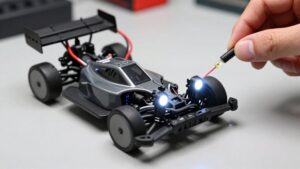
For a .21-class buggy engine, match plug heat range to fuel nitro content, compression, and head temperature—not engine size alone. An OS A5 is a cold-plug option listed for many off-road engines, making it a sensible starting point for typical .21 buggy use.
For high-nitro, high-RPM combinations, the very-cold OS R5 may suit the added thermal load; confirm the engine maker’s recommendation before fitting it. The OS #8 is hot for most current OS and other two-stroke engines, so don’t assume it’s suitable for a .21: high compression or elevated head temperature may call for a colder plug. Check plug reach as carefully as heat range. Many .18-and-larger engines use long plugs, but your .21 manufacturer’s specification takes precedence. Check it before you install.
Recognizing Overheated Plug Symptoms
If a glow plug has overheated, its coil may sag, stretch, distort, or break; a healthy element stays evenly wound and centered. If engine behavior changes, inspect the plug: lean running and high head temperature can wear its element.
- Look for an uneven, displaced, or broken coil; don’t run with visible damage.
- If intact, test it with a glow-plug driver; expect an even, bright glow.
- A plug too hot for nitro content or compression may ignite the charge prematurely.
- High-nitro, high-compression, or hot-running setups may need a colder range.
If a previously reliable engine becomes hard to start, suspect plug wear, but check the sealing washer too: crushing or reuse can leak compression and mimic plug failure. Confirm the cause before replacing parts unnecessarily.
Ambient Temperature Selection
After checking for heat-related wear, consider ambient temperature as one factor in plug selection: a hotter plug can improve cold-weather starting and idling, especially with low- or no-nitro fuel.
For typical sport flying, start with a standard-heat plug, then adjust only when engine behavior and your setup justify a change.
- Treat temperature as a clue, not a rule; nitro content, compression, and head temperature shape heat range.
- Choose a cold plug for high-nitro, high-compression, or high-head-temperature operation, not because weather is warm.
- Check your engine maker’s recommendation before changing heat range; retain the plug type and reach for your engine.
- An incorrect-length plug can damage the engine, so verify fit, then assess starting, idle, and running temperature under your normal fuel and load.
Conclusion
Choose your glow plug by matching its heat range to your fuel nitromethane content, engine, and conditions. Check maker’s scale rather than comparing brand labels directly. Account for air density and ambient temperature, then confirm compatibility with an idle-bar setup.
During break-in, don’t allow prolonged cold running and monitor filament condition. In a 21-class buggy, tune cautiously; replace a plug showing overheating. The correct choice supports reliable starting, stable idle, and consistent combustion throughout operation.