Can You Replace NiMH With LiPo in an RC Car? What to Check First
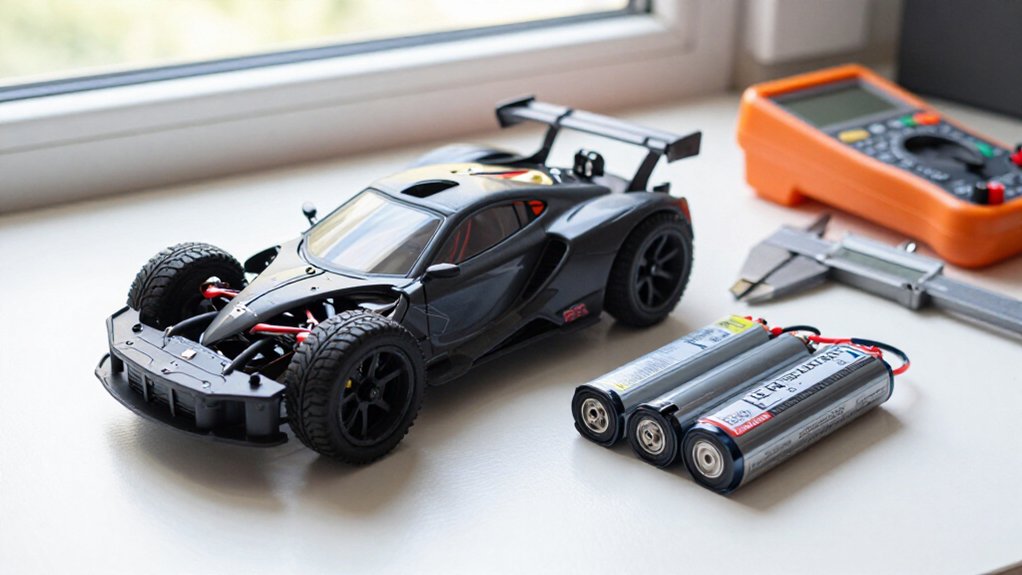
You can replace NiMH with LiPo only if your ESC and motor support the pack’s cell count and charged voltage—not its nominal voltage alone. Check the battery bay, fit, connector type, and polarity before connecting it.
Confirm the ESC has LiPo low-voltage cutoff, and use a balance charger set for the pack. LiPo may sharpen acceleration and raise motor temperature, but won’t guarantee longer runtime.
Check these essentials first; the trade-offs matter.
Check Voltage and Fit
Before choosing a LiPo, match its nominal voltage to the NiMH pack: a 2S LiPo is 7.4 V, close to a 6-cell NiMH pack’s 7.2 V. Then check fully charged voltage: each LiPo cell reaches 4.2 V, so a 2S pack reaches 8.4 V. That higher voltage may exceed your motor or electronics’ ratings.
Confirm your manual explicitly supports the selected cell count and voltage; matching the old pack’s nominal voltage alone doesn’t prove the car can handle it. Next, measure the battery bay’s length, width, and height, allowing room for wires and connectors. Compare those measurements with the LiPo’s dimensions. Check that its shape and connector fit, then restrain it securely without pinching wires or leaving the pack loose during use.
ESC Low-Voltage Cutoff
Check your ESC’s manual for a LiPo low-voltage cutoff (LVC) mode; its NiMH setting may be different or may provide no cutoff at all. Set the LVC for your pack’s cell count and the voltage your ESC manufacturer recommends: a 2S LiPo has two cells, while a 3S pack has three. LVC helps prevent over-discharge, which can permanently damage cells; don’t treat reduced speed as a safe warning. If your ESC lacks a suitable LiPo mode, use a compatible external alarm or replace the ESC.
Stop driving as soon as cutoff activates. Before running the car, verify the cutoff works and triggers at the correct voltage; an incorrect setting or late cutoff can leave your LiPo under-voltage. Check the recommended voltage for each cell in the pack.
Throttle Feel After Switching
Once the LiPo cutoff is set, expect throttle to feel different: a LiPo’s higher voltage under load can deliver harder acceleration and more top speed than a NiMH pack with the same nominal voltage. A fully charged 2-cell LiPo reaches about 8.4 V; a six-cell NiMH is 7.2 V nominal. Check your ESC and motor ratings before running. LiPo voltage stays steadier, so response may remain more consistent as the pack discharges.
| Factor | What you’ll notice |
|---|---|
| Voltage | Stronger pull |
| Discharge | Steadier response |
| Setup | Gearing affects speed |
| Control | Limit punch if needed |
Compare similar-capacity packs with the same cell count; battery weight and gearing affect feel. If throttle feels too sharp, reduce ESC throttle limit or punch, then increase power gradually. Test safely and monitor temperatures closely.
Hardcase Versus Softcase Packs
A hardcase shields LiPo cells from impacts, while a softcase saves weight but leaves pouch cells more exposed to punctures and crushing. Check that the pack’s dimensions, shape, and connector fit your chassis and wiring; a hardcase may be too bulky. Secure either pack against sliding and abrasion, and don’t use one that’s swollen, dented, cracked, or otherwise damaged.
Physical Protection Differences
A hardcase’s rigid plastic shell helps shield LiPo cells from punctures, impacts, and pressure, making it a practical choice for an RC car that may roll over or strike obstacles. A softcase LiPo pack uses a flexible pouch instead of a rigid shell, so you must mount it carefully and protect it from sharp edges, chassis parts, and crash damage.
A softcase may suit a setup with a secure, well-protected battery compartment, but neither case makes a LiPo crash-proof. Check that your strap or retainer holds the pack firmly without crushing it; don’t assume a shell can prevent internal damage. After any impact, inspect the pack; don’t use it if it’s swollen, punctured, leaking, or otherwise damaged. Check before running it again after impacts.
Chassis Fit and Clearance
Beyond impact protection, the pack must fit the chassis without being squeezed or contacting moving parts. Measure the battery bay’s length, width, and height, then compare those dimensions with the LiPo listing. Allow room to insert and remove it; a close fit can still bind.
A hardcase’s rigid, standardized shell adds bulk, so check clearance around the tray, straps, wires, and connectors. A softcase can suit an irregular compartment, but never let the chassis, strap, or nearby parts pinch, pierce, or compress its pouch.
Install the body and compress the suspension to check for contact with the body, driveshaft, or other moving parts. Secure the pack against sliding or rattling, but don’t let straps or foam press sharply into a softcase cell. Recheck clearance.
Choosing the Right Case
If your RC car faces frequent impacts, debris, or a tight battery bay, choose a hardcase LiPo for its added protection against punctures and crushing. A softcase pack weighs less and may fit a compact tray, but its pouch cells need secure support. Keep them clear of sharp edges and protect them from crashes and chassis flex.
Check the compartment dimensions and strap or tray layout; your pack must fit without squeezing, bending, or looseness. Confirm its connector, wire exit, and orientation match the car. Route leads so you can’t pinch them, and secure the pack against shifting while driving. Neither case makes a LiPo impact-proof. After a crash, inspect the pack carefully; don’t ever use it if it’s swollen, punctured, or otherwise damaged.
Brushed Versus Brushless Motors
Your brushed motor uses brushes and a commutator, while a brushless motor relies on its ESC to switch current through the windings. Before fitting a LiPo, check that your motor and ESC support its voltage; LiPo cells deliver about 3.7 V nominal each, versus 1.2 V for NiMH. Don’t assume matching cell counts are safe: excess voltage can overheat or damage your motor or ESC.
Motor Type Compatibility
Both brushed and brushless motors can run on LiPo batteries, but the ESC must support the pack’s voltage and cell count.
Check your motor and ESC labels or manuals before swapping packs. A brushed ESC must match the LiPo’s voltage and cell count; a brushless ESC must also handle the motor’s current demands. Because LiPo voltage can exceed a same-cell-count NiMH pack’s, verify both component ratings—don’t assume motor type guarantees safety.
Use an ESC’s LiPo low-voltage cutoff, or add a suitable external cutoff, to help prevent over-discharge. Check each run.
| Setup | Check | Risk |
|---|---|---|
| Brushed | ESC voltage/cell rating | Check first; avoid damage |
| Brushless | ESC voltage, cells, current | Match prevents costly failure |
| Either | Verify motor and ESC labels | Don’t guess |
| LiPo | Low-voltage cutoff | Prevent over-discharge |
Brushed Voltage Limits
Brushed motors have no universal voltage limit, so check the motor’s rating and the ESC’s supported cell count before installing a LiPo. Compare your fully charged battery voltage with both limits; don’t rely on its label or nominal voltage alone. LiPo cells provide about 3.7 volts nominal, versus roughly 1.2 volts per NiMH cell. A 2S LiPo is 7.4 volts nominal, but reaches 8.4 volts when fully charged.
That increase can exceed a brushed motor’s rating, causing overheating and faster brush and commutator wear. Check your motor manual and ESC documentation before choosing a pack. Brushless motors also have voltage ratings, and their higher potential RPM and power make careful motor, ESC, and battery rating matches especially important. If either limit’s unclear, ask the manufacturer before fitting a LiPo.
Brushless ESC Requirements
Before installing a LiPo, check that the ESC matches the motor type: a brushed ESC drives a motor with two power leads, while a brushless ESC typically drives one with three, and they aren’t interchangeable. Next, confirm your ESC supports LiPo voltage and has a low-voltage cutoff; a NiMH-only unit may let the pack discharge too far.
Check the cell-count limit against your pack: 2S is 7.4 V nominal and 8.4 V fully charged; 3S is 11.1 V nominal and 12.6 V fully charged. Also verify the ESC’s current rating and compatibility with your motor setup. Your pack’s discharge capability must not exceed what either component can handle. If LiPo support or cutoff settings aren’t clear, consult the manual or manufacturer before connecting the pack.
Battery Connector Compatibility
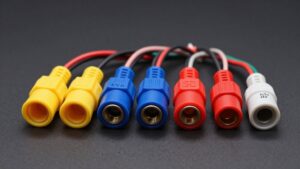
Check your car’s connector type and polarity before buying a LiPo; common plugs include Tamiya, Deans (T-plug), XT60, and EC3, and matching shapes don’t guarantee matching polarity.
If the LiPo plug differs from your car’s, choose a suitable adapter or have the connector replaced. Verify positive and negative wiring before connection, and make sure the adapter, plug, and wires are rated for your car’s current draw; a plug that fits may still be undersized. Inspect both battery and vehicle connectors for loose pins, corrosion, or heat damage. Poor contacts add resistance and can overheat under load.
If you solder or replace a plug, insulate each terminal separately and keep the battery’s positive and negative leads from touching. If unsure, verify polarity and ratings.
Charging and Storage Safety
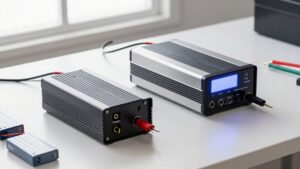
Once the connector is compatible, charge the LiPo with a charger that supports LiPo chemistry and the pack’s exact cell count, never use a NiMH mode. Use its balance function with the pack’s balance lead, and set the manufacturer-specified charge rate as well as the correct cell count. Charge on a nonflammable surface, stay nearby throughout, and stop immediately if the pack swells, becomes unusually hot, or shows damage. Don’t leave charging unattended.
For storage beyond a short period, select storage mode to reach the maker’s specified voltage, typically about 3.8 volts per cell. Keep the pack cool and dry in a LiPo-safe container, away from flammable materials. Protect terminals from contact with conductive objects; a short circuit can cause fire.
Assuming Lipo Guarantees More Runtime
A LiPo doesn’t guarantee longer runtime; capacity, usable energy, gearing, driving style, and the car’s current draw all affect how long it runs.
Compare energy, not headline voltage or mAh: estimate watt-hours by multiplying volts by amp-hours. A higher-voltage pack with fewer mAh may store more energy, but use it only if your motor and speed controller support its cell count and voltage.
- Check that capacity and discharge rating meet your car’s current demand; an undersized or low-C pack can sag and cut usable performance.
- Compare packs in the same car and similar terrain, throttle use, and battery age.
- Match voltage first; extra voltage can damage components, not simply extend a run.
Keep gearing and driving style consistent when judging results for a fair comparison.
Monitor Motor Temperature
Because a LiPo can make the motor run faster and hotter, measure its temperature after a short, gentle run and again after normal driving. Use an infrared thermometer at the same spot each time, ideally soon after stopping; the motor cools quickly.
Follow the manufacturer’s temperature limit. If none exists, stop and investigate if it becomes too hot to touch briefly; touch isn’t a precise measurement.
| Check | What to do |
|---|---|
| First run | Measure after gentle driving. |
| Normal use | Measure after typical driving. |
If the motor overheats, stop driving. Check gearing, drivetrain binding, tire size, and ventilation before running again. Recheck after changing cell count, gearing, or driving conditions, because each can raise motor speed or load. Record readings to spot trends and prevent damage.
Conclusion
You can replace a NiMH pack with LiPo in many RC cars, but check fit, voltage, connector, and ESC low-voltage cutoff first. Confirm your motor and ESC can handle the pack, then use a LiPo-compatible charger and follow safe charging and storage practices. Expect throttle response to change, and don’t assume you’ll get more runtime. After the first run, check motor temperature and stop if it gets unusually hot. If anything’s uncertain, consult your vehicle’s manual before powering up.
RC Battery Runtime & Voltage Calculator
Get LiPo or NiMH pack voltage (nominal and full), estimated runtime and C-rating current from cells, mAh, C and average amp draw.
LiPo Charge Time & Charger Wattage Checker
Estimate how long a LiPo pack takes to charge and check whether your charger's watts and amps cover the charge current you enter.
Basher Motor, ESC & LiPo S-Count Matcher
Compare your motor kV, ESC max S and LiPo cell count from your own spec sheets and see the theoretical no-load RPM (kV × S × 3.7).
RC Apps & Software Finder
Filter RC phone control apps, ESC/radio programming software and design tools by purpose, platform, price and brand, with official links.