10 Best RC Car ESCs for 2026
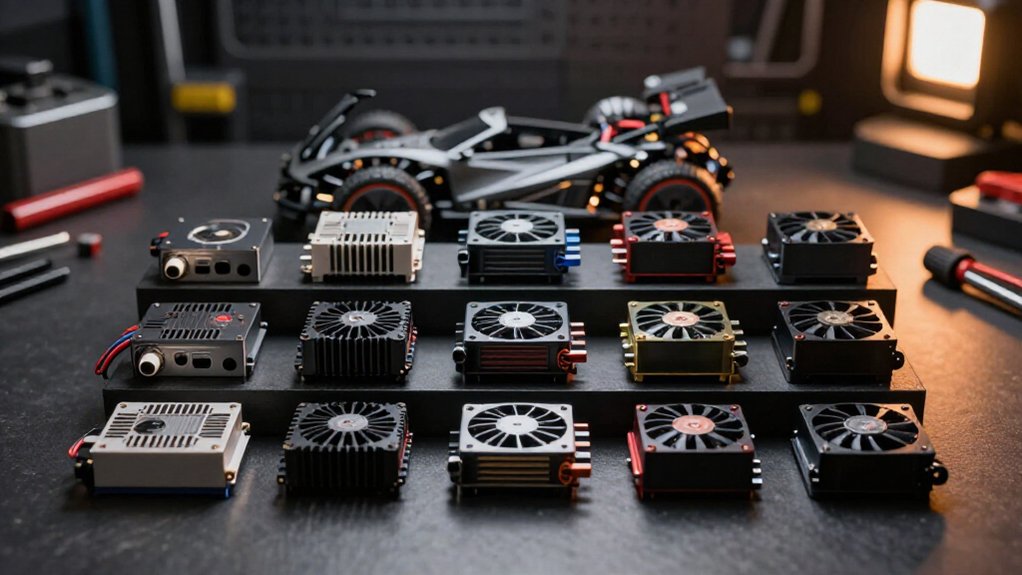
The best RC car ESCs for 2026 depend on your motor, battery, vehicle, and driving style.
For brushed setups, consider the 30A two-pack, 9IMOD WP 1060, four-pack mini ESCs, or Radiolink CL9030.
Brushless options include the Hobby Fans 60A, Surpass Hobby Supersonic V2, ZTW Beast SL G2, and a 40A ESC with XT60.
Match voltage and continuous current to your motor, and check fit, protection, and controls. The options below can help you choose.
| 30A Brushed ESC with Brake for RC Vehicles (2-Pack) |  | Best Budget Brushed ESC | Current Rating: 30A forward; 40A peak | Motor Type: Brushed | Vehicle Use: RC cars, boats, crawlers, and tanks | VIEW LATEST PRICE | Read Our Analysis |
| 9IMOD WP 1060 Waterproof Brushed ESC for RC Crawlers |  | Best Waterproof Brushed ESC | Current Rating: 60A continuous | Motor Type: Brushed | Vehicle Use: 1/10-scale crawlers and trucks | VIEW LATEST PRICE | Read Our Analysis |
| 4-Pack Mini RC 20A Brushed ESCs with Brake |  | Best Mini ESC Set | Current Rating: 20A | Motor Type: Brushed | Vehicle Use: RC cars, boats, and tanks | VIEW LATEST PRICE | Read Our Analysis |
| Radiolink CL9030 90A 2S-4S RC Brushed ESC Waterproof 5A BEC 5.5V/7.5V |  | Best High-Current Brushed ESC | Current Rating: 90A continuous; 100A peak | Motor Type: Brushed | Vehicle Use: 1/10-scale crawlers, trucks, buggies, tanks, and boats | VIEW LATEST PRICE | Read Our Analysis |
| Hobby Fans 60A Waterproof Brushless ESC for RC Cars |  | Best Brushless Crawler ESC | Current Rating: 60A | Motor Type: Brushless | Vehicle Use: 1/10-scale crawler cars and trucks | VIEW LATEST PRICE | Read Our Analysis |
| Omquot 30A Brushless Motor ESC Speed Controller |  | Best Programmable Brushless ESC | Current Rating: 40A maximum | Motor Type: Brushless | Vehicle Use: RC cars and boats | VIEW LATEST PRICE | Read Our Analysis |
| HOBBYWING QUICRUN 10BL120 SENSORED G2 |  | Best Sensored ESC | Current Rating: 120A continuous; 760A peak | Motor Type: Sensored or sensorless brushless | Vehicle Use: 1/10-scale touring cars, buggies, and drift setups | VIEW LATEST PRICE | Read Our Analysis |
| Surpass Hobby Supersonic V2 130A RC Brushless ESC |  | Best High-Power ESC | Current Rating: 130A continuous; 860A peak | Motor Type: Brushless | Vehicle Use: 1/8-scale short-course and monster trucks | VIEW LATEST PRICE | Read Our Analysis |
| ZTW Beast SL G2 80A ESC 2-3S Sensorless Brushless for 1/10 Scale RC Cars |  | Best 1/10-Scale Brushless ESC | Current Rating: 80A | Motor Type: Sensorless brushless | Vehicle Use: 1/10-scale RC cars | VIEW LATEST PRICE | Read Our Analysis |
| 40A Brushless ESC with 3A UBEC and XT60 Plug |  | Best Plug-and-Play ESC | Current Rating: 40A | Motor Type: Brushless | Battery Support: 2–4S LiPo or 5–12-cell NiCd/NiMH | VIEW LATEST PRICE | Read Our Analysis |
More Details on Our Top Picks
30A Brushed ESC with Brake for RC Vehicles (2-Pack)
For budget-minded builders, the Nuofany 30A brushed ESC 2-pack adds affordable, brake-equipped control to DIY RC projects. You get two compact controllers measuring about 35×22×6 mm, suited to mini cars, boats, crawlers, and tanks. Each supports 4-8V operation and connects directly to a 2S, 7.4V lithium battery. Forward current reaches 30A, with a 40A instantaneous peak; reverse output is 20A, and braking handles 40A. Use them with a receiver and steering servo in compatible 1/10-scale on-road or off-road cars, trucks, or SCT vehicles. You can choose normal or sport racing, while the brake adds useful stopping control for your build.
- Current Rating:30A forward; 40A peak
- Motor Type:Brushed
- Vehicle Use:RC cars, boats, crawlers, and tanks
- Battery Support:4–8V; supports 2S lithium
- Control Functions:Forward, reverse, and brake
- Brand:Nuofany
- Additional Feature:2-pack
- Additional Feature:40A instantaneous peak
- Additional Feature:Compact 35 × 22 mm size
9IMOD WP 1060 Waterproof Brushed ESC for RC Crawlers
The 9IMOD WP 1060 is a waterproof brushed ESC choice for 1/10-scale crawler owners driving in wet conditions. It supports 2–3S batteries and delivers 60A of current, while its switch-mode BEC and built-in voltage cutoff protection help safeguard your setup. Forward and brake functions pair with smooth throttle response, giving you controlled input on trails.
A pre-soldered XT60 plug simplifies power connections, and the black-and-yellow unit fits compatible 1/10-scale crawler cars and trucks. If you’re replacing a controller or installing one in your vehicle, check your space and wiring before mounting. Its waterproof design suits wet-weather use.
- Current Rating:60A continuous
- Motor Type:Brushed
- Vehicle Use:1/10-scale crawlers and trucks
- Battery Support:2–3S
- Control Functions:Forward and brake
- Brand:9IMOD
- Additional Feature:Waterproof design
- Additional Feature:Switch-mode BEC
- Additional Feature:Pre-soldered XT60 plug
4-Pack Mini RC 20A Brushed ESCs with Brake
This four-pack mini ESC set suits small-RC builders who need 20A control with braking.
Each UMLIFE unit handles 3.0 to 9.4V power and runs at 2kHz, making it a fit for compatible 2S setups. It supports 130, 180, 260, 280, and 380 brushed motors, with forward, reverse, and brake functions for straightforward driving control.
You’ll often use these lightweight controllers in RC cars, boats, and tanks, or install one in a Mini-Z mosquito car modification. The four-piece package gives you spares or lets you equip several builds. High-precision manufacturing supports stable performance, but check your motor and battery requirements before installation.
- Current Rating:20A
- Motor Type:Brushed
- Vehicle Use:RC cars, boats, and tanks
- Battery Support:3.0–9.4V; 2S
- Control Functions:Forward, reverse, and braking
- Brand:UMLIFE
- Additional Feature:4-piece set
- Additional Feature:Compatible with 130–380 motors
- Additional Feature:2kHz operating frequency
Radiolink CL9030 90A 2S-4S RC Brushed ESC Waterproof 5A BEC 5.5V/7.5V
Radiolink’s CL9030 is a high-current brushed ESC for 1/10-scale crawlers, trucks, and other demanding builds.
At 90A continuous and 100A peak, it suits buggies, tanks, boats, and bait boats too. Its 6 to 18V input supports lithium, Ni-MH, Ni-Cd, and lead-acid packs. Set Jumper Cap 3 correctly: insert it for lithium, remove it for other chemistries; the wrong setting can over-discharge or damage your battery. A 32-bit chip, 2KHz PWM, and sensitivity up to 2000 deliver smooth, linear forward and reverse control. You also get under-voltage, input-voltage, and temperature protection, plus nano coating and IP66 water- and dust-resistance in tough outdoor conditions.
- Current Rating:90A continuous; 100A peak
- Motor Type:Brushed
- Vehicle Use:1/10-scale crawlers, trucks, buggies, tanks, and boats
- Battery Support:6–18V; 2S–4S lithium
- Control Functions:Forward and reverse
- Brand:Radiolink
- Additional Feature:5A BEC
- Additional Feature:IP66 water- and dust-resistant
- Additional Feature:Under-voltage protection
Hobby Fans 60A Waterproof Brushless ESC for RC Cars
Hobby Fans’ 60A waterproof ESC is a strong brushless crawler choice for 1/10-scale drivers using 3650 sensorless motors and 2–3S batteries. You’ll get 60A current handling, heat dissipation, and easy programming. Its IP66 rating protects against dust and splashes, but don’t submerge it. Low-voltage cutoff and overheat protection help safeguard your electronics during runs.
The built-in 5V/3A switch-mode BEC can power high-torque, high-voltage servos, making this an option for crawler builds that need capable steering support. Check your motor and battery configuration before installation to confirm compatibility; this ESC is designed for Hobby Fans 3650 sensorless motors and 2–3S packs.
- Current Rating:60A
- Motor Type:Brushless
- Vehicle Use:1/10-scale crawler cars and trucks
- Battery Support:2–3S
- Brand:Hobby Fans
- Additional Feature:IP66 splashproof
- Additional Feature:5V/3A BEC
- Additional Feature:Programmable
Omquot 30A Brushless Motor ESC Speed Controller
For RC car and boat builders, Omquot’s 30A ESC offers programmable throttle and brake settings. You can use its soft-start ramp to ease motor acceleration, while high-speed, low-resistance PWM supports responsive control. It also provides forward and reverse operation, though its low-torque starting may not suit every setup. Adjust the throttle range and braking to match your vehicle and driving style.
Protection features include automatic motor cutoff, signal-loss shutdown, and low-voltage cutoff. Omquot lists a maximum current of 40A, despite the 30A name, so check your motor and battery demands before installation. At 56 × 24 × 8.5 mm, it’s compact enough for many RC car and boat builds, but verify its connectors and mounting space carefully.
- Current Rating:40A maximum
- Motor Type:Brushless
- Vehicle Use:RC cars and boats
- Control Functions:Forward and reverse
- Brand:Omquot
- Additional Feature:Soft-start ramp
- Additional Feature:Signal-loss shutdown
- Additional Feature:Adjustable throttle range
HOBBYWING QUICRUN 10BL120 SENSORED G2
A standout sensored ESC choice, the HOBBYWING QUICRUN 10BL120 SENSORED G2 suits 1/10-scale touring, buggy, and drift builds. It runs sensored or sensorless brushless motors and delivers 120A continuous, with 760A peak current. You can use 2–3S LiPo packs; 3650-size motors need ≥4.5T on 2S or 10.5T on 3S.
Its switch-mode BEC offers 6V or 7.4V output, supplying 4A continuously and up to 7A for high-voltage servos. You can tune Boost and Turbo timing up to 32°, but neither works on 3S. Program it with Hobbywing boxes or onboard controls, choose CW or CCW rotation, and rely on built-in protection.
- Current Rating:120A continuous; 760A peak
- Motor Type:Sensored or sensorless brushless
- Vehicle Use:1/10-scale touring cars, buggies, and drift setups
- Battery Support:2–3S LiPo
- Control Functions:Forward and reverse control
- Brand:HOBBYWING
- Additional Feature:Selectable 6V/7.4V BEC
- Additional Feature:Boost and Turbo timing
- Additional Feature:Adjustable motor rotation
Surpass Hobby Supersonic V2 130A RC Brushless ESC
The Supersonic V2 stands out as a high-power ESC for 1/8-scale truck owners who need support for 3 to 6S LiPo packs. Its 130A rating and 860A peak suit demanding runs, while a switchable 6A BEC offers 6.0V, 7.4V, or 8.4V for your electronics. You can tune throttle stroke and choose startup levels 1 to 6 to boost explosive power by up to 50%, using the pocket-sized program card. Built-in safeguards cover low voltage, overheating, signal loss, and blocked motors.
Its IP67 rating resists water and dust, but remove the fan before water use. Clean and dry it promptly to limit connector rust.
- Current Rating:130A continuous; 860A peak
- Motor Type:Brushless
- Vehicle Use:1/8-scale short-course and monster trucks
- Battery Support:3–6S LiPo
- Brand:Surpass Hobby
- Additional Feature:Switchable 6.0–8.4V BEC
- Additional Feature:IP67 waterproof
- Additional Feature:Startup levels 1–6
ZTW Beast SL G2 80A ESC 2-3S Sensorless Brushless for 1/10 Scale RC Cars
ZTW’s Beast SL G2 is a strong 1/10-scale brushless ESC choice for drivers seeking 80A output and 2–3S battery support. Its sensorless design suits compatible brushless motors, while a 32-bit microprocessor delivers low-latency throttle response and precise control for acceleration and straight-line stability.
The adjustable built-in BEC supplies 6V at 3A to your servo and optional equipment. Low-voltage, overheating, and signal-loss protections help safeguard the ESC and motor. A waterproof coating helps resist RC-level exposure to puddles, wet grass, and light rain, though it isn’t intended for submersion. Use the LED programming card to adjust settings. Choose this ZTW unit if you want practical protection, straightforward setup, and 80A output.
- Current Rating:80A
- Motor Type:Sensorless brushless
- Vehicle Use:1/10-scale RC cars
- Battery Support:2–3S
- Brand:ZTW
- Additional Feature:32-bit microprocessor
- Additional Feature:LED programming card
- Additional Feature:Waterproof coating
40A Brushless ESC with 3A UBEC and XT60 Plug
With its pre-soldered XT60 plug and 3.5mm bullets, this 40A ESC makes plug-and-play setup easy for RC drivers. It supports 2 to 4-cell LiPo packs or 5 to 12-cell NiCd/NiMH batteries across a 6.4 to 16.8V range. Its 5V/3A UBEC powers your receiver and servos, while low-battery, overheating, startup-throttle, signal-loss, and abnormal-voltage protections help guard your setup. You can program it with a programming card or transmitter. The compact blue unit suits you if you’re building a small RC vehicle and want straightforward wiring plus essential safeguards. RCElectricParts.com makes it for your RC build.
- Current Rating:40A
- Motor Type:Brushless
- Battery Support:2–4S LiPo or 5–12-cell NiCd/NiMH
- Brand:RCElectricParts.com
- Additional Feature:Pre-soldered XT60 connector
- Additional Feature:3.5mm bullet plugs
- Additional Feature:Transmitter-programmable
Factors to Consider When Choosing RC Car ESCs
When choosing an RC car ESC, match its motor type, current capacity, and battery voltage range to your setup. Consider your vehicle’s scale and how you’ll use it. Check for waterproofing and protective features to suit your driving conditions.
Motor Type Compatibility
Motor compatibility starts with matching the ESC to the motor type: brushed motors need brushed ESCs, while brushless motors need brushless ESCs. These systems use different control designs, so you can’t swap ESC types.
For a brushless setup, check whether your motor needs a sensored ESC, supports sensorless operation, or can run with either; support varies between models. Then compare the motor’s size and KV rating with the ESC’s limits and your chosen battery voltage. Higher voltage may call for a lower-KV or smaller motor, so confirm the combination in the manufacturer’s specifications. Also check that the ESC provides the direction and controls your car requires, especially forward and reverse. This helps support reliable motor control in your car overall.
Current Capacity
Choose an ESC whose continuous-current rating meets or exceeds your motor’s expected draw, and leave extra headroom for acceleration bursts.
Check the continuous rating against ongoing load: a 60A ESC can sustain more current than a 30A model. Don’t rely on peak-current figures; they describe brief surges, not continuous operation. Compare forward, reverse, and braking ratings, because an ESC’s capacities can vary by function.
For example, a unit rated at 30A forward, 20A reverse, and 40A braking doesn’t offer capacity equally in every mode. Match the ESC to your motor and vehicle’s demands: a setup may need 90A or 120A, while a lighter application may suit 20A or 30A. Headroom helps your ESC handle short bursts without being sized for momentary peaks alone.
Battery Voltage Range
Match your ESC’s voltage range to your battery’s chemistry and cell count. A 2S LiPo pack has a nominal voltage of 7.4 volts, while a 3S pack delivers 11.1 volts. Check the ESC’s minimum and maximum ratings, not just its advertised cell range.
An ESC marked for 2S to 3S may not safely support a 4S battery, even if its connector fits. Confirm support for other battery chemistries, since their cell counts and voltage ranges differ from LiPo packs. Set the low-voltage cutoff for your battery chemistry to help prevent excessive discharge. Before connecting a pack, verify its voltage against the ESC’s specifications; using an unsupported voltage can cause malfunction or damage. Read the manual and inspect the pack label; you can’t rely on assumptions alone.
Vehicle Scale And Use
An ESC built for a 1/10-scale car may not suit a mini or 1/8-scale truck. Match the controller to your vehicle’s scale and chassis so it can handle the setup’s demands. Then consider how you drive.
If you crawl, choose smooth, precise throttle control for low-speed maneuvering. For racing, prioritize quick acceleration and dependable braking to respond through turns. Check motor compatibility, too: brushed and brushless motors need different ESCs, so confirm the controller supports your motor before buying.
If you’re building a boat, tank, or another non-car model, make sure the ESC supports that application and offers the forward, reverse, or braking functions you need. The right match helps you get predictable control and performance from your specific vehicle for your driving style.
Waterproofing And Protection
If you drive through wet conditions, check the ESC’s specific water-resistance rating rather than relying on the word “waterproof.” IP66 protects against dust and water spray, while IP67 allows temporary immersion under specified test conditions; some splashproof units can’t be submerged.
Check the stated limits: ratings don’t guarantee safety in every situation. Look for safeguards against electrical and mechanical risks. Low-voltage cutoff helps prevent excessive battery discharge, while over-temperature protection can reduce heat-related damage. Signal-loss shutdown can stop the motor if the receiver loses its signal; motor-block protection may limit damage if the drivetrain jams.
After wet runs, disconnect the battery and promptly clean and dry the ESC and connectors. Water can still cause corrosion, especially around plugs, so don’t leave moisture there long.
Setup And Programming
A programmable ESC lets you tailor control to your car and driving style. Start by checking whether you can calibrate its throttle range to match your transmitter. Proper calibration helps you get smooth, predictable response instead of abrupt starts or uneven control. Next, consider adjustable brake strength and, if you need it, forward-and-reverse operation. These options let you adapt the ESC to your driving preferences and terrain.
Check how you’ll change settings before you buy. Some ESCs use onboard buttons and LEDs, while others require a programming card or LCD programming box. Choose an interface you can operate easily. If your motor setup requires it, confirm that you can adjust rotation direction and timing. Finally, verify the battery-type setting carefully. Selecting the wrong battery type can cause excessive discharge and damage your battery.
Frequently Asked Questions
How Do I Calibrate an ESC to My Transmitter?
Turn on your transmitter, set throttle trim to neutral, and power the ESC. Hold its setup button if required, then follow its tones: full throttle, full brake, and neutral. Save settings and test safely afterward.
What Battery Safety Precautions Should I Follow When Using an RC ESC?
Use a compatible battery, and check its voltage, chemistry, and polarity before connecting. Secure wires from moving parts, and never short terminals. Charge and store batteries with equipment; don’t leave packs unattended, and disconnect them.
Can I Update My Esc’s Firmware, and How?
Yes, you can update your ESC’s firmware if its manufacturer supports updates. Identify your exact model first, download the official software, connect the required programming card or USB interface, then follow the manufacturer’s instructions carefully.
What Causes an ESC to Cut Out During a Run?
What Causes an ESC to Cut Out During a Run?
Your ESC may cut out from overheating, low battery voltage, loose connections, motor overload, or protection settings. Check wiring, battery condition, gearing, cooling, and error codes; reduce load and improve airflow before your next run.
How Can I Diagnose a Faulty ESC Versus a Failing Motor?
Swap in a known-good motor, then test your suspect motor with a known-good ESC. If the problem follows the motor, you’ve found it; if it stays, inspect your ESC, wiring, and connections for visible damage.
Conclusion
Choosing the right ESC starts with matching it to your motor, battery, vehicle, and driving style. Whether you need a simple brushed unit for a crawler or a powerful brushless controller for faster runs, check current capacity, voltage range, waterproofing, brake settings, and BEC output before you buy. You’ll get smoother, more reliable performance when the ESC fits your setup. Compare the options above, confirm connector compatibility, and choose the features you’ll actually use most.