Does a LiPo Make an RC Car Faster? Voltage, Punch and Real Gains
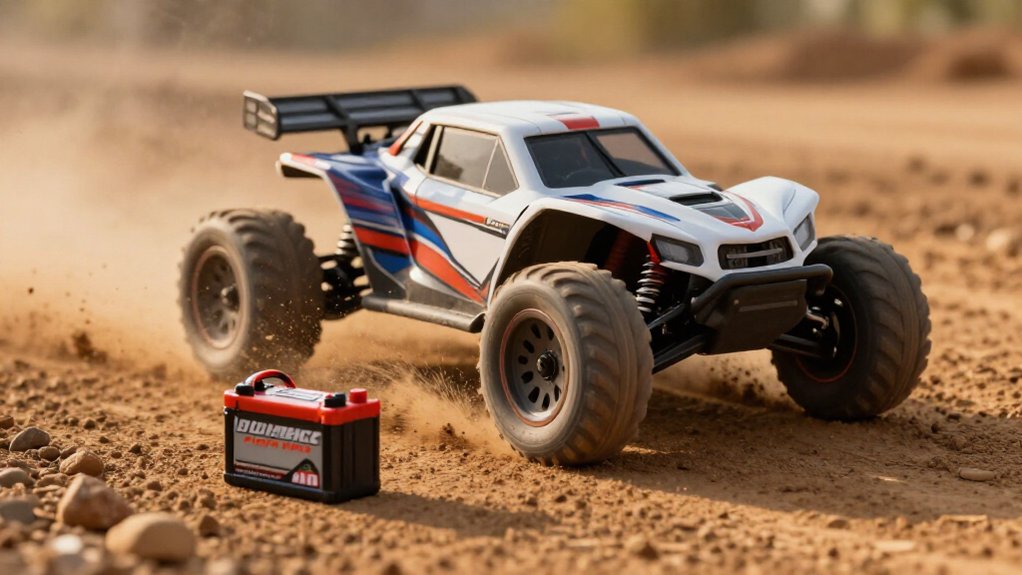
A LiPo can make your RC car faster, but only if the battery’s voltage stays within your ESC and motor limits. A 3S pack provides 50% more nominal voltage than 2S, potentially raising motor rpm and top speed; it doesn’t guarantee quicker acceleration.
Gearing, tire size, grip, pack weight, and voltage sag all affect real gains. You’ll get a clearer performance picture by checking compatibility, temperatures, and the details behind each factor.
Voltage Doesn’t Guarantee Speed
Higher voltage can raise motor speed, but only if your motor, ESC, gearing, and drivetrain can handle it—and it doesn’t guarantee quicker acceleration. Under load, your battery can sag, so the motor receives less voltage than the pack’s label suggests. Internal resistance drives that drop: at 100 A, a cell with 6 mΩ resistance loses about 0.60 V, while a 3 mΩ cell loses 0.30 V.
That difference can affect punch, especially when your setup draws high current. Don’t judge a pack by its printed C rating alone; cell quality, age, temperature, and resistance all shape power delivery. If your car already accelerates smoothly without noticeable sag, a higher-voltage or higher-rated pack may deliver little practical speed gain. Measure performance under load before upgrading.
Voltage, Gearing, and Top Speed
Once voltage sag is accounted for, pack voltage sets the motor’s potential speed: moving from a 7.4 V 2S LiPo to an 11.1 V 3S pack raises nominal voltage by 50%, but only use 3S if your motor, ESC, and other electronics are rated for it.
Gearing determines how motor rpm becomes wheel speed. Your final speed also depends on tire diameter, drivetrain losses, and available motor rpm under the selected load. Taller gearing can raise top speed, but it also increases motor load and heat. A 3S setup may expose gearing that’s too tall; monitor motor and ESC temperatures, and gear down if either overheats. Choose voltage and gearing for your intended setup; a higher C rating alone doesn’t guarantee more top speed.
Voltage Sag Under Load
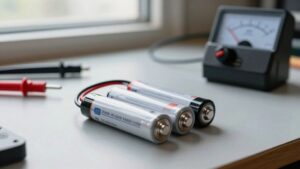
When the motor draws current, a LiPo’s voltage drops according to its internal resistance: ΔV = I × R. At a 100 A peak, a cell with 3 mΩ resistance sags about 0.30 V; at 6 mΩ, it loses roughly 0.60 V. That difference reduces the voltage available to your motor during acceleration, when current demand is highest. Lower sag helps your car maintain power and deliver a sharper throttle response; greater sag can make acceleration feel softer, even if the pack’s nominal voltage matches.
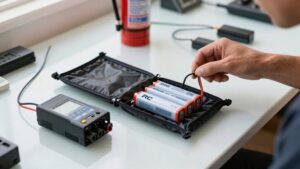
Internal resistance changes with battery condition, temperature, and cell quality. Don’t rely on the printed C rating alone: a healthy, lower-resistance pack may perform better. For useful comparisons, measure packs on the same charger at a consistent state of charge and temperature; different chargers and test conditions can produce different readings.
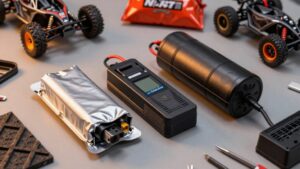
Hardcase Versus Softcase Packs
A hardcase shields cells from impacts and punctures, while a softcase saves weight but needs careful mounting to guard its exposed pouch. Check your chassis compartment’s fit and clearance, and secure either pack so it can’t shift. The shell itself won’t make your car faster; weigh any mass savings against protection, while matching voltage and connector requirements.
Physical Protection Differences
Although a hardcase LiPo doesn’t make an RC car faster by itself, its rigid shell helps protect the cells from impacts, abrasion, and pressure during driving.
You gain a physical buffer when the chassis bottoms out or debris strikes the battery. A softcase pack removes that shell, reducing weight and allowing more flexibility, but leaves cells more exposed to punctures, crushing, and rough handling. That tradeoff can matter more than a small mass difference if your car sees contact, jumps, or abrasive terrain. Don’t treat the hardcase as waterproof or fireproof protection; it can still fail after damage. Before each run, inspect the case, leads, and cells for cracks, cuts, or other damage. Never use a swollen, punctured, or otherwise damaged pack. Reject it.
Chassis Fit and Clearance
Beyond impact protection, pack fit can affect how reliably your RC car handles power.
A hardcase’s rigid shell sets tray limits, so measure your battery tray before buying. Capacity and cell count won’t confirm compatibility. A softcase fits tight or irregularly shaped battery compartments, but needs support and protection from edges, suspension components, and chassis flex.
Check clearance for wires and the connector, then confirm the strap or retainer holds the pack securely without crushing it. Keep the battery clear of the driveshaft, motor, and other moving parts; vibration or chassis movement mustn’t pinch its leads.
Choose a pack matched to your specified tray and retention system. Forcing an oversized hardcase or leaving a softcase loose risks damage, regardless of voltage or C rating.
Weight and Performance Tradeoffs
When weight matters, softcase LiPo packs typically keep an RC car lighter and fit tighter compartments, which can improve responsiveness. That lower mass can sharpen acceleration and make steering feel more immediate, but leaves cells less protected. A softcase lacks rigid shell protection from impacts and punctures.
A hardcase adds a protective barrier, but casing increases pack weight and bulk. Extra mass may blunt acceleration and alter handling, particularly if you mount the pack high or off-center. Compare complete ready-to-run weight and dimensions, not capacity alone; casing and layout affect fit and balance. Choose softcase when low weight and secure containment matter most; choose hardcase if crashes or abrasion can reach the battery area. This choice depends on your chassis protection and driving conditions.
Tire Diameter and Grip
Larger tires raise effective gearing and potential top speed, but they demand more torque and can increase heat; smaller tires often improve acceleration. Grip lets your motor transfer torque to the ground, yet excess traction can raise drivetrain load and current draw. Match tire compound and tread to the surface, or your LiPo’s added power may only produce wheelspin.
Tire Diameter Changes Gearing
Changing tire diameter alters the car’s effective gearing, regardless of battery voltage. Larger-diameter tires let your car travel farther per motor revolution, gearing it taller. That can raise top speed, but it reduces torque at the contact patch and may weaken acceleration. Smaller tires shorten the effective gearing, increasing wheel torque for launches while lowering top speed.
Don’t rely on the size printed on the package: mounted tires can have a different rolling diameter. Measure them before comparing setups. Larger tires may also add rotational mass and increase motor and battery load. That demand can build heat and slow acceleration, offsetting speed gain. Evaluate tire diameter alongside gearing, motor temperature, and measured acceleration, rather than assuming a larger tire guarantees a faster car.
Grip Converts Power
Tire diameter changes effective gearing, but grip determines whether that gearing and added LiPo power produce forward acceleration. Your motor’s torque only becomes useful speed when the tires can transmit it to the ground. If traction breaks, extra voltage mostly spins the wheels; the car may feel sharper without gaining acceleration.
Larger tires travel farther per rotation, raising effective gearing and potentially top speed, but they demand more torque and can dull launch. Smaller tires shorten gearing, reducing motor load and often improving initial acceleration, though they may cap top speed. To judge a LiPo gain, keep tire diameter and grip constant during runs; otherwise, traction or gearing changes can hide whether added voltage improved acceleration or merely increased wheelspin under the same conditions.
Match Tires to Surface
To make LiPo power useful, match tire diameter and compound to the surface. Larger tires travel farther per motor revolution, effectively raising your gearing and potentially increasing top speed. That gain comes with a cost: the motor must turn more tire mass, demanding extra torque and often reducing acceleration.
Smaller tires lower effective gearing, so your car may punch harder and put less strain on the motor, though maximum speed can fall. Grip matters just as much. Softer compounds generally work best on smooth tracks, where they transfer power efficiently; treaded tires help maintain traction on loose dirt. Too much grip, especially with large tires, can overload the drivetrain and build heat. Change diameter or compound in small steps, then check motor and battery temperatures after each run. If temperatures climb, reduce load before pushing harder.
Battery Weight and Acceleration
Although a LiPo can deliver the same voltage and current, a heavier pack adds mass the motor must accelerate and can blunt acceleration. You may notice slower launches and weaker response, especially when the added weight is substantial relative to your car. Higher-capacity packs generally extend runtime, but they weigh more; that tradeoff can reduce punch even if voltage and discharge capability stay unchanged.
To judge a battery upgrade, compare packs with the same voltage and similar capacity. That keeps weight from confounding your acceleration test. A higher C rating alone won’t make your car accelerate faster. It helps only if your original pack’s voltage sag was limiting power.
Choose a pack that fits your chassis and meets its power needs without unnecessary weight.
Motor Temperature Limits
A higher-voltage LiPo can increase motor speed and power draw, raising temperatures, especially during repeated hard acceleration. More punch adds heat, but the pack’s C rating doesn’t define your motor’s safe limit. Check the manufacturer’s temperature specification; allowable temperatures vary with motor design and operating conditions.
After each run, measure the motor promptly with an infrared thermometer, since it cools quickly once unloaded. If the reading exceeds the stated limit, stop and reduce load before driving again. To manage heat, lower gearing or throttle demand, improve cooling, or choose a lower voltage. Let the motor cool before another run. This keeps performance repeatable and helps prevent heat-related damage; don’t treat acceleration as proof that the setup remains thermally safe over a session.
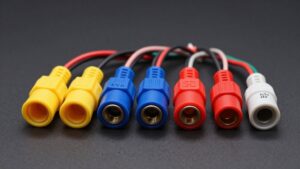
Battery Connector Resistance
Beyond motor heat, the battery-to-ESC connection can limit how much voltage reaches the motor under load. Connector resistance creates voltage drop according to Ohm’s law: current multiplied by resistance equals lost voltage. At 100 amps, each milliohm costs 0.10 volts and dissipates 10 watts as heat.
- A loose plug adds resistance and can soften acceleration.
- Worn contacts may increase voltage loss under peak current.
- Poor solder joints create another resistive point.
- Choose clean, tight connectors rated for your current.
- Check for warmth or discoloration after each hard run.
These losses reduce the voltage available to your ESC and motor during acceleration. If the connection already has low resistance, changing connector style alone won’t make your car faster. Focus on sound contacts and soldering.
Check Your ESC Voltage Limit
Before installing a higher-voltage LiPo, check your ESC’s label or manual for its maximum cell count. If it lists a voltage limit, compare that figure with the pack’s nominal voltage; each LiPo cell provides about 3.7 V. A 2S pack is 7.4 V, 3S is 11.1 V, and 4S is 14.8 V. If the ESC specifies cells, follow that rating and don’t exceed its S count.
Overvoltage isn’t a safe way to gain speed, even for a brief run. It can damage the ESC and push the motor beyond its rating. Check the motor, gearing, and other electronics, too: the ESC’s limit doesn’t prove the whole car can handle that voltage. Choose a compatible pack before tuning for stronger acceleration or higher top speed.
Conclusion
A LiPo can make your RC car faster, but voltage alone won’t guarantee more top speed. You need compatible gearing, an ESC that supports the pack, and enough tire grip to use the added power. Lower voltage sag and reduced battery weight can sharpen acceleration, while poor connectors or excess motor heat erase gains. Check your ESC’s voltage limit, monitor motor temperature, and tune gearing before pushing for more speed.