How Much Does RC Racing Cost? Car, Batteries, Entry Fees and Spares
Your RC racing budget can start under $100 for an entry-level car, while high-end models top $1,000. Check whether a ready-to-run kit includes a compatible battery and charger; packs range from about $8 to $200.
Add spares, tires, tools, and repairs, since costs depend on track surface and how you drive. Local club racing may be free, but memberships, event entries, travel, lodging, and food can add up.
Use the breakdown below to plan ahead.
RC Racing Cost Breakdown
RC racing costs can range from under $100 for an entry-level car to more than $1,000 for a high-end model, with mid-range options balancing price and capability. Treat that range as a starting point, not a complete budget. Your total depends on how often you race, where you compete, and how much maintenance you handle yourself. Local club racing is usually free, but larger events may charge registration fees; travel and equipment can add substantially to the day’s cost.
Set aside money for spares and repairs, because replacement costs depend on which parts you need and the damage involved. Tires, shocks, and motors are common upgrades, but you don’t need to buy them all at once. Inspect your car after each run and replace worn parts before they cause further damage. Proper maintenance can keep an older car running for years, so you don’t always have to chase the newest model.
Car, Battery, and Entry Costs
Your car is the biggest upfront cost: prices range from under $100 to over $1,000, with mid-range models offering a balanced starting point. A ready-to-run car may include a battery and charger, but check the kit list; you’ll need compatible extras if either is missing.
| Category | Typical cost | Budget note |
|---|---|---|
| Car | Under $100 to over $1,000 | Mid-range balances value |
| Compact battery | $7.99 | 160mAh |
| High-capacity battery | $49.99 | 5,000mAh hard-case |
| Club entry | Usually free | Check event fees |
Local club racing is usually free, though larger events may charge registration. Add travel and equipment expenses before committing.
Reserve money for replacement parts, too: crashes or wear can require anything from a component to an assembly, so your total depends on what breaks. Compare event rules and kit contents, then set your first-race budget.
Seasonal Tire Replacement Costs
Tires don’t necessarily need replacing each season; inspect them regularly and replace them when wear or damage affects performance. Check tread, edges, and sidewalls for wear, tearing, or other damage that could reduce grip or make handling unpredictable. Your track surface and driving style influence how quickly tires wear, so use condition—not the calendar—to decide when to buy replacements.
Tire prices vary by brand and quality, and the right choice depends on your vehicle and racing surface. Match the tire type to your setup, then weigh durability against the performance you need. Reputable manufacturers can help you balance those priorities, though no tire guarantees a fixed service life. Record the cost of each set in your racing budget alongside other replacement parts and event expenses. This makes seasonal spending easier to forecast without assuming you’ll need a new set every year.
Pit Equipment Costs
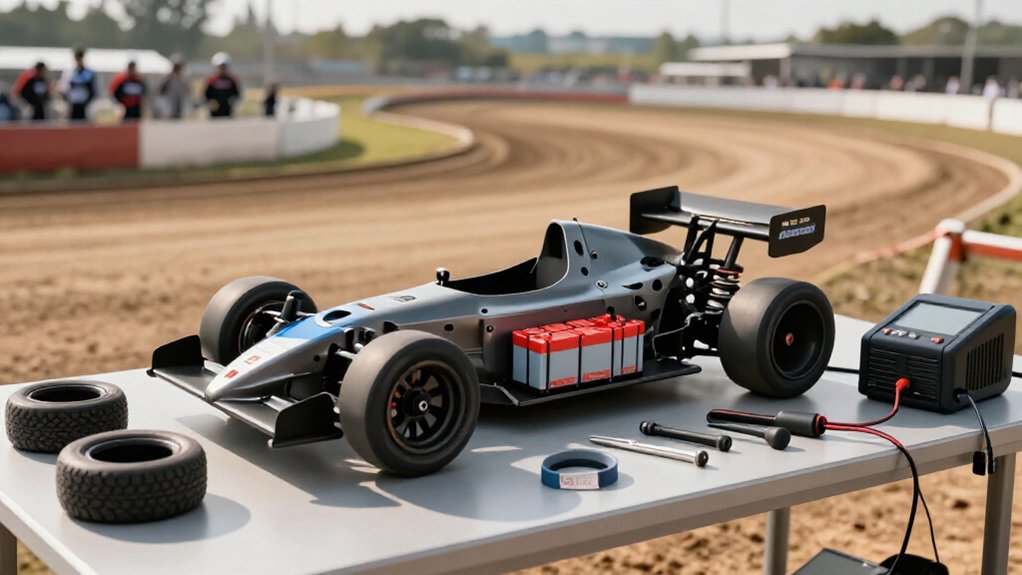
Pit equipment costs depend on the tools, setup gear, and storage or transport solutions you choose. Check your car’s manual for compatible batteries and chargers before buying, since battery prices range from $7.99 to $199.99. Plan your budget around your vehicle and racing schedule, and consider spare batteries to reduce downtime.
Essential Pit Tools
Budget for pit equipment separately from your car, batteries, and race-entry fees, since tools and repair supplies add to the cost of RC racing.
Check your car’s manual and the track’s rules before buying; they identify tools you’ll need for routine adjustments and repairs. Set aside money for basic maintenance supplies and replacement tools, since wear and damage can create extra costs over a season.
Start with essentials rather than buying a complete collection; you can add tools when repeated maintenance or track requirements justify the expense.
Bring a few compatible spare batteries to reduce downtime between runs, but check your vehicle manual before purchasing them. Plan spending before events, especially larger ones, where registration and travel costs may compete with your pit-equipment budget.
Setup Equipment Costs
Once you’ve planned for basic tools, set aside a separate amount for setup equipment rather than folding it into your car, battery, or race-entry costs.
Pit gear has no standard price here, so build a budget around what your setup actually requires. Buy essential equipment first, then add items as your racing needs grow; this keeps early spending controlled without leaving you unable to make useful adjustments. Check compatibility with your car and batteries before you buy. Your vehicle’s owner’s manual can confirm battery requirements and help you avoid unsuitable gear.
Compare both price and quality across brands, and favor reputable manufacturers for equipment and replacement parts. Don’t assume every event adds the same expense: local-club racing is usually free, while larger events may charge registration and require travel spending. Keep those event costs separate from your pit-equipment allowance so you can track each part of your racing budget.
Storage And Transport
Along with your car and batteries, storage and transport gear can add to RC racing costs. Include these items in your budget. Your needs depend on what you take to the track: a car, batteries, charger, tools, and spare parts all require organized space. Choose a setup that carries the equipment you use; buying more capacity than you need can waste money.
You won’t find fixed prices or product recommendations here, so compare options against your budget and travel plans. If you attend a larger event, travel expenses may make convenient transport more valuable. Account for those costs before choosing optional upgrades. A practical storage and transport plan helps protect your gear, simplifies packing, and keeps spending focused on what supports your racing.
Electric Versus Nitro Classes
When you compare electric and nitro classes, weigh powertrain and operating costs, including batteries versus fuel and class-specific maintenance. Electric battery prices vary widely by capacity and voltage, so check your car’s manual for compatible packs and connectors. You can’t make a reliable total-cost comparison without nitro pricing, and spare batteries, event fees, and travel can also affect your budget.
Powertrain and Operating Costs
Electric RC racing requires a compatible battery and charger, and your battery choice affects runtime, acceleration, and torque, so check your vehicle’s manual before buying.
Keep spare packs ready for longer sessions, and confirm your charger supports their chemistry and voltage. A spare battery can extend track time, though it adds gear to charge, transport, and manage between runs at your venue. Plan around your schedule.
Before choosing a class, check its rules and ask local racers about typical maintenance. Compare equipment requirements so you can budget for a practical setup and avoid incompatible components.
Battery Versus Fuel Expenses
Your class choice also shapes recurring power costs: electric racers need compatible batteries, with examples ranging from $49.99 for a 5,000mAh 2S pack to $79.99 to $89.99 for a 5,000mAh 3S pack. Electric pack prices span widely: a small 160mAh 2S LiPo can cost $7.99, while a 10,000mAh 4S LiPo lists at $199.99. Choose a pack your vehicle supports; check its manual before buying or planning upgrades.
Capacity, voltage, and discharge rating affect runtime, torque, and acceleration, so the cheapest option may not suit your class or driving goals. Carrying compatible spares lets you spend longer on track, but adds to your upfront outlay. Nitro racers buy fuel instead, yet these figures provide no nitro-fuel prices. You can’t make a reliable direct running-cost comparison from battery prices alone. Treat battery purchases and fuel use as separate budget lines; compare only with realistic track-time and consumption estimates for both.
Class-Specific Maintenance Needs
Maintenance differs by class: electric racers need a compatible battery and charger, while nitro racers need fuel and regular engine care. Check your manual before buying approved battery types or upgrades; a mismatch can sideline your car. Spare batteries help you return to the track faster. Nitro avoids drive-battery needs, but you’ll still clean, inspect, and replace worn or broken parts. Neither class has a fixed repair bill: use and damage determine what you spend.
| Class | Electric | Nitro |
|---|---|---|
| Power upkeep | Approved battery, charger | Fuel, engine care |
| Common repairs | Tires, shocks, motor | Clean and replace parts |
| Budget impact | Spares cut downtime | Damage drives spending |
When a part fails mid-season, choosing replacements protects your budget without pretending every repair costs alike.
Race-Day Spare Parts Costs
Because race-day spare-part costs depend on brand, quality, and what’s damaged or worn, plan for cleaning, replacements, and repairs rather than a fixed amount.
You’ll budget for routine cleaning, worn parts, and crash repairs. Common replacements or upgrades include tires, firmer shocks, and motors; choose based on your car and racing needs. Costs vary with brand and quality, so check compatible options rather than assume a standard price. Buy from reputable manufacturers to support reliable performance and avoid adding repair needs.
Carrying useful spares can get you back on track sooner when a part fails. Check your car’s specifications before buying, and prioritize likely replacements. A focused kit helps you avoid carrying parts that won’t fit during race day without wasting too much budget.
Travel and Lodging Costs
Local and club races are usually free, so you may have little or no travel or lodging expense. Larger events can add travel costs; your distance and arrangements determine the total. If you’re traveling far, you may need an overnight stay. Plan both costs before you go, then include them with registration and equipment when estimating your race budget.
| Situation | Cost to plan |
|---|---|
| Local club | Often little or none |
| Nearby larger event | Travel |
| Farther event | Travel and possible lodging |
| Race estimate | Add travel and lodging |
Your outlay depends on how you get there and whether you stay overnight; no lodging figure applies to every race. Check the location early, compare arrangements, and set a limit so transport or a room doesn’t push race spending beyond plan.
Budgeting for Trackside Food
How much should you budget for trackside food? Track prices vary, so check the venue’s menu before race day. Set a separate allowance beside your entry fees, travel, and equipment costs, then keep it within your overall hobby budget.
- Check venue prices beforehand; confirm whether food and drinks are sold trackside.
- Bring snacks or a packed meal if the track allows it; this helps you keep spending predictable.
- Allow extra money for drinks or a meal during longer race days, when you may spend more than planned.
- Trackside purchases can add up, so set a firm limit and avoid treating convenience buys as part of your entry costs.
Review your total after each event and adjust next time.
Check Track Membership Fees
Ask your local track or club about membership fees, since costs vary. Before you budget, ask whether membership is required to use the track or whether you can pay per visit. Find out if your dues include practice access, race-entry fees, or neither; don’t assume one covers the other.
For occasional running, per-visit charges may suit you better, while regular practice could make membership worthwhile. Confirm any extra conditions, such as guest limits or booking rules, before you commit. Local-area and local-club racing is usually free, but check directly for track-specific charges. If you’re considering a larger event, add registration and travel expenses to your budget. Ask organizers what registration covers and whether practice or race access costs any extra.
Conclusion
RC racing costs depend on your class, track, and travel, but you can keep spending predictable. Start with a reliable car, batteries, and basic pit gear, then budget for entry fees, tires, and common spares. Check membership rates and ask local racers about typical race-day expenses before committing.
If you’re choosing between electric and nitro, compare the full running costs, not just the car price. Set a seasonal budget, track every purchase, and upgrade only when you know what you need.