RTR vs Kit RC Car: Which Should You Buy First?
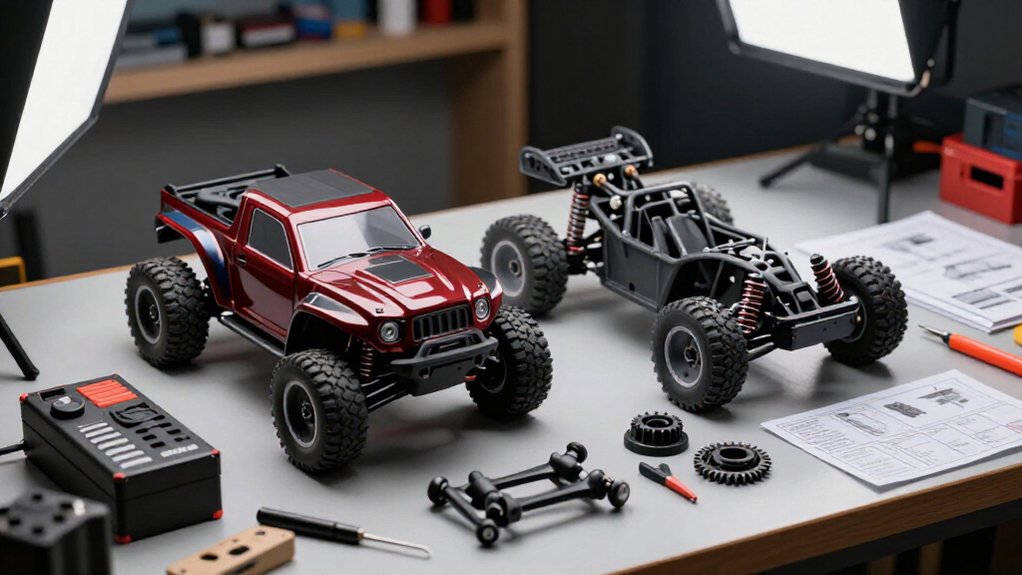
Buy an RTR first if you want to drive this weekend with a factory-built chassis, installed radio gear, and minimal setup. Confirm whether it includes a battery and charger, then check ride height, parts stock, and warranty coverage.
Choose a kit if you want to select electronics, solder connections, tune suspension, and target a specific race class. Kits cost more time and tools but offer greater control. The comparisons below clarify the trade-offs for you.
Included Transmitter, Battery, and Electronics
RTR RC cars typically arrive with the transmitter, motor, ESC, steering servo, and receiver already installed and wired, so you can avoid selecting and configuring core electronics. That lowers your startup complexity, but it doesn’t guarantee every power item is in the box. Most transmitters come paired to the receiver; you may still need AA cells.
| Item | RTR buying check |
|---|---|
| Radio | Confirm AA batteries |
| Drive battery | Check inclusion |
| Charger | Check inclusion |
| Kit electronics | Source compatible components |
Before you buy, inspect the package list: an RTR may omit its drive battery and charger. A kit commonly excludes those parts plus the motor, ESC, servo, and radio. You’ll need to match every kit component to the vehicle and to the other electronics carefully.
Factory-Built Chassis vs DIY Assembly
A factory-built RTR gives you an assembled chassis with the suspension, drivetrain, motor, ESC, and steering servo already installed and wired, so you can focus on charging the battery and driving. This general-purpose factory setup minimizes common assembly errors and gets you on the ground quickly. Choose it if you value convenience, predictable fitment, and less upfront work.
A kit supplies separate chassis, suspension, drivetrain, and hardware components that you assemble from instructions. Expect a four- to eight-hour build, a dedicated workspace, hex drivers, and sometimes a soldering iron. That effort lets you control assembly and understand the gears and suspension, making later maintenance and repairs easier. Choose a kit if you want hands-on knowledge and direct build control from day one.
Suspension Tuning and Lap Times
For faster, more repeatable lap times, start with the baseline: an RTR arrives with a general-purpose suspension setup, while a kit gives you direct control over components and settings during assembly. Check your RTR’s ride height, camber, and toe before chasing speed; factory settings target broad, all-around driving, not your track. With either option, alter one variable at a time, then run consistent laps.
Compare averages, not a pass. Adjust shock oil and springs for surface grip and bumps: these choices govern suspension response, so stiffer won’t automatically lower times. A kit suits you if you want component-level control; an RTR suits you if you’d rather learn from a preassembled reference. Log settings and results, then retain only changes that produce measurable, repeatable gains.
Soldering Skills and Build Hours
Beyond suspension setup, the time and technical work required before the first drive separate RTR and kit RC cars. With an RTR, the factory typically installs and wires the motor, ESC, servo, and receiver, so you can usually run after charging the battery and adding transmitter batteries.
- RTR: avoids soldering and minimizes pre-drive preparation.
- Kit: can require soldering motor, ESC, or battery connections, depending on the chassis and electronics.
- Build time: expect roughly 4–8 hours, with electronics installation and setup potentially adding more.
Choose RTR when you want use, limited tools, and no soldering learning curve. Choose a kit if you have a workspace, hand tools, and possibly a soldering iron. Assembly takes longer, but it teaches you how system fits, wires, and functions.
Terrain and Track Surface
Terrain should shape your RTR-versus-kit decision as much as budget or build time. If you’ll run on grass, gravel, or bumpy ground, a larger 1/5 or 1/6 RTR generally copes better than a 1/24 or 1/18 mini, although it requires more room. Minis fit indoor floors and compact tracks.
Whatever you choose, match ground clearance, tire pattern, and suspension travel to the surface. On a prepared track, a kit gives you control to build and tune damping, ride height, and setup around local conditions; an RTR arrives with a general-purpose factory setup. Before purchasing, confirm its tires and components suit your usual terrain or track, and verify replacement parts are stocked locally. This check prevents mismatched handling and avoidable downtime after your first runs.
Battery Replacement Costs
Battery costs can shift the real price gap between an RTR and a kit. Some RTR packages include a battery and charger, but many don’t, so verify the box contents before you compare purchase prices. Kits usually exclude both, requiring you to add them to your build budget.
- Match chemistry, voltage, capacity, and connector to the vehicle’s specifications.
- Include a compatible charger when the package doesn’t supply one.
- Measure battery space and confirm electronics limits before choosing upgrades.
With a kit, you can select battery specifications that suit your runtime, power, and charging goals. An RTR can be less flexible: its replacement pack must fit the tray and work with installed electronics. Don’t use mismatched batteries or chargers; they can damage your equipment directly.
Warranty Terms and Parts Availability
Warranty terms and parts support can matter as much as the initial RTR-versus-kit price. Check the warranty before you buy: the store information lists 90 days, but coverage varies by brand and model. Confirm which failures and components qualify, then ask whether upgrades, modifications, or your own repairs void protection.
Both hobby-grade RTR cars and kits typically use replaceable suspension, drivetrain, and body parts. Before choosing, verify that those spares are in stock through the manufacturer, online retailers, or preferably a local hobby shop. Local availability can prevent long overseas shipping delays when a crash sidelines your car. A kit gives you knowledge of its assembly, which can simplify diagnosis and repairs. An RTR saves setup time, but you’ll need maintenance and replacement components.
Long-Term Resale Value
You’ll protect resale value in either an RTR or kit by documenting maintenance, repairs, and component condition. Keep original parts, manuals, receipts, and packaging, since buyers often prefer a verified baseline over heavily personalized upgrades. Performance electronics can help a kit attract the right buyer, but they won’t always raise its price if they don’t match that buyer’s setup.
Condition And Maintenance Records
Long-term resale value depends less on whether an RC car started as an RTR or kit than on how clearly you can prove its condition and care. For an RTR, document factory-installed electronics and drivetrain service; for a kit, record assembly details and build-time part changes.
- Keep receipts, build notes, and dated logs for cleaning, lubrication, shock service, and repairs.
- Photograph the car before listing and identify missing battery, charger, transmitter, or kit items.
- Disclose crashes, water exposure, and known faults honestly.
These records let buyers compare an RTR’s wear on its factory-installed motor, ESC, servo, and drivetrain against a kit’s assembly quality. Clear evidence supports your asking price, reduces condition-related disputes, and sets accurate expectations about package completeness. It also protects your sale.
Upgrades Versus Original Parts
Upgrades can improve performance, but they don’t automatically raise an RC car’s resale value. You should keep removed factory components, particularly the motor, ESC, servo, wheels, and suspension parts. Because hobby-grade platforms use modular components, a buyer can reinstall stock equipment or assess whether your upgrades fit the model.
A kit’s selected electronics may attract a buyer, while an RTR’s replacement hardware can concern someone seeking original specification. Document each upgrade’s brand, specifications, installation, and condition, then provide that list with your vehicle. Before spending more, compare upgrade costs against used-market pricing. A kit may already carry a higher investment after electronics, yet that expense rarely transfers dollar-for-dollar at resale. Complete original parts give buyers flexibility, verify compatibility, and make your listing easier to evaluate.
Race-Class Eligibility Requirements
Before you buy, check the organizer’s current spec-class RTR rules, as a stock model must meet chassis, motor, battery, and modification limits. A kit lets you choose class-compliant components, but your finished build faces the same technical inspection. Confirm approved electronics, tires, body style, and weight limits, and ask whether your exact configuration qualifies.
Spec Class RTR Rules
Spec-class racing doesn’t treat every ready-to-run car as race-legal, so compare the current rulebook against the exact RTR or kit configuration you plan to run. An RTR can offer a cheaper, faster entry, but its included electronics and tires may miss class specifications. Before you buy, verify:
- Approved chassis, drivetrain layout, and minimum race weight
- Motor type or rating, battery voltage, and required tire compound
- Availability of legal replacement parts and upgrade restrictions
A kit may give you more control over approved components, while an RTR may require swaps before its first heat. Check whether the rules mandate a stock chassis or prohibit drivetrain changes, then price the required parts. Don’t assume “spec” means identical: organizations revise lists, and local tracks may often enforce limits.
Kit Build Compliance
A kit gives you more component control than an RTR, but it isn’t automatically eligible for a race class. Before you buy, check the event’s rulebook for eligible classes, approved chassis, and required specifications. A kit can meet a class only when its final configuration matches every restriction, including dimensions, body rules, minimum weight, and drivetrain layout.
Compare the exact kit version against the class listing, not merely the platform name. Some categories require a specific release or ban modifications that otherwise improve performance. Check whether optional parts, conversion pieces, and setup changes remain permitted. If the rules or eligibility lists seem unclear, ask the race organizer before you purchase or assemble the car. That prevents costly rebuilds and protects your planned class entry.
Approved Electronics And Tires
Race rules often control the exact electronics and tires you can run, so verify the current approved list before choosing a kit or RTR. Classes may restrict motors, ESCs, batteries, servos, radios, and tires, making component verification a purchase requirement. A kit lets you choose compliant gear from the start; an RTR may need upgrades.
- Confirm motor and ESC model, rating, turn count, voltage, and allowed firmware.
- Match tire brand, tread, compound, and modification requirements.
- Price approved replacement parts when comparing RTR value with a kit.
Some events mandate event-supplied tires, which eliminates choice but controls parity and ongoing costs. Don’t assume stock RTR equipment qualifies; include replacement costs before calling it the cheaper entry. That comparison protects your race budget on day one.
RTR for First Weekend Drives
For a first weekend drive, an RTR RC car gets you on the ground quickly: its assembled chassis, painted body, glued tires, motor, ESC, and steering servo typically come installed. You’ll need to charge a compatible battery and install AA cells in the transmitter, but verify the box: batteries and chargers aren’t always included.
Factory assembly and a general-purpose setup maximize driving time rather than build and tuning time, unlike a kit. If you’re new, choose a model with training mode limiting throttle to 50 percent, and favor durability over headline speed. Also confirm local replacement-parts availability; RTR cars still require maintenance and occasional repairs. That support matters more than extra speed when a first crash bends a suspension arm or breaks your bumper.
Conclusion
You should buy an RTR first if you want to drive this weekend, avoid soldering, and receive matched electronics, radio gear, and a warranty path. Choose a kit when you’ll tune suspension, select components, and accept longer build time for sharper setup control and often better race compliance. Your terrain, local class rules, parts support, and budget decide the winner. Start RTR for convenience; move to a kit when customization and competitive development matter most.