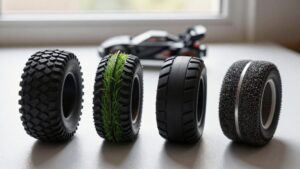
RC Drift Tire Compound Chart: Match Your Tires to Every Surface
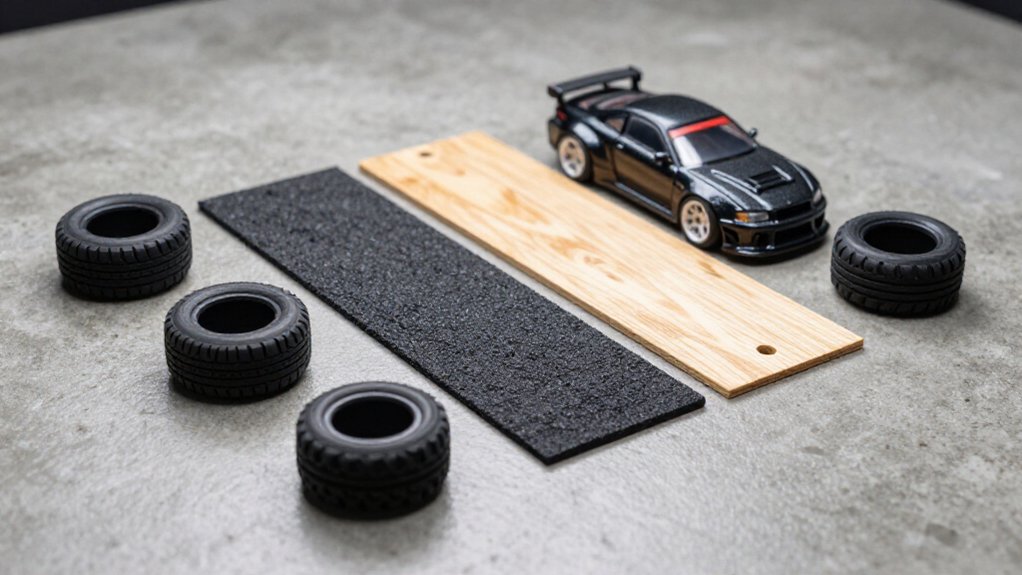
Match your RC drift tire to the surface: use Yokomo DRPA on P-Tile, DRC or MST Carpet tires on carpet, and DRA on asphalt.
For polished concrete, hard-plastic or resin slicks provide a freer slide; rough pavement generally favors harder, more durable compounds. Compare hardness only within the same brand, since ratings aren’t standardized.
Adjust for temperature, then test grip and wear on track. Check manufacturer RPM limits and seat each bead securely; the chart below explains the key codes and setup details.
Surface-Specific Compound Picks
Choose compounds by surface: polished concrete and tile suit hard plastic or resin slicks such as DS Racing LF tyres, where higher LF numbers (LF-1 to LF-5) indicate harder, lower-grip compounds. On P-Tile, fit a tyre designed for that finish: Yokomo DRPA Competition (#YOKZR-DRPA) or Topline P-Tile (#TDW-TDT-002PE). Carpet needs a dedicated compound, not a smooth-surface slick; consider Yokomo DRC Competition (#YOKZR-DRCA) or an MST Carpet tyre. For asphalt, choose a matched option such as Yokomo DRA Competition (#YOKZR-DRAA); a medium compound can balance traction with service life on sealed tarmac. On outdoor pavement or rougher ground, select a wear-resistant tyre for longer runs. A softer option can increase grip, but expect faster wear.
Hardness Ratings by Surface
Compound hardness ratings aren’t standardized across brands, so compare them only within the same tire range. A higher number may mean harder rubber in one line, not another; DS Racing LF-1 through LF-5 gets harder as numbers rise.
| Surface | Hardness cue | Selection guidance |
|---|---|---|
| Polished concrete or tile | Hard | Low, steady grip; sticky tires suit especially slippery floors |
| P-Tile | Surface-rated | Choose Yokomo DRPA or Topline P-Tile |
| Carpet or asphalt | Specific to surface | Carpet: MST Carpet or Yokomo DRC; asphalt: Yokomo DRA |
On carpet, a carpet-specific compound lets you slide predictably without gripping fibers. Outdoors, medium or harder tires last longer on asphalt, and harder rubber resists tearing on rough surfaces. Don’t transfer a rating between brands: select for the surface, then compare compounds within that tire range.
Tire Acronyms Decoded
Yokomo’s DRA, DRPA, and DRC codes identify tires for asphalt, P-Tile, and carpet, respectively. Match the code to your track surface before comparing tread or fit. Yokomo’s competition examples are DRA #YOKZR-DRAA, DRPA #YOKZR-DRPA, and DRC #YOKZR-DRCA; each label links the tire to its intended flooring.
DS Racing’s LF series runs from LF-1 to LF-5, with each higher number indicating a harder, lower-grip compound. Choose among these ratings for the surface and grip level you need. DS Racing also offers HF compounds for higher-grip surfaces.
MST names compounds from Soft through Hardest and includes a dedicated Carpet option. Don’t compare these labels directly with another brand’s scale: manufacturer names and hardness ratings differ. Compare compounds within each brand, then verify the intended surface application.
Temperature-Based Compound Adjustments
Match compound hardness to track temperature: below 18°C, you’ll generally get steadier shape from harder tyres, while 18 to 25°C suits mid-range compounds. Above 25°C, softer tyres can maintain grip, but you’ll need to monitor heat and wear. Treat these ranges as starting points, then reassess compounds as surface texture and driving conditions change.
Match Compound to Temperature
As track temperature changes, adjust tire hardness to maintain a consistent contact patch. Below 18°C, choose a harder compound; it resists deformation and can deliver steadier contact across the running surface. From 18 to 25°C, use mid-range hardness to balance tire flex with stability as the tread loads through shifts. Above 25°C, a softer compound stays flexible and can conform to surface texture, though increased wear may shorten its useful life.
Treat these ranges as setup starting points, not fixed rules. Check how your tires load, slide, and release on your specific surface, then refine compound choice for grip and predictable rotation. A smooth, high-grip track may demand a different balance than a rough or low-grip surface, even at the same temperature. Track wear between runs.
Cold Weather Adjustments
Cold-weather compound choice depends on both temperature and surface texture. Below 18°C, harder compounds resist deformation, helping your tires hold a more predictable line on cold pavement. On smooth surfaces, however, a softer tire may preserve grip because limited texture gives the tread fewer edges to engage. Match that adjustment to the track’s actual finish, not temperature alone.
Around 18 to 25°C, mid-range hardness balances grip and durability across varied surface textures. Above 25°C, softer compounds stay flexible and maintain grip, though they may wear faster.
Treat these ranges as starting points. Test compounds on your own surface, then compare steering response, slide consistency, and wear. A rough or high-grip track can behave differently from smooth pavement at the same temperature, so log your results carefully.
Hot Track Considerations
When track temperatures exceed 25°C, softer compounds can stay flexible and maintain grip, but they may wear faster.
On cooler tracks below 18°C, harder compounds resist deformation and can deliver more consistent performance across the surface. Between 18 to 25°C, a mid-range compound gives you a practical balance of grip and durability. Treat these ranges as starting points, not fixed settings: texture and available grip also shape how predictably your tires slide.
A smooth, low-grip surface may favor a compound that breaks traction progressively, while a rougher or grippier surface can load the tread differently and change the response. Choose for the track you’re driving, then adjust compound if the tire’s behavior doesn’t match your desired drift angle or changeover speed on that particular surface today.
Monitor Tire Heat
Track tire temperature during each session, since heat can change how consistently the car breaks traction.
Below 18°C, choose a harder compound; it resists deformation and holds its shape more consistently as it warms. From 18 to 25°C, a mid-range compound balances flexibility, grip, and durability on the track. Above 25°C, a softer compound stays flexible, but you’ll trade longer tire life for increased wear.
Check temperature during the run and watch for grip or slide behavior that becomes inconsistent; heat may signal that your compound doesn’t suit the operating range.
Treat these thresholds as starting points, not guarantees: test each compound on your actual surface. Track texture and available grip also affect tire response, so judge temperature alongside how the car shifts from grip to slide. Keep your speed and run length consistent when comparing compounds to isolate heat effects accurately.
Reassess as Conditions Change
As track temperature shifts, reassess compound hardness because heat changes tire flexibility and slide consistency. Below 18°C, choose harder tires to resist deformation on the surface and preserve a predictable drift line. From 18 to 25°C, mid-range hardness balances grip with stability, helping you maintain angle without abrupt traction changes.
Above 25°C, softer compounds may stay flexible and conform to the track, but expect faster wear, especially on abrasive layouts.
Treat hardness values as a starting point, not a fixed rule. Around 40A suits a balanced beginner setup; 30A to 35A generally adds grip, while 45A to 55A tends to last longer with less traction. When conditions shift, run the same setup and compare grip, slide consistency, and wear. If any changes, adjust compound hardness, then retest on the same surface.
Reading Compound Chart Values
To read a compound chart accurately, compare values within one manufacturer’s lineup, since brands use different names and scales.
Read the maker and compound name or code together; a number alone won’t tell you how another brand’s tire behaves.
For DS Racing LF compounds, hardness rises from LF-1 to LF-5. Higher numbers generally mean less grip and a freer slide, which can suit a surface where you want less tire bite. MST labels compounds from Soft through Hardest, but its Carpet option targets that surface specifically; it isn’t another step on the hardness scale.
Yokomo codes describe intended surfaces, not directly comparable hardness: DRA means asphalt, DRPA means P-Tile, and DRC means carpet. Use those codes to match the tire to your track’s surface.
Tire RPM Safety Limits
Before a high-speed run, check the tire maker’s maximum RPM rating and never exceed it; there’s no universal safe limit for RC drift tires.
At the same vehicle speed, a smaller tire spins faster than a larger one. Higher RPM raises centrifugal force, which can stretch the tire, loosen its fit on the wheel, or cause failure. Tire diameter thus affects how quickly your compound rotates, regardless of the surface you’re preparing to run.
Before testing, inspect each tire and wheel bond for cracks, damage, or loosening; replace any compromised part. Secure tires as the manufacturer directs, since an imperfect bond may release under load.
Use a protective test area and keep clear of the vehicle during high-RPM checks. Confirm your tires remain seated before each run.
Asphalt and Concrete
Asphalt and Concrete
On smooth asphalt and concrete, slick or shallow-tread drift tyres maintain consistent contact for smooth slides. Choose compound hardness according to the finish and grip level, not the surface name alone. On polished concrete, hard plastic or resin compounds slide freely and wear slowly, giving you behavior suited to low grip.
Higher-grip or outdoor asphalt can demand a medium compound to balance traction with durability; on rough pavement, harder tyres resist tearing. If polished concrete or wet asphalt feels too slippery, a stickier compound may help your car hold an angle, but wet conditions can still reduce control. Test the surface before settling on a setup. Because brands use different rating scales, compare hardness within one manufacturer’s lineup; a number from a brand may not indicate an equivalent compound.
Preventing Tire Bead Slippage
A tyre bead can slip on the rim during high-RPM running if dirt or oil reduces its grip. On asphalt or concrete, secure seating keeps your drift tyre’s contact patch consistent through loaded slides.
- Wipe the rim’s mounting surface with isopropyl alcohol to remove dust and oil before fitting.
- Press the tyre evenly onto the rim, seating both beads fully in the inner grooves all around.
- Inflate only slightly to check even seating; don’t overinflate, which can distort the fit.
- Apply RC tyre glue or bead sealant around the bead to resist slippage at high RPM.
- Before each session, check secure seating, especially after removing or remounting the tyre.
A clean rim and seated beads maintain predictable grip as track speed and load rise.
Brand-Specific Compound Codes
Compound codes vary by manufacturer, so match the label to the surface rather than assuming the names are interchangeable. Before you buy, check the maker’s chart and your track: a code describes that brand’s compound or intended surface, not a universal hardness scale.
- DS Racing LF-1 through LF-5 get harder as numbers rise, reducing grip; choose its HF range for higher-grip surfaces.
- For RWD Competition II slicks, compare F One and FF Zero against your surface.
- MST runs Soft to Hardest, plus Carpet; CS-M slicks use White or Silver.
- Yokomo labels DRA for asphalt, DRPA for P-Tile, and DRC for carpet.
- Also check HPI Hard T-Drift, Reve D AS-01 HG, and Topline’s Concrete or P-Tile specs.
Test first, then log grip and wear on-track.
Conclusion
Match your RC drift compound to the surface, not just the chart label. On smooth concrete or polished asphalt, start with a harder compound for predictable grip and lower wear; on dusty, rough, or cold surfaces, test a softer option for traction. Adjust for temperature, confirm brand codes, and check bead security before each run.
Keep tire RPM within the manufacturer’s limit. Record results by surface and conditions, then refine your setup one change at a time.