How to Get Started in RC Racing at Your Local Track
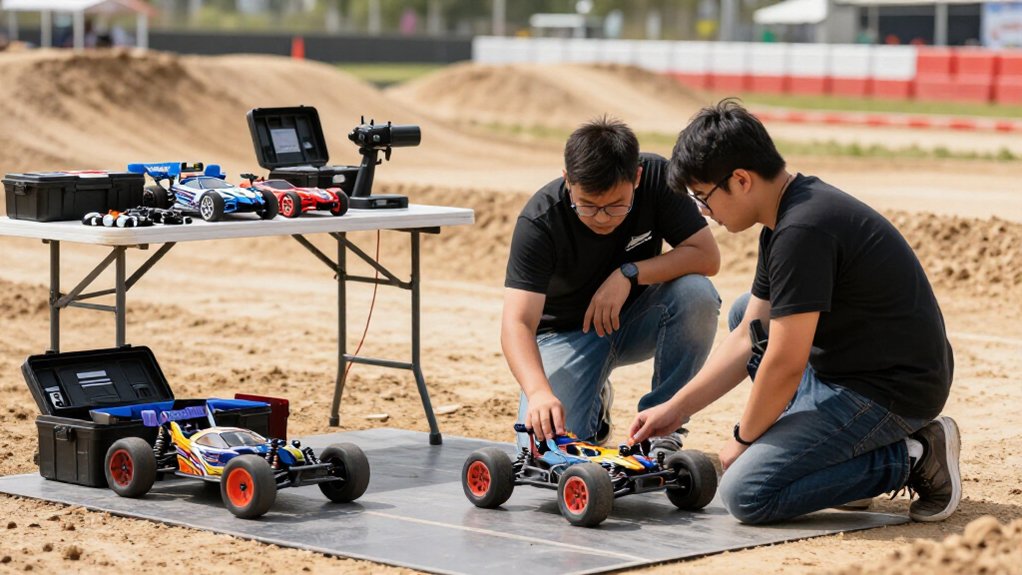
Visit a nearby RC track during an event to watch races, meet drivers, and confirm schedules, fees, classes, and beginner options. Pack your pit box with quality tools, common spares, charged batteries, a compatible charger, and mounted spare tires. Walk the layout, ask about marshal positions and qualifying, then practice at a comfortable pace.
Build confidence with clean, repeatable laps before chasing speed. More guidance can help you prepare for race day and keep improving.
Finding Your Local Track
Start by visiting a nearby RC track during an event. You can watch races, explore the pits, and talk with local drivers to learn how the venue works. Ask racers or nearby hobby shops about track locations, event dates, schedules, fees, and registration before you make plans.
Check which classes the track offers, including novice or rookie divisions, before choosing a car; the right class can make your first races more welcoming. Find out which models local racers drive, then ask whether the track’s hobby shop stocks parts for them. That support can simplify maintenance and help you stay on the track. When you’re comparing venues, consider starting at a convenient local track. Shorter trips make it easier to attend events and practice regularly.
Pack Your Race-Day Pit Box
Once you’ve chosen a track, pack a pit box with the tools and spares you’ll need to handle quick repairs between rounds. Choose a sturdy box with compartments so small hardware stays easy to find.
- Pack quality hex and nut drivers for fast wheel changes, plus clips, wheel nuts, screws, and likely breakable parts: suspension arms, shock towers, C hubs, and axle pins.
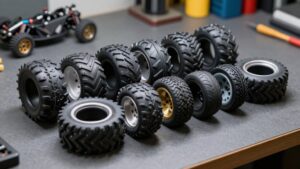
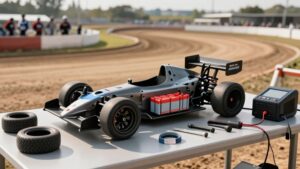
- Bring two or three LiPo packs, a compatible fast charger, and mounted spare tires in varied compounds or treads; track grip changes with surface conditions and temperature.
- For indoor racing, add a chair, pit table if needed, a mat, and a LiPo sack.
Organize gear before you leave, and you’ll spend less time searching and more time learning from each run.
Step 1: Install Fresh Receiver Batteries
Before heading to the track, make sure your receiver has reliable power. If your radio system uses AA batteries, install a fresh set in your transmitter and pack spares for race day. For a rechargeable receiver pack, charge it fully at home; don’t assume it still has enough power from your last outing.
At the track, check the receiver-battery connection and switch on your system to confirm the receiver has power before practice or a race. If you plan to use a transponder, make sure your receiver has an available servo port for it. Keep a charged spare receiver battery in your pit box, too. That way, a low pack won’t interrupt racing, and you can stay focused and enjoy your first race day.
Step 2: Inspect the Track Layout
What does the track demand from your car and driving? Visit your local track during an event and watch racers tackle its turns, jumps, and other features. You’ll see which sections reward smooth steering and where drivers need patience.
Walk the track and pit area, then ask local racers which lines and sections beginners should focus on. During practice, learn the layout and grip at a comfortable pace; build confidence before attempting jumps or adding speed. Notice where you can safely wait when you’re not driving. Keep your car off the track, especially the straightaway. Ask track staff about layout rules and marshal positions, too. You’ll know where to stand and how to return an overturned car safely. Inspection builds confidence and awareness.
Step 3: Ask About Qualifying Format
Ask the race director how qualifying works: how heats are assigned, how long each race lasts, and how results determine your starting position in the Main. After the drivers’ meeting, check the posted race sheets for your heat, race number, and qualifying order. Find out how many rounds the schedule includes; a typical format may include three, and each may require a charged battery pack.
Ask whether heats are timed or based on completing the most laps, and how officials handle ties or missed heats. Knowing the rules helps you plan. Once you’ve identified your race, stay alert to the schedule and get ready before your heat is called. If you’re in race four, prepare during race three. Clarify anything uncertain with the director before racing begins.
Step 4: Drive Three Practice Laps
Use your first three practice laps to learn the track, not to chase a fast time. Drive at a comfortable pace and keep your car near the middle of the track. Pay attention to the layout, identify the racing line, and stay aware of other drivers. Smooth throttle inputs and accurate steering will help you stay in control.
Approach bumps steadily and roll over them before you attempt any jumps. Keep your car upright and avoid collisions; consistency matters more than speed during early practice.
If you need to stop, drive off the track and place your car safely out of the way. Build confidence with these laps.
Step 5: Check Tire Temperatures
Between runs, check your tire temperatures and compare them with how the car grips and handles on track.
Tire temperatures offer useful clues, but don’t chase a universal number; track conditions and tire choice affect readings and grip. A tire that worked earlier may not suit changed conditions. After each run, note whether the car slides, pushes, or feels planted, then use that behavior alongside your temperature check to guide adjustments.
Ask experienced local racers which compounds and tread patterns suit today’s conditions. Their advice can help you choose a sensible setup without guessing. Bring spare mounted tire sets, so you can swap compounds or tread patterns as conditions change. Run again and evaluate the car. With careful checks, you’ll learn what works at your track in each new session.
Step 6: Return the Rental Transponder
Once your race is over, return any borrowed transponder promptly. Don’t leave it attached to your car or set it aside in the pits.
Before you handle the unit, switch off your transmitter, then turn off your car. This sequence helps prevent accidental operation while you remove the transponder.
Check the label or assignment before handing it back: make sure it matches your race number. If you’re unsure which unit is yours, ask a track official rather than guessing. Staff can also tell you exactly where borrowed transponders belong, since return procedures differ between venues.
Handle the device carefully and follow their directions. Returning it promptly and correctly is a simple way to support the track crew and help the next racer get ready.
Record Your Best Lap
During practice, build a clean, consistent lap before chasing a faster time. Use practice sessions to learn the track’s layout and find racing lines you can repeat. Start at a pace, focusing on steering and keeping your car on the track instead of driving flat out. First, aim for five to ten laps, or four to six minutes, without collisions or flips.
Once you’ve built that foundation, gradually add speed. Keep your car upright; on bumps or jumps, rolling over them may be quicker than risking a crash. Check your lap times and compare them to see if your changes help. Use sessions to pinpoint where you lose rhythm, then practice that section. A dependable lap gives you a strong baseline for faster driving.
Stripped Spur Gear Fixes
If your RC car clicks under throttle or suddenly loses drive, check for stripped spur-gear teeth.
Stop running the car and inspect the spur gear for worn or missing teeth. Then check the pinion and confirm its teeth aren’t worn; a damaged pinion can ruin your replacement. Inspect mesh and motor mount before fitting a new spur gear. Secure the mount, then adjust mesh until the gears have slight play without binding. Too tight or loose a fit speeds tooth wear.
| Track clue | Your quick fix |
|---|---|
| Clicking | Inspect spur teeth |
| No drive | Replace damaged gear |
| Worn pinion | Replace it too |
Keep a spare spur gear and correct tools in your track bag, so you can repair between heats and get back racing confidently, quickly.
Clean and Oil Bearings
Clean bearings help your RC car roll smoothly and maintain consistent handling. Before you start, check your car’s manual for the recommended cleaning method and oil; bearing designs and manufacturer guidance differ.
Remove each bearing carefully, keeping its parts together. Use a bearing-safe cleaner to flush out dirt and lubricant, and handle them carefully so you don’t damage or lose components. Let the bearings dry completely before you add oil.
Apply one small drop of bearing oil to each bearing. Spin it gently to spread the lubricant, then wipe away excess. Too much oil can attract dirt, so keep the application light.
Make bearing care part of your routine, especially after dusty or wet runs. If a bearing still feels rough or sounds noisy after cleaning and oiling, replace it rather than risking handling problems on track.
Conclusion
Your first race doesn’t need to go perfectly. Find a local track, pack your pit box, and ask questions as you learn the layout and race-day format. Check your receiver batteries, return any rental transponder, and record your best lap so you can track progress. If a spur gear strips or a bearing needs attention, treat it as useful experience. Show up prepared, make small improvements, and enjoy the racing—you’ll get more confident with every visit.