
RC Hex Driver Size Chart by Brand: Traxxas, Arrma, Axial and More
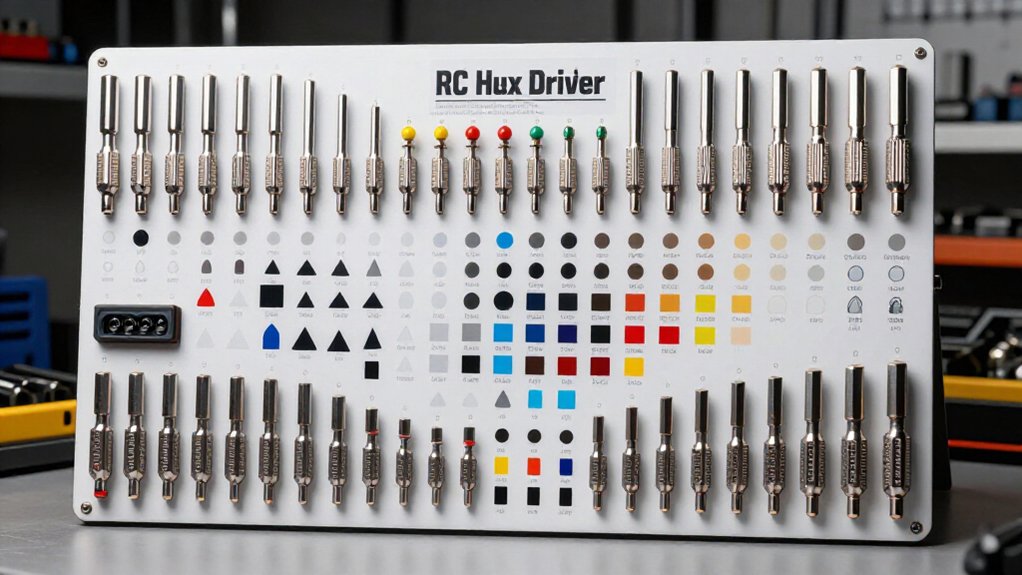
For Traxxas, use a 1.5-mm driver only when the screw’s hex socket matches. Arrma commonly uses 2.0 mm, while Axial often takes 2.5 mm.
Button-head screws have rounded heads with internal hex sockets. Losi may use 1.27-mm (0.05-inch) drivers, but check each fastener. Metric and SAE tips aren’t interchangeable.
Seat the tip fully and squarely, especially on aluminum heads, which can strip easily.
Replace worn tips; the full chart can clarify sizes and long-reach handle choices.
Traxxas 1.5mm Driver Fit
A 1.5 mm hex driver, such as the MIP #9207, fits Traxxas fasteners with a matching 1.5 mm recess. For smaller screws, this size gives you a close fit when the screw head uses that exact hex dimension. Before applying torque, confirm the fastener size; Traxxas models can use several driver sizes, and one tool won’t fit every screw.
On TRX-4, Slash, or Stampede projects, you can include a 1.5 mm driver in a broader kit, but check each fastener rather than assuming a universal fit. Choose a steel tip that seats fully in the recess. A well-fitting tip helps reduce the chance of stripping small hex screws. Keep the driver aligned with the screw axis and apply steady pressure as you turn carefully.
Arrma 2mm Driver Fit
For Arrma repairs, a 2.0 mm hex driver is a practical choice for screws with a matching socket. The MIP #9208 gives you a standard tip for routine work. Its #9208S Speed Tip turns faster and provides more torque. For angled access in tight spaces, choose the ball-end #9240 or #9240S Speed Tip. The listed ARRAROWN eight-size set also includes a 2.0 mm driver and names Arrma models among its applications.
| Tool | Fit or use |
|---|---|
| MIP #9208 | Standard 2.0 mm driver |
| MIP #9208S | Faster turning, more torque |
| MIP #9240 / #9240S | Ball-end angled access |
| ARRAROWN set | Includes 2.0 mm across RC scales |
Check each screw head first: Arrma vehicles can use different hex sizes, and this driver fits only a matching 2.0 mm socket.
Button-Head Screw Identification
Button-head screws have a rounded, low-profile head and an internal hex socket; choose your driver by the socket size, not the screw’s thread diameter. Common RC button-head sockets measure 1.5 mm, 2.0 mm, or 2.5 mm, but the right size can vary with the vehicle and individual screw. Seat a matching hex driver fully and check that it fits snugly; a loose fit can round the socket when you apply torque.
If the driver rocks, stop before turning. Remove dirt or debris from the recess, then check the fit again. For an unfamiliar fastener, consult your vehicle manual or compare its socket with known-size drivers. Don’t infer the socket size from the brand, head appearance, or thread diameter. Use a driver that enters cleanly without binding, and don’t force a near fit; a proper match keeps the socket walls engaged as you turn.
Axial 2.5mm Driver Fit
A 2.5 mm driver is listed as compatible with the Axial SCX10 and suits larger chassis fasteners. Check each screw’s hex recess or your model’s manual to confirm the tip engages fully and prevent stripping. Use a straight driver for direct access or a ball-end tip when you need to reach a screw at an angle.
Axial 2.5mm Fit
Although Axial models can use different driver sizes, a 2.5 mm hex driver fits fasteners with matching 2.5 mm sockets. Check each fastener’s socket size rather than choosing a tool by vehicle brand alone; Axial platforms may require more than one driver size. A standard 2.5-mm driver, such as the MIP #9209, gives you controlled engagement for precise work on matching hex screws.
When a fastener sits in a tight or awkward position, choose a 2.5-mm ball-end driver to approach it at an angle. Keep the driver aligned with the socket whenever access allows, and apply steady hand pressure as you turn.
If the tool rocks or slips, stop and verify that you’re using the correct size before continuing. Keep tools close during maintenance.
Screw Head Compatibility
When an Axial screw has a 2.5 mm hex socket, use a 2.5 mm driver such as the MIP #9209, regardless of the vehicle’s scale.
A 2.5 mm driver matches the socket’s across-flat size, not the overall dimensions of the fastener or the model. You’ll commonly need this size for larger RC chassis screws often found on builds, but don’t assume every Axial vehicle uses it. Check the screw head directly or consult your model manual before selecting a tool; Axial models may use multiple socket sizes.
If the socket measures 2.5 mm, choose a standard 2.5 mm hex driver. Keep separate drivers labeled by size so you can select the correct one during maintenance. This quick check helps prevent tool-size mismatch during routine service work.
Driver Tip Engagement
For Axial RC screws with 2.5 mm hex sockets, use a 2.5 mm driver and check that its tip seats fully with minimal wobble before applying torque. A snug fit keeps the driver aligned as you turn the screw. If the tip rocks, stops short, or engages only at its edge, remove it and inspect the recess and driver for debris or wear. A loose or partial engagement can cam out under load and strip the socket, so don’t increase force to compensate; reseat the tool squarely first.
The MIP #9209 provides a straight 2.5 mm tip for controlled access. A 2.5 mm ball end, such as the MIP #9210, reaches angled positions when access is restricted; use modest torque because contact reduces engagement.
Common Axial Fasteners
Beyond checking tip engagement, match the driver to the screw’s hex socket: a 2.5 mm driver fits Axial fasteners with 2.5 mm sockets, including some larger chassis screws.
Use the screw head as your reference rather than assuming every fastener on an Axial model takes the same tool. A 2.5 mm driver is a choice for larger RC chassis screws and belongs in a standard maintenance set. Before you turn a fastener, confirm that the tip seats in its socket.
SCX10 vehicles are compatible with hex-driver tools, but the required size can change between parts and model versions. Check each screw individually, working across chassis, suspension, and accessory hardware. If the socket doesn’t match 2.5 mm, select the size that fits instead of forcing this driver.
Preventing Stripped Screws
To prevent stripped screws, use a true 2.5 mm hex driver only when it seats fully in the socket with minimal wobble. Press the tip straight into the screw head and keep the driver aligned as you turn. This reduces cam-out and protects the socket.
If the tip rocks or slips, stop and check the driver size and screw for wear. Don’t add torque to a poor fit; it can round the recess. For tight Axial screws, use controlled force and straight engagement. Don’t break them loose with an angled ball end. A sturdy 2.5 mm driver, such as the MIP #9209, offers precision and durability.
The #9209S Speed Tip supports faster turning and more torque, but maintain full, straight contact throughout each turn to keep the hex seated and reduce the chance of socket damage, especially when the fastener resists movement under load during removal too.
Metric Versus SAE Hardware
Metric hex drivers use millimeter sizes such as 1.5, 2.0, 2.5, and 3.0 mm, while SAE drivers use inch sizes such as 0.05, 1/16, 5/64, and 3/32 inch. You can’t treat metric and SAE tips as interchangeable; choose the driver that fits the screw socket snugly.
A 1.5 mm tip and a 1/16-inch tip are close in size, but they aren’t identical, so don’t substitute one for the other. Check your vehicle manual or screw specifications before selecting a tool, because brands and models may use different hardware standards. If you work on several models, keep both systems available; some sets include four metric and four SAE sizes. Label each driver by size, then match it to the fastener before turning it during assembly.
Aluminum Screw Head Stripping
Even after you identify the correct hardware standard, an ill-fitting driver can strip an aluminum screw head.
Match the driver to the screw’s hex size; common RC sizes include 1.5 mm, 2.0 mm, 2.5 mm, and 3.0 mm. Make sure the tip seats fully in the socket; partial engagement concentrates force on the edges and can round them. Keep the driver aligned with the screw and apply steady pressure as you turn. Use a well-fitting, undamaged steel tip, since a worn or loose-fitting tip can slip under load.
If the tip slips, stop. Check the driver’s size and condition, then inspect the screw socket for rounding or damage. Replace a damaged driver, and use a sized tip before resuming. Apply enough pressure to keep the tip seated; excessive force won’t compensate for poor fit.
Losi 1.27mm Driver Fit
A 1.27 mm (0.05-inch) hex driver fits a Losi fastener only when its socket matches that size; check each screw, since Losi models can use different hex sizes. You can use the listed eight-piece hex-driver set for this size because it includes a 0.05-inch driver, equivalent to 1.27 mm.
Before turning a fastener, seat the tip squarely and confirm that the socket measures 1.27 mm; don’t assume every small Losi screw takes the same tool. Check the relevant model manual or compare the driver with the screw socket when sizing is unclear. Choose a tool explicitly marked 0.05 inch or 1.27 mm, then verify the fit on the specific fastener. This check helps you select the correct size before applying torque. Keep the driver aligned as you work; stop if it won’t seat properly.
Worn Driver Tips (3 Words)
Worn Driver Tips (3 Words)
When a hex-driver tip is rounded, chipped, or no longer seats snugly, it can slip and strip the screw head. Inspect each driver before tightening RC hardware; a worn tip can damage the fastener and complicate removal.
- Use the correctly sized driver—1.5 mm, 2.0 mm, or 2.5 mm—to improve seating and reduce tip wear.
- Replace a tip that’s rounded, chipped, or loose in the screw; don’t force it to turn a resistant fastener.
- If your driver has replaceable tips, install a fresh one and keep the handle; steel resists damage but still wears.
Check the fit against an undamaged screw before applying torque. A snug, full-depth engagement helps you control the tool; replace questionable tips promptly rather than risking costly hardware during service.
Long-Reach Driver Handles
Long-reach driver handles help you access recessed RC fasteners, but the bit must still match the screw’s hex size. Choose a handle with an ergonomic, slip-resistant grip; it gives you steadier control when you reach into tight spaces. Engraved size markings let you identify the correct driver without pulling it from the work area, reducing interruptions during assembly or repairs. For common RC jobs, keep these sizes available:
- 1.5 mm: Use it only when the fastener’s socket matches; extra reach won’t compensate for a loose fit.
- 2.0 mm and 2.5 mm: These cover frequent small and medium hex fasteners; verify fit before applying torque.
- 3.0 mm: Select this size for compatible larger sockets, and replace worn tips promptly.
Check tip compatibility before ordering replacements.
Conclusion
Match your RC hex driver to the screw head—not just the vehicle brand. Traxxas commonly uses 1.5mm, Arrma 2mm, Axial 2.5mm, and some Losi hardware 1.27mm, but verify each fastener before turning. Distinguish button-head screws from other styles, and don’t confuse metric sizes with SAE. Use a correctly seated, unworn tip, especially on aluminum screws, which strip easily.
Choose a long-reach handle only when access requires it. The right fit helps you tighten securely and avoid damaged hardware.