How Often Should You Maintain an RC Car? A Simple Service Schedule
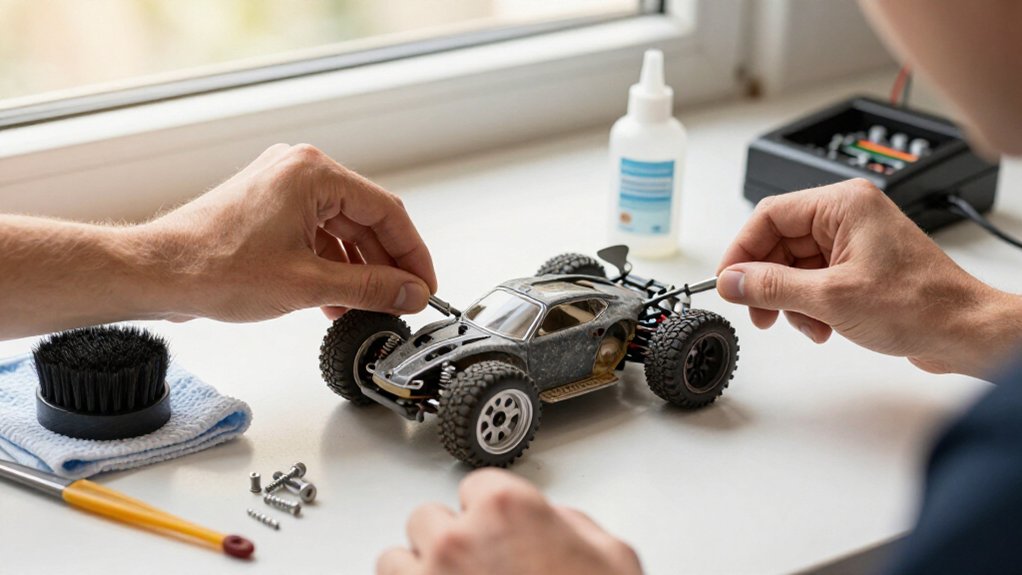
Inspect your RC car after every run: clean debris, check tires, hardware and shock leaks, and listen for drivetrain noise.
Tighten loose fasteners with snug-fitting metric hex drivers, and inspect gear mesh weekly or after impacts.
Clean the drivetrain every two to three runs; rebuild shocks at 10 to 15 packs, check ball diffs at five, and gear diffs at 20 to 25.
Log repairs and pack counts. In cold weather, warm batteries and follow storage guidance.
More follows.
Service by Driving Surface
Service intervals depend on the surface: on clean, smooth tracks, inspect and clean your car after every pack, though drivetrain cleaning can usually wait two or three runs unless dirt builds up. On dusty surfaces, clean the drivetrain every two or three runs, and check gear mesh weekly or after an impact.
After wet or muddy runs, dry and inspect the car thoroughly to limit rust and corrosion, especially around bearings and drivetrain components. Rough or dusty tracks can also shorten shock-service intervals.
Check shocks for leaks after every pack; rebuild any leaking shock immediately. Dirt and water accelerate bearing wear, so clean and re-oil bearings after each session. Replace a bearing if it remains gritty after cleaning or has noticeable play. Use dirt, moisture, and impacts to guide extra checks.
Metric Hex Drivers
After cleaning your car, use a metric hex-driver set to check and tighten loose fasteners around the suspension arms, wheel hexes, and body mounts. Choose the driver size that fits each screw snugly; a loose or oversized tip can slip and damage the screw head. Keep the tool straight and apply controlled pressure as you turn, stopping when the fastener feels secure rather than forcing it. Use a small screwdriver alongside your hex drivers for any fastener without a hex head.
- After each run, inspect suspension-arm screws for movement or visible gaps.
- Check wheel-hex fasteners and confirm the hexes sit firmly in place.
- Tighten body-mount screws if they’ve loosened, keeping mounts aligned.
- Recheck each screw by feel; don’t overtighten these small screws or strip threads.
Service Interval by Run Type
Whether you run electric or nitro, inspect the car after every battery pack or fuel tank: clear debris, check the tires and hardware, and look for shock leaks or an unusual feel in the differentials. Track intervals by packs or tanks, not calendar time; heavy use may bring service sooner.
| Interval | Check | Action |
|---|---|---|
| Every run | Tires, hardware, shocks, diffs | Inspect |
| 5 packs | Ball-diff grittiness | Hold spur; turn wheel slowly |
| 10 to 15 packs | Shocks | Inspect; rebuild |
| 20 to 25 packs | Gear-diff shafts | Check grease leaks |
If a shock leaks, rebuild it at once, even when you haven’t reached the pack interval; don’t wait for the next scheduled check. Between seasons, tear down to the tub; refresh differential fluid, fit new shock seals, and inspect bearings, driveshafts, and slipper pads.
Clean, Inspect, Tighten, Lubricate
After each run, spend about five minutes clearing debris from the chassis and drivetrain, wiping the car, and cleaning the tires. After every pack, check fasteners, suspension links, pillow balls, steering screws, wheel hardware, tires, and shocks for looseness, wear, or leaks; tighten or repair issues promptly. Clean and re-oil bearings after each session, use only a light coat of RC-specific lubricant where recommended, and clean the drivetrain every two to three dusty runs before storage.
Clean After Every Run
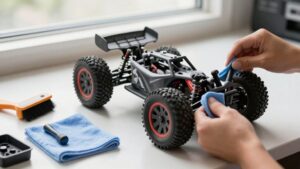
Give your RC car a quick cleanup after every run to keep dirt from wearing down its drivetrain. Brush or blow debris off the chassis and drivetrain, then wipe the wheels and body with a microfiber cloth. Clear packed grit from around the differential housing and wheel hexes, where residue can interfere with parts and trap moisture.
After a wet or muddy run, remove mud promptly and let the car dry completely before storage; trapped water can promote corrosion. Once the car’s clean and dry, apply only a light coat of RC-specific lubricant to gears and moving parts that require it. Don’t use household oils, WD-40, or harsh chemicals; they can attract dirt or damage materials. Use a small amount and wipe excess.
Inspect Critical Components
Spend about five minutes after each run clearing debris from the chassis and drivetrain, cleaning the tires, and checking for visible damage or wear. After that, examine pillow balls, links, the servo saver, steering screws, and other joints for looseness or excess play. Inspect shocks for oil leaks before and after every run; rebuild a leaking shock promptly.
Check for grinding differentials and shocks that feel dead. After each session, clean and re-oil bearings; replace any that still feel gritty or show noticeable play. In dusty conditions, clean the drivetrain every two to three runs. Check gear mesh weekly or after an impact. Catching wear early helps prevent failures and keeps steering and suspension response consistent. Compare movement across both sides to spot uneven wear. Record recurring leaks, grit, or play so you can track developing faults.
Tighten Loose Fasteners
Before each run, clean debris from fasteners, then check suspension arms, wheel hexes, body mounts, steering screws, and other hardware for looseness or play. Make this check part of your five-minute post-run inspection, including between heats. Loose hardware can let components shift, cause breakage, or cost you a wheel. Pay extra attention to parts exposed to vibration and dirt, and repeat the check after an impact and during service.
Use the correctly sized hex driver or screwdriver; a poor fit can round screw heads and slow repairs. Turn each fastener until it seats snugly, then stop. Don’t overtighten: excess force can strip threads, crack plastic, or damage the part. If a screw won’t hold, inspect its threads and the receiving hole rather than forcing it.
Lubricate Moving Parts
After every run, clean dirt from the chassis and drivetrain, then inspect moving parts for grit, leaks, wear, or looseness before lubricating them. Apply a light coat of RC-specific lubricant to gears, differential drives, and shocks; excess oil attracts dirt. Don’t use household oils, WD-40, or harsh chemicals, which can contaminate or damage components.
Clean and re-oil bearings after each session. Replace any bearing that still feels gritty or has noticeable play. In dusty conditions, clean the drivetrain every two to three runs. Check gear mesh weekly, after impacts, and whenever you change a pinion or spur; rotate the spur through a full turn carefully while checking. Tighten loose screws with the correct hex driver, especially at suspension arms, wheel hexes, and body mounts.
Check Before Storage
Once your final run is over, brush off dirt, wipe the chassis, wheels, and body with a microfiber cloth, and let them dry fully.
Before storage, inspect bearings, gears, differential housing, wheel hexes, suspension, tires, and electronics for grit, wear, leaks, or damage. Check screws around suspension arms, wheel hexes, and body mounts; tighten loose ones with the correct hex driver. Apply a light coat of RC-specific lubricant to gears, differential drives, and shocks. Avoid household oils, WD-40, and harsh chemicals.
For long-term storage, remove the battery, keep your car covered in a cool, dry place away from direct sunlight, and store the battery at a partial charge. A pre-storage check helps you catch wear before it worsens and keeps your next run dependable.
Cold-Weather Battery Care
Cold temperatures shorten run times, so monitor battery performance and warm the pack slightly before use without applying direct heat. Charge it with a suitable charger, and don’t leave it unattended. Between outings, store it partially charged in a cool, dry place; check for damage or swelling after each run and stop using a compromised battery.
Cold-Weather Charging
Low temperatures reduce battery performance, so your RC car will have shorter run times and may respond differently during each outing.
After a cold run, let the battery return gradually to a suitable room temperature before you connect a charger; never charge a frozen pack. Check its temperature and condition first, then use a charger matched to its chemistry. Follow the battery maker’s specified temperature limits, charge rate, and termination guidance rather than relying on a generic setting.
Stay with the battery throughout charging, and disconnect it if it swells, becomes unusually hot, or shows any physical damage. Don’t resume charging until you’ve identified and corrected the cause.
During a seasonal break, remove the pack and store it in a cool, dry location at the manufacturer-recommended partial charge. After each outing, note run time and response; a decline can signal cold-related performance loss.
Keep Batteries Warm
Before each cold-weather run, warm the battery slightly indoors to improve its performance, but keep it away from heaters and other direct heat sources.
Let it reach a moderate indoor temperature naturally; don’t use a heater, heat gun, or hot water. Fit the pack only when it feels mildly warm, not hot, and check its condition before connecting it.
In low temperatures, your battery will lose charge faster, so plan for shorter run times and watch voltage or the vehicle’s low-voltage warning during each session. Stop when the warning appears rather than pushing the pack to its limit. Cold also makes body plastics more brittle. Handle the shell gently when removing clips, opening the body, or lifting the car, since force can crack it.
Safe Winter Storage
When you put your RC car away for winter, remove the battery and store it separately in a cool, dry place out of direct sunlight.
For a LiPo, choose a partial charge, not a full or empty pack; follow the maker’s storage-voltage guidance. Use your charger’s storage-charge mode when available, and never leave a battery charging unattended. Cold temperatures increase discharge and reduce performance, so let the pack warm slightly before use.
Don’t charge it while cold; allow it to reach a suitable temperature first. Before each run, inspect the case and leads for swelling or damage. If you find either, don’t install or use the battery. Set it aside safely and follow the manufacturer’s instructions for handling or disposal. Protect terminals from shorts.
Check Drivetrain Noise
After each run, listen for new clicking, grinding, or inconsistent drivetrain noise, which can indicate worn bearings, gears, or differentials. During your post-run inspection, rotate each wheel by hand and note grinding or unusual resistance; either can reveal trouble before it worsens. Compare sides and listen for noise that changes as you turn the wheels.
In dusty conditions, clean the drivetrain every two to three runs because debris can accelerate wear and create noise. Record when noise starts and whether it appears under acceleration, braking, or coasting; this pattern helps you narrow the source without dismantling the drivetrain. Recheck after cleaning before running. If noise remains, inspect the affected parts and replace any component that still feels gritty or loose or looks damaged.
Differential Gear Inspection
Inspect gear differentials for grease leaks around the diff shafts every 20 to 25 battery packs, following HPI’s guidance. If you find a leak, disassemble the differential, add grease, and reassemble it carefully, keeping the gears and seals correctly seated. Check a ball differential for grittiness about every five packs: hold the spur gear and slowly turn one wheel. Rough or uneven movement indicates that you should inspect its plates and balls.
These checks assess mechanical wear; they’re separate from changing differential-fluid weight to tune handling. Refresh the fluid every two to three months for casual bashing, monthly if you drive regularly, or often before each event when you’re racing. Follow your model’s service instructions when opening the unit, and use the specified lubricant and quantity.
Misreading Tire Wear Patterns
Tire wear can reveal problems that a quick glance might miss, so clean off dirt and check the tread after every run. Don’t treat every mark as dirt or assume lubrication will restore damaged tread.
- Look for chunking or missing tread; replace the tire rather than cleaning it.
- Compare left and right tires; different tread loss can expose one-sided wear.
- Check across each tire; uneven wear may point to handling or suspension trouble.
- If your car feels bouncy, unstable, or pulls aside, inspect its suspension.
Use tread evidence with behavior, not appearance alone: a tire can look sound yet lose grip as its tread breaks apart. Replace it once the rubber separates, and check sides after next run to confirm the pattern hasn’t continued.
Track Repairs in a Pit Log
Tread wear can reveal recurring setup or suspension problems, and a pit log helps you track them alongside other repairs. At each outing, record the date, track conditions, and battery packs used—or fuel tanks for a nitro car. After every pack, note inspection results and repairs: loose screws, worn tires, leaking shocks, or gritty differentials.
Track usage, not calendar time alone, to judge service needs. Log when you service differentials, shocks, and bearings; compare pack counts with recommended intervals, such as shock service every 10 to 15 packs. Record symptoms like grinding, leaks, excess heat, or reduced run time, then list parts repaired or replaced. These details help you identify repeat failures and connect wear to setup changes. Keep setup and service notes together; RacerRX setup timestamps can track pack counts and show when each component was last serviced.
Conclusion
Keep your RC car reliable by matching service to its surface and run intensity. After each session, clean it, inspect for damage, tighten hardware with metric hex drivers, and check for drivetrain noise or unusual tire wear. Lubricate as needed, inspect differential gears regularly, and protect batteries from cold. Record repairs and checks in a pit log so you can spot recurring problems and set a schedule that fits how you drive.