
How to Choose RC Tires for Dirt, Grass, Asphalt and Carpet
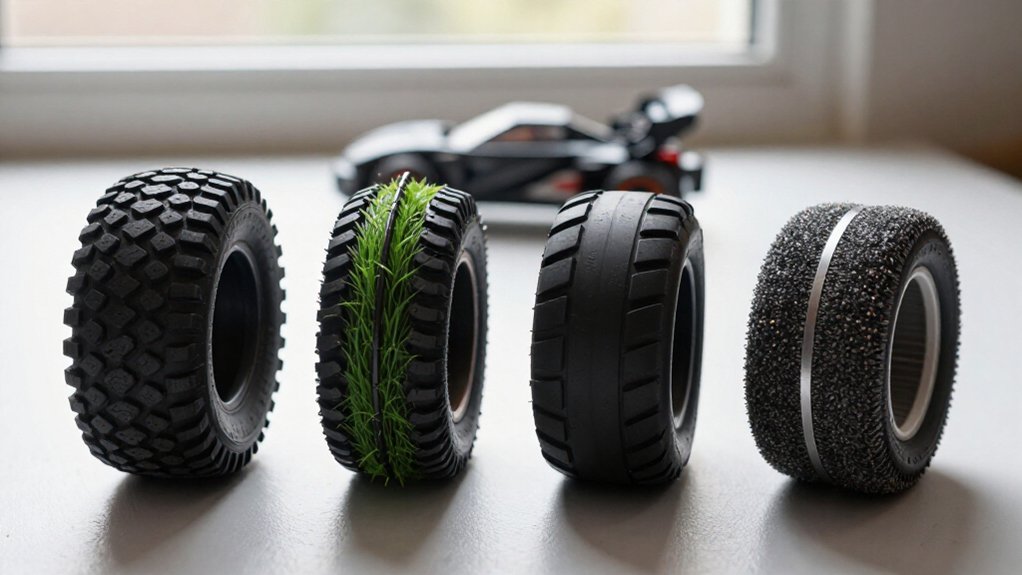
Choose pin tires for loose dirt and gravel, medium tread for compact dirt, and spike length to match grass or carpet pile.
For asphalt or concrete, use slicks with a compound suited to abrasiveness. Softer rubber grips harder but wears faster; harder compounds last longer.
Match insert firmness to terrain: soft inserts conform, while firm inserts stabilize cornering.
Check wheel fit, clearance, and motor temperature with tires of a different diameter. Small, controlled setup changes can reveal your best combination.
Tire Choice by Surface
Choose RC tires by matching tread and compound to the surface: pin or spike treads dig into loose dirt, gravel, and rough ground, with larger spikes suited to rougher terrain; medium treads balance traction and steering on compact dirt. For grass and turf, use spikes; choose longer pins for taller pile and shorter spikes for AstroTurf® or low-pile carpet. On smooth asphalt or concrete, slick tires maximize contact, but compound controls wear and grip: soft rubber wears quickly, while hard rubber can weaken braking and corner-exit traction.
On carpet, mini spikes grip smooth, dust-free tracks, and hard compounds suit its higher-grip conditions. Check track conditions before each run, then inspect tread wear and clean the contact surface. Select a compound that preserves predictable braking and corner-exit control without sacrificing service life.
Tire Choice by Surface
Match the tread pattern and compound to the surface to maintain predictable traction and steering. For loose dirt and gravel, choose spike or pin treads that penetrate the surface. Larger spikes suit rough terrain, while denser pins handle varied off-road conditions. On compact dirt, use a medium tread to balance forward traction with steering precision.
In grass, match spike length to pile height. Longer spikes work in tall field grass; shorter spikes suit AstroTurf® and low-pile carpet.
On smooth asphalt or concrete, slick tires maximize surface contact. Select a compound for track conditions; overly hard rubber can reduce braking and corner-exit grip.
For carpet, mini spikes suit smooth, dust-free tracks. Harder compounds are often preferred on carpet or turf, particularly in hot ambient conditions.
Grip vs. Tire Wear
Softer compounds generally deliver more grip, but they often wear faster than harder natural-rubber tires. Choose a compound that matches the surface and your run length, not just the first burst of traction. On asphalt, an overly soft tire wears quickly; an overly hard tire can cost braking and corner-exit grip.
| Choice | Grip image | Wear signal |
|---|---|---|
| Soft rubber | Strong bite | Fast wear |
| Hard rubber | Reduced bite | Longer life |
| Foam | High grip | Chunking risk |
| Mild compound | Steady grip | Better consistency |
Foam’s weight and high grip suit drag racing, but it can wear rapidly and chunk. For a full session, a slightly less aggressive compound may stay consistent as tires heat. Check wear after every run, then adjust tread and compound to suit the surface carefully.
Foam Insert Firmness Options
Foam inserts support your hollow tires, preserve their shape, and damp impacts. Soft inserts allow more flex, medium inserts balance flex and support, and firm inserts provide greater support. Choose firmness to suit your chassis weight, surface, tire compound, and handling goals, then recheck your setup.
Soft Foam Inserts
Because hollow RC tires can deform under cornering loads and impacts, foam inserts help them retain their shape. Soft inserts allow greater tire flex, helping the tread conform to uneven surfaces and maintain contact across changing terrain. This compliance can suit tracks with bumps or loose patches, where a rigid tire may bridge surface irregularities.
Choose softness according to your vehicle’s weight and the track’s demands; a heavier chassis places greater loads on its tires and may need more support to preserve predictable handling. Don’t assume the softest insert is automatically best: excess flex can let the sidewall move more under cornering force. After each run, inspect inserts for wear, tears, or compression damage. Replace deteriorated foam, since damaged inserts can make handling inconsistent.
Medium Foam Inserts
Medium foam inserts balance tire support with cushioning, making them a versatile choice when track conditions or driving demands vary. They can help your tires hold a predictable contact patch without making the ride feel overly harsh. On compact dirt, a controlled insert, including a medium-firm option, can balance forward traction with steering precision.
Match insert firmness to chassis weight. Heavier cars generally need more support to limit excessive tire deformation; lighter cars may tolerate more flex. Test options on your usual surface, changing one variable at a time, and compare traction, steering response, and consistency over repeated runs. After each run, inspect inserts for wear, tears, or compression. A worn insert can change tire support and handling, even when the tire appears intact.
Firm Foam Inserts
Firm foam inserts support the tire carcass and limit sidewall flex, helping your tires hold their shape under load.
A firm insert resists compression as cornering forces load the tire. This support can keep the tread more evenly planted and make steering response consistent through turns. On compact dirt, controlled insert support can provide a stable balance of grip and carcass stability. However, excessive stiffness reduces compliance, so the tire may follow bumps less effectively and lose grip on uneven surfaces.
After each run, inspect foam for cuts, compression, or other damage. Worn inserts can deform unevenly and make handling less predictable, especially during direction changes. That inspection helps you maintain predictable response across repeated runs.
Choosing Insert Firmness
Choosing foam insert firmness lets you tune how your tires respond to bumps and cornering loads. Foam inserts support hollow tires and help them retain their shape under load. Softer foam deforms more readily, adding compliance over rough sections. Firmer foam resists deformation, supports the carcass more strongly, and can make steering response feel more precise.
Match firmness to your vehicle’s weight and the support your track demands. A heavier chassis generally needs firmer inserts to control tire deflection; a lighter vehicle may benefit from softer foam when bump compliance matters. After each run, inspect inserts for wear or damage, which can reduce support and cause inconsistent handling. When you change firmness, recheck suspension settings and handling, since insert changes alter tire response.
Grass-Specific Tire Features
On grass, choose tall, widely spaced treads to penetrate the surface and clear debris. A larger tire diameter and firm inserts help maintain rolling clearance and support, while durable sidewalls resist flex and damage. Match spike length to grass height: use shorter spikes on short-pile turf and longer ones on taller grass.
Tall, Widely Spaced Treads
To maintain traction on grass, use tires with tall, widely spaced spikes that reach through the grass or turf pile and bite into the surface. Their spikes provide mechanical grip through dense vegetation. Match spike length to the surface: choose longer spikes for taller grass, and shorter ones for short-pile turf or AstroTurf®. If spikes are too short, they may not reach the underlying surface; unnecessarily long spikes can perform poorly on shorter turf.
Wide spacing lets the tread engage grassy terrain and clear vegetation between lugs, rather than ride on top of it. Test your tire choice on the actual grass track. Grass height, turf construction, and track conditions affect how much traction the tread delivers, so verify grip under running conditions.
Larger Tire Diameter
Beyond tread design, a larger tire diameter can help your RC car maintain ground clearance over grass and keep the chassis from dragging through the turf.
Taller tires roll over grass stems and small bumps more easily, improving progress on uneven ground. Match tread to grass height: longer spikes reach taller grass; shorter spikes suit short-pile turf. Check body and suspension clearance through full steering and suspension travel before installation.
Larger tires alter effective gearing and handling, so monitor motor temperature and vehicle response after fitting them. The added radius raises the chassis relative to the turf, while the larger rolling surface helps the wheels climb over obstacles instead of pushing into them. Recheck fitment with the suspension compressed and steering at both limits.
Firm Tire Inserts
Firm foam inserts support the tire carcass, helping it resist folding under the load and side forces of grass driving.
On grass, pair these inserts with spike tread long enough to reach through the pile. Firmer support helps spikes stay positioned and deliver consistent traction. Match insert firmness to your vehicle’s weight: heavier cars generally need more support, but an overly firm insert can reduce compliance over uneven ground.
Check inserts for compression, tearing, or lost shape; worn foam won’t keep handling consistent even when tires look sound. After changing firmness, recheck suspension and handling, since inserts affect how each tire responds to bumps and cornering. Test the car at speed, then adjust damping or ride height only if the changed response warrants it.
Durable Sidewalls
Durable Sidewalls
Because grass and turf can snag or stress tires, reinforced sidewalls help resist punctures and damage. Choose durable sidewalls when you run on rough grass, where sticks and uneven ground can strike or deform a tire. Belted tires resist deformation under impact, helping the tire hold its shape across demanding terrain.
This construction can improve stability, but it won’t eliminate cuts or punctures; inspect both sidewalls after each run. Check for damage before you return to the track, and replace a tire if its structure is compromised. Reinforcement often raises tire cost, so weigh the added protection against how often you replace tires. If grass is smooth and your tires rarely suffer damage, a less reinforced option may provide better value without sacrificing necessary performance.
Wheel Hex and Offset
Match the wheel hex to your axle’s size and shape; common sizes include 12 mm and 17 mm, but some models use pin-drive or other hub systems, so check your vehicle manual before buying. An incorrect hex won’t seat securely, and you shouldn’t force a wheel onto an incompatible hub.
Wheel offset measures the distance between the mounting face and the wheel’s centerline. Positive offset generally places the wheel farther inward; negative offset moves it outward. Choose an offset that maintains your vehicle’s intended track width and keeps the tire clear of the body, suspension, and steering parts. After changing hex adapters or offset, check clearance through full steering travel and suspension compression, then confirm each wheel spins freely without contacting nearby components afterward.
Sidewall Support for Cornering
When cornering loads rise, a well-supported sidewall helps the tire hold its shape and keeps the tread stable and predictable. Through turns, this support lets you maintain steering response. On rough dirt or grass, reinforced sidewalls resist excess flex and impacts from rocks, sticks, and obstacles. Inserts support the tire from within, helping limit sidewall collapse when you load the car hard in a corner.
Choose sidewall and insert support to suit your vehicle’s weight and track demands. If support feels too soft, you may notice less stability; if it’s too stiff, you’ll sacrifice compliance over uneven surfaces. Consider surface texture and cornering speed when setting up your tires. Before, inspect sidewalls and inserts for damage or wear, because weakened support can make cornering behavior inconsistent.
Premature Tread Wear
Sidewall support controls cornering stability, but tread choice determines how long your tires last. Abrasive asphalt can strip soft compounds quickly, while raised tread blocks scrub away on smooth asphalt or concrete. Choose slicks for those surfaces and match compound hardness to both surface abrasiveness and temperature. On carpet and turf, select spike length for the pile; shorter spikes suit low-pile carpet and AstroTurf® and reduce needless wear. Foam tires can wear rapidly or chunk, so inspect them after high-grip runs.
- Check tread depth, edges, and foam condition after every run; uneven loss can signal a poor surface match.
- Replace damaged or heavily worn tires before grip becomes inconsistent.
- Adjust compound or tread pattern to the track, then monitor wear again.
Protect tire life.
Match Gearing to Terrain
Gearing should suit the traction and resistance your tires encounter, because either can raise motor load and heat.
- On carpet or turf, high grip can load the drivetrain. Check motor temperature after each run and adjust the pinion or spur if heat climbs.
- On loose dirt or grass, tires can dig in and bog a tall gear. Fit a smaller pinion or larger spur for easier acceleration.
- On asphalt, balance tire grip against run length. Traction raises load, and long, fast runs demand temperature checks.
After changing tire diameter, recheck gearing: larger tires effectively raise the ratio and make the motor work harder. Change gearing carefully in small steps, then test acceleration and motor temperature on your intended surface before settling on the setup.
Conclusion
Choose tires for the surface you run most, then tune compound and tread for grip without accepting unnecessary wear. On grass, you need taller lugs and clearance; on carpet, you need controlled traction and firm inserts. Match foam firmness to temperature and cornering load, and confirm hex size, offset, and sidewall support. Finally, adjust gearing for terrain to protect the motor and keep acceleration consistent. Don’t overlook wear: inspect and replace tires before grip falls.
